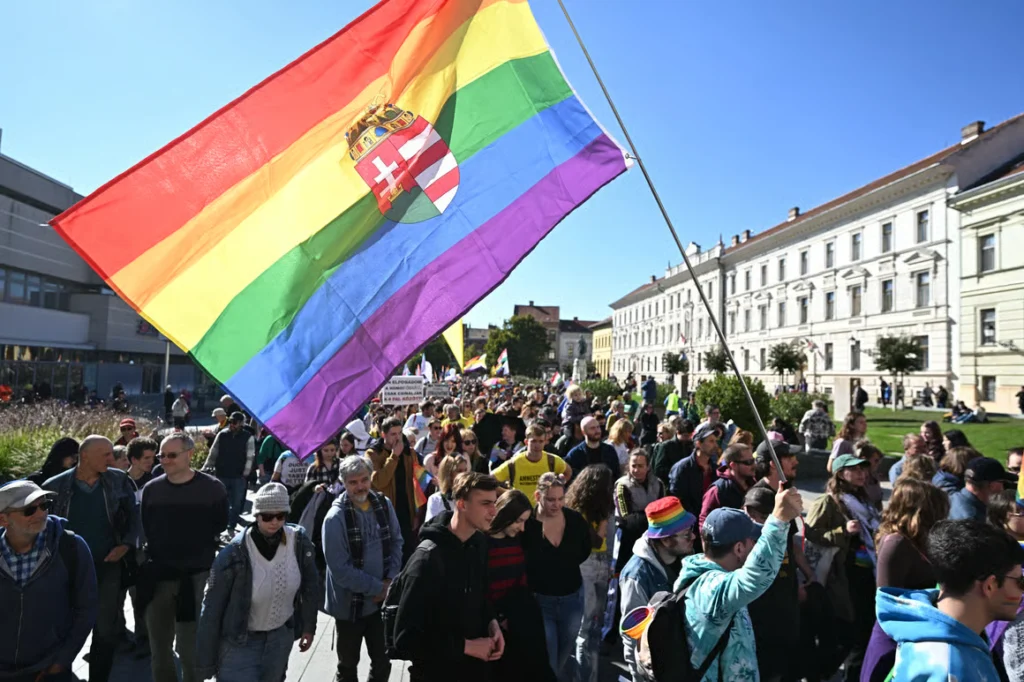
On April 21, 2026, Europe’s highest court delivered a ruling that reshapes the legal and moral landscape of the European Union. The European Court of Justice found that Hungary’s restrictive legislation targeting LGBTQ+ content and expression violates core EU fundamental rights, marking a decisive moment in the long running tension between Budapest and Brussels over human rights, democracy, and rule of law.
A Landmark Judgment Rooted in EU Fundamental Values
We are witnessing a judgment that goes beyond a single national law. The court concluded that Hungary’s 2021 legislation, often referred to as its child protection framework, unlawfully discriminates against LGBTQ+ individuals and undermines essential EU principles including dignity, equality, freedom of expression, and non discrimination.
The ruling is especially significant because it relies on Article 2 of the Treaty on European Union, which defines the Union’s foundational values. According to the court, Hungary’s law stigmatizes LGBTQ+ people by restricting their visibility in educational materials and media content, effectively linking sexual orientation and gender identity with harm or deviance.
This is the first time the European Court of Justice has issued a judgment grounded so directly in Article 2 as a standalone violation, reinforcing its role as a constitutional anchor for the Union.
What Hungary’s Law Actually Did
The contested legislation, adopted in 2021 under Prime Minister Viktor Orbán’s government, placed strict limitations on the depiction of LGBTQ+ themes in content accessible to minors. It restricted educational materials, advertising, and television programming, particularly before late evening hours.
Hungarian authorities defended the law as a measure intended to protect children from what they described as inappropriate or ideological content. However, critics across Europe and within human rights organizations argued that the law blurred the line between child protection and censorship, effectively erasing LGBTQ+ identities from public education and media spaces.
Over time, additional measures including restrictions on public assemblies and heightened surveillance around Pride events intensified concerns about a broader pattern of institutional discrimination.
The Court’s Reasoning and Legal Impact
The European Court of Justice found that Hungary’s legislation violated multiple layers of EU law. These include the Charter of Fundamental Rights, rules on freedom to provide services, and data protection standards, all of which collectively protect individuals from discrimination and unjustified restrictions on expression.
At the core of the ruling is the court’s conclusion that the Hungarian law fosters stigma. By limiting the representation of LGBTQ+ individuals in public life, the legislation sends a signal that their identities are inherently harmful or unsuitable for young audiences, a conclusion the court said is incompatible with a pluralistic democratic society.
This reasoning aligns with earlier legal opinions within the EU system, including assessments from the European Commission and Advocate General submissions that warned the law conflicted with foundational rights protections.
A Turning Point in EU Rule of Law Enforcement
We are seeing more than a symbolic ruling. The decision strengthens the European Union’s ability to enforce shared democratic standards across member states, particularly when national legislation conflicts with EU treaties.
The case was widely supported within the bloc. A majority of EU member states joined legal action against Hungary, signaling that concerns over rights protections extend beyond institutional Brussels politics into broader European consensus.
Human rights organizations described the judgment as a defining moment for minority protection in Europe. It reinforces the idea that membership in the European Union carries not only economic obligations but also binding commitments to uphold human dignity and equality.
Political Context in Hungary and Across Europe
This ruling arrives during a period of political transition in Hungary. The government of Viktor Orbán has long argued that its policies reflect national sovereignty and cultural values, while critics within the EU have accused it of systematically weakening democratic institutions and civil liberties.
Recent developments, including electoral shifts and growing domestic debate, have added complexity to the situation. Hungary’s incoming political leadership faces increasing pressure to align national laws with EU standards or risk prolonged legal and financial consequences from Brussels.
Within the EU itself, the ruling is likely to intensify discussions about enforcement mechanisms, including funding conditionality and legal sanctions for member states that violate fundamental rights obligations.
Human Impact and Social Reality
Beyond legal frameworks, the court’s decision reflects real social consequences. LGBTQ+ communities in Hungary have reported increasing marginalization, restrictions on public visibility, and a shrinking space for cultural expression.
Public Pride events have faced legal and administrative barriers, and activists describe a climate where public discourse on LGBTQ+ issues is often framed through a security or moral lens rather than a rights based perspective.
International human rights monitoring groups have also documented concerns about discrimination and hostile environments affecting minority communities in the country.
What This Means for the European Union
The ruling strengthens the European Union’s legal architecture around equality and non discrimination. It reinforces the principle that member states cannot adopt domestic laws that contradict the Union’s core values, even when those laws are politically popular at home.
At a structural level, the judgment may influence future cases involving media regulation, education policy, and freedom of assembly across Europe. Legal experts suggest it could serve as a reference point for how the EU handles conflicts between national sovereignty and supranational rights protections.
A Defining Moment for Rights and Governance in Europe
We are looking at a decision that will likely be studied for years in constitutional and human rights law. It underscores a central tension within the European project, the balance between national identity and shared legal commitments.
For LGBTQ+ communities across Europe, the ruling represents recognition of legal protections that extend beyond borders. For policymakers, it is a reminder that EU membership carries enforceable obligations tied directly to dignity, equality, and democratic standards.
As Europe moves forward, this judgment sets a clear precedent. Fundamental rights are not optional principles within the Union, they are binding standards that define what it means to be part of a shared European legal order.