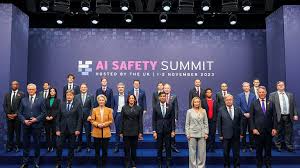
On May 29 and 30, 2026 academics, corporate leaders and policy experts finalized the agenda for a high profile London summit that will tackle generative AI ethics in corporate governance, professional credentialing and large scale reskilling. I attended preparatory sessions and spoke with organizers, human resources chiefs and affected workers to capture how the meeting aims to turn abstract principles into boardroom practice and workforce pathways that protect safety and livelihoods.
Why this summit matters for boards and employees
Generative AI has moved from experimental labs to mainstream business functions, touching hiring, customer service, legal drafting and creative work. Boards now face decisions about model procurement governance risk allocation and oversight that carry legal and reputational weight. For employees the technology reshapes job content and requires new competencies. The summit intends to produce practical frameworks that corporate leaders can adopt to govern model use, credential staff who work with AI and design reskilling programs that preserve dignity and opportunity for displaced workers.
Core themes and expected outcomes
Organizers distilled the summit objectives into three priorities: policy for corporate credentialing, standards for safety and ethical deployment, and coordinated reskilling pathways. Delegates aim to publish a set of voluntary governance principles a proposed template for company level credential programs and a roadmap for public private reskilling partnerships. Leaders hope these deliverables will shorten the time between lofty ethics statements and tangible corporate practice while making cross border cooperation easier for multinational firms.
Corporate credentialing: what is at stake
Credentialing means formalizing the skills and responsibilities of employees who develop, deploy and audit generative AI systems. Employers seek consistent credential standards that cover data stewardship prompt engineering risk assessment and model auditing. Proponents argue that credentialing creates clearer accountability lines and career tracks for workers who oversee AI. Workers and unions stress that credentials should not become a gatekeeping mechanism that underpays or precariously outsources responsibility to junior staff; rather they should accompany career ladders, bargaining protections and liability clarity.
Safety ethics and governance ladders
Practical safety requires layered governance. Sessions previewed a laddered model where strategic decisions remain with boards and senior management, operational model choices fall to product leads, and day to day monitoring sits with credentialed specialists. The summit will explore model risk committees, external auditing requirements and reporting standards that corporate disclosures can adopt. Legal experts will discuss aligning these structures with existing fiduciary duties and regulatory expectations, while technologists will emphasize the need for robust testing, red teaming and incident response playbooks.
Reskilling at scale: pathways and pitfalls
Reskilling conversations centered on three elements: identifying transferable skills, funding sustained learning, and creating measurable job transition outcomes. Companies described on the job bootcamps that pair junior engineers with domain experts and rotational programs that mix AI work with customer facing roles. Public officials advocated subsidies and portable credential systems so workers can carry validated skills across employers and industries. Labor representatives pushed for co designed curricula and binding commitments on job absorption rather than vague training promises that do not translate into sustainable employment.
Human costs and worker perspectives
Employees at AI enabled firms shared mixed feelings. A customer support agent told me how AI cut repetitive tasks and gave her time for problem solving, improving job satisfaction. A mid career analyst worried about wage pressure as employers hire cheaper credentialed contractors. Those stories show that technology can improve daily work while creating insecurity when organizational commitments to redeploy and fairly compensate displaced staff are absent. The summit organizers prioritized worker voice sessions to ensure policy outcomes reflect lived realities.
Cross sector cooperation and public policy levers
The summit will emphasize partnership across universities, corporates, vocational institutions and regulators. Public policy levers discussed include tax incentives for companies that fund accredited reskilling, procurement clauses that require ethical AI commitments from suppliers and public funding for accredited training providers. International harmonization of credential standards could ease labor mobility and prevent a patchwork of qualifications that frustrates both workers and employers.
Accountability, audits and external validation
External audits and independent third party assessments emerged as recurring themes. Delegates argued for certification bodies that validate governance processes as well as technical compliance. For credibility these bodies should be multidisciplinary, combining legal, ethical and technical expertise, and should publish non confidential summaries of findings so investors and stakeholders can compare corporate practices. Proposed measures also include whistleblower protections for AI related harms and mandatory reporting of significant AI incidents to regulators and relevant industry bodies.
Financial implications for boards and investors
Investors are increasingly tying AI governance to fiduciary risk. Poor governance can mean legal exposures, reputational harm and operational disruption. Several pension fund representatives said they would push portfolio companies for credible credentialing and reskilling commitments as part of stewardship activities. That investor pressure could accelerate board level adoption of the summit outputs and motivate companies to disclose their AI governance metrics more transparently in investor communications.
Global and cultural dimensions
Delegates stressed that credentialing and reskilling frameworks must be culturally adaptable. Workforce education systems vary widely and credentialing that works in one national context may fail in another. The summit will therefore promote modular credential blueprints that can be localized and translated into national qualifications systems, while retaining core competency standards. That approach aims to reduce barriers to international labor mobility for AI competent professionals without imposing one size fits all solutions.
Voices from academia and civil society
Academics contributed practical research on learning science and assessment design, arguing that micro credentials must be defensible indicators of competency rather than marketing badges. Civil society groups insisted on transparency about the content of corporate training programs and on public access to foundational skills training for underserved communities. Those contributions underscored the summit ambition to bridge private capacity with public interest through accountable partnerships.
Next steps and deliverables to watch
Attendees expect three public deliverables within six months: a voluntary corporate credential framework, a template for reskilling partnership agreements and a set of governance reporting metrics suitable for investor scrutiny. The effectiveness of these outputs will depend on adoption by major multinationals, accreditation by recognized bodies and follow up monitoring that tracks whether training leads to stable employment and reduced harm from AI misuse.
Further reading and authoritative resources
For governance context see the OECD guidance on AI policy and corporate governance materials from major accounting and audit bodies. For workforce planning and credential design UNESCO and the World Economic Forum publish frameworks on skill taxonomies and lifelong learning that inform practical reskilling models.
Would you like a companion brief that maps proposed credential competencies to job roles and suggests assessment formats employers can adopt to certify AI related tasks in their workforce