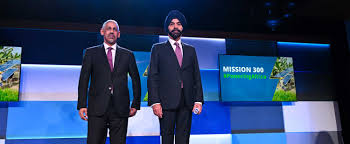
On June 16, 2026 the World Bank and the African Development Bank announced that their joint Mission 300 initiative has connected 50 million people across 40 African countries to electricity, a major milestone on the path to providing power access to 300 million people by 2030. The milestone is more than a headline figure. It marks nights lit for study, clinics able to run refrigerators for vaccines, small businesses able to operate beyond daylight hours, and entire communities gaining new options for work and health.
What Mission 300 set out to do
Launched as a coordinated finance and implementation push, Mission 300 combines concessional financing, private capital mobilization, and technical assistance to accelerate grid extensions, mini grid deployment, and distributed renewable solutions. The program aims to prioritize underserved areas where electrification costs per capita are highest and where private investment has historically been insufficient. By blending grants and low cost loans with guarantees and policy support the initiative seeks to make bankable projects that catalyze follow on investment from commercial lenders.
How the 50 million were reached
The progress to date is the result of multiple approaches executed in parallel. Large scale grid extensions funded through public private partnerships brought power to peri urban zones that anchor regional markets. Mini grids, often solar paired with battery storage, provided reliable local networks in rural districts where transmission is prohibitively expensive. Off grid household solar systems delivered immediate benefits to isolated homesteads, enabling lighting, phone charging, and small appliance use. Critical to the rollout was local contracting and hiring which shortened deployment timelines and built maintenance capacity within communities.
On the ground: stories behind the numbers
In a dusty township outside Kumasi mothers described a simple ritual of studying by dim kerosene lamps replaced by the hush of LED lights and the soft whir of a charger powering a student s tablet. A nurse at a rural clinic in northern Burkina Faso spoke of the relief of a solar backed refrigerator that keeps vaccines at required temperatures and allows scheduled immunization days that previously had to be canceled. A seamstress in coastal Mozambique recounted how an evening power supply enabled her to extend work hours and accept larger commissions, reshaping household income patterns.
Financing mechanics and partnerships
Mission 300 s financial architecture mixes direct lending from multilateral banks, blended finance that reduces risk for private capital, and targeted grants for grid strengthening and community engagement. Risk sharing facilities helped attract pension funds and infrastructure investors who might otherwise consider rural electrification too remote or uncertain. Local currency instruments and partial risk guarantees addressed exchange rate exposure that often prevents long term financing in lower income markets.
Policy reforms and enabling environments
Technical assistance emphasized policy and regulatory reforms that make electrification projects viable. Governments adopted streamlined permitting for mini grids, clarified tariffs that strike a balance between affordability and service sustainability, and implemented social safeguards to protect vulnerable households. Capacity building for utilities focused on integrated planning so that mini grids and on grid extensions complement rather than compete with each other. These policy changes reduced bottlenecks and lowered project costs.
Technology choices and resilience
Renewable technologies dominate the Mission 300 approach because of falling hardware costs and the modular nature of solar and battery systems. Yet project designers prioritized resilience through hybrid architectures, local spare parts networks, and training for technicians. In flood prone regions systems were raised on platforms and in areas with grid instability backup generation or larger battery capacity was specified. Designers also emphasized interoperability so community networks could migrate to national grids if and when transmission arrives.
Measuring impact beyond connections
Counting households connected is a starting point. Mission 300 tracks indicators that include hours of reliable supply, changes in household income, school attendance, health outcomes, and local enterprise formation. Early monitoring shows correlations between electrification and increased evening study hours, a rise in microenterprises such as welding and cold storage services, and improved clinic readiness for emergency care. The program will sustain a longitudinal monitoring effort to capture outcomes that unfold over years rather than months.
Equity concerns and remaining gaps
Despite the milestone significant gaps remain. Remote communities with harsh terrain or dispersed populations continue to have high per capita costs. Affordability remains a barrier for the poorest households even where infrastructure exists, and gendered barriers limit how women access the economic opportunities electrification creates. Mission 300 partners are piloting targeted subsidies, pay as you go models, and community ownership schemes to address these inequities and ensure inclusive benefits.
Scaling lessons and operational challenges
Implementers highlighted several operational lessons. Early stakeholder engagement that includes traditional leaders, women s groups, and local businesses reduces resistance and speeds uptake. Reliable supply chains for components are essential to avoid long maintenance delays. Projects that built local enterprises to provide operations and maintenance outperformed those that relied on distant contractors. On the procurement side standardized contracts and modular design packages reduced planning cycles and lowered transaction costs.
What the next phase looks like
Reaching the 300 million target requires accelerating deployment rates and increasing the scale of private finance. Partners plan to deepen policy reforms, replicate successful mini grid models, and expand blended finance windows that absorb first loss risk. There is also a push to integrate clean cooking and productive use appliances into electrification projects to amplify economic impact. The World Bank and AfDB signaled intent to expand technical assistance to national regulators and utilities to streamline national electrification plans and align donor and private investment flows.
Global and regional support networks
Mission 300 works with a constellation of partners from bilateral donors, philanthropic foundations, to technology providers and local nongovernmental organizations. These relationships underpin risk sharing, innovation pilots, and capacity building. International platforms such as the Sustainable Energy for All initiative provide coordination and knowledge exchange, while regional organizations facilitate cross border grid planning for larger transmission projects.
Where to follow official reporting and data
Readers can consult the World Bank and African Development Bank portals for detailed program reports, country level dashboards, and financing documents. These sources provide the technical appendices and monitoring frameworks that underpin public announcements and allow stakeholders to assess progress and fiscal commitments. For policy and implementation guidance the World Bank s energy practice offers practical manuals on mini grids and rural electrification strategies https://www.worldbank.org/en/topic/energy.
Closing observation
Fifty million people connected is a testament to the possibilities of coordinated finance, pragmatic technology choices, and local execution. The work ahead is immense both technically and politically. If Mission 300 sustains its focus on inclusion, resilience, and measurable outcomes the initiative can reshape economic prospects across the continent and bring the 2030 vision within reach.