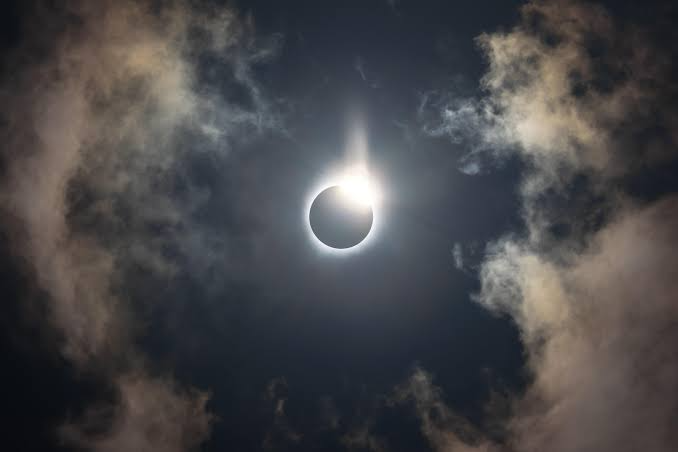
We have watched plenty of travel booms unfold over the years, driven by a viral destination or a falling airfare, but nothing quite prepares you for the particular energy of a sky event that will never happen the same way again. On August 12 and 13, 2026, the world witnessed a genuinely rare celestial convergence, a total solar eclipse sweeping across Europe, the Perseid meteor shower peaking under a new moon, and a six planet alignment stretching across the dawn sky, and travelers responded by booking flights and hotel rooms toward Spain, Iceland, and Greenland at a pace the travel industry rarely sees outside of a single blockbuster event, let alone three at once.
A Once in a Lifetime Sky, Not a Marketing Line
It is easy for travel writers to overuse the phrase once in a lifetime, but in this case the description holds up under scrutiny. The August 12 event marked the first total solar eclipse visible from mainland Spain in more than 120 years, with the moon’s shadow crossing northern and eastern Spain shortly before sunset while the sun hung unusually low in the western sky. Totality was visible only inside a narrow path crossing parts of far Arctic Russia, Greenland, Iceland, a small part of Portugal, Spain, and the Balearic Islands, with many other regions experiencing only a partial solar eclipse. In parts of the United States, from Alaska to North Carolina, the eclipse appeared only as a partial event, with the moon taking a small bite out of the sun that varied by location.
What made the date irresistible to skywatchers was not the eclipse alone. The eclipse coincided with a new moon on the same day, and the Perseid meteor shower reached its peak on the night of August 12 into 13 under those same dark, moonless skies. Before dawn, six planets, Mercury, Jupiter, Mars, Saturn, Uranus and Neptune, stretched across the morning sky, adding a third distinct spectacle to a single 24 hour window. We cannot think of another recent date on the astronomical calendar that layered this many rare events on top of each other, and neither, it seems, could the millions of people who decided this was worth crossing an ocean for.
The Numbers Behind the Rush
Booking data from across the travel industry paints a picture of demand that caught even seasoned tourism boards off guard. Hotels.com reported that lodging searches for destinations along the August 12 eclipse path climbed 245 percent year over year. Data from Amadeus showed flight bookings to airports along the eclipse route climbing 25 percent, while hotel occupancy across Spain and Iceland rose 16 percent and average daily room rates jumped 36 percent. Short eclipse trips increased 57 percent, solo travel bookings rose 48 percent, and tiny villages along the path of totality began preparing for thousands of visitors, with eclipse packages in Mallorca reportedly reaching as high as 200,000 dollars.
Public appetite for this kind of travel was already building well before the numbers came in. A Booking.com survey of 27,000 travelers found that 62 percent of respondents were considering a trip to a dark sky destination, a figure that helps explain why this particular date became such a magnet for international bookings. We think that statistic captures something worth sitting with, a genuine hunger among travelers for experiences that cannot be replicated on a screen, no matter how many people post about them online.
Spain Leans Into the Moment
Spain’s official tourism board built an entire Eclipse Hunters section devoted to the country’s upcoming eclipses, and the path of totality crossed a wide section of northern Spain, reaching cities including A Coruña, Oviedo, Santander, León, Bilbao, Zaragoza, Valencia and Palma. Spain marketed the eclipse, meteor shower, and planetary alignment together as a single astrotourism draw, recognizing that travelers were not planning around one event but around the rare overlap of all three. For a country with as much sun soaked coastline and cathedral studded history as Spain, building a national campaign around a few minutes of daytime darkness says something about how seriously the tourism sector now takes celestial events as a genuine economic driver, not a novelty.
Iceland and Greenland Draw the Purists
For travelers chasing the longest possible experience of totality, Iceland offered something Spain could not match. The longest duration of totality anywhere along the path, off the western coast of Iceland, reached 2 minutes and 18 seconds. In Reykjavík specifically, totality lasted one minute, beginning at 17:48:18 GMT, a window travel planners encouraged visitors to check precisely using apps built for eclipse timing, since local terrain and weather could easily obscure the view.
Greenland, meanwhile, offered something closer to a polar expedition than a conventional sightseeing trip. Travelers seeking a more immersive experience could join a Greenland polar expedition with fjords serving as the eclipse backdrop, one of several distinctive ways offered to experience this particular eclipse. NASA solar physicist Dr. Michael Kirk captured why location mattered so much to serious eclipse chasers, noting that every eclipse is unique because the geography of where a viewer stands genuinely shapes and personalizes the experience.
A Sky That Kept Giving After Sunset
For travelers who stayed put once the sun reappeared, the night sky had more waiting. Once darkness fell, the Perseids took over, and northern Spain was considered probably the best overall choice for viewing them, since locations north of about 60 degrees latitude, including Iceland and Greenland, were poor choices for the meteor shower due to the brightness of the August sky at those latitudes. The Perseid meteor shower is considered one of the best annual meteor showers both because it produces a high volume of meteors and because it peaks around August 12 and 13, making the late night viewing more tolerable during warm summer nights than the same vigil would be in the middle of winter. Perseids are also known for producing fireballs, extra bright, dramatic meteors that leave glowing trails streaking across the sky.
Dr. Kirk added a detail that we suspect will be recounted by eclipse chasers for years, saying it would even be possible to see some bright meteors streak through the sky during totality itself, a genuinely rare overlap between two separate celestial phenomena occurring within the same brief window of darkness.
What This Surge Tells Us About Travel’s Future
We see this eclipse rush as part of a broader pattern rather than an isolated event. Two years after millions of people traveled to see the 2024 total solar eclipse across North America, travelers did it again, this time centering the rush on Spain and Iceland instead. Astrotourism has moved from a niche hobby practiced by dedicated eclipse chasers into a mainstream travel category capable of reshaping hotel occupancy and flight demand across entire regions, and organizations like NASA continue to serve as a trusted reference point for skywatchers planning around these events through resources such as its own eclipse tracking and skywatching guidance.
What stays with us most, though, is not the booking percentages or the record breaking hotel rates. It is the image of tiny villages along a Spanish mountain ridge or an Icelandic fjord suddenly filled with strangers from around the world, all of them standing still together, necks tilted back, waiting for the same few minutes of darkness to arrive. Celestial events like this one remind travelers that some experiences cannot be rescheduled, cannot be streamed with the same impact, and cannot be recreated once the moment passes. For everyone who made the journey to Spain, Iceland, or Greenland this August, that fleeting alignment of sun, moon, planets, and shooting stars will likely remain one of the more vivid travel memories of the decade.