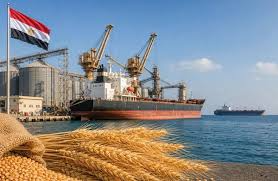
We keep coming back to a simple, uncomfortable image this week, grain silos sitting full while ships sit empty at anchor, waiting for a corridor of water that has effectively become a battlefield. On August 13, 2026, disruptions to agricultural export routes across the Black Sea and Middle Eastern maritime corridors pushed international trade bodies into emergency discussions aimed at securing global wheat and staple crop supplies, and the urgency in those conversations is not hard to understand once you look at what is actually happening on the water.
A Corridor Under Direct Attack
Russia and Ukraine, together responsible for close to a third of projected world wheat exports for the 2026/27 season, have intensified strikes against each other’s agricultural export infrastructure, and the numbers coming out of that escalation are startling even for a region that has weathered years of disruption. Ukrainian drone strikes halted operations at grain terminals in Novorossiysk this week, and Russian August loadings are tracking near 2.5 million metric tons, under half the five year seasonal pace and the weakest August total since the 2016 and 2017 marketing season. Ukraine’s month to date shipments of 201.7 thousand metric tons are down 76 percent compared with the same period last year, with the deepwater corridor effectively closed since July 22 and alternative Danube and European solidarity lanes moving perhaps half a million metric tons a month against the roughly 7 million metric tons the corridor once handled.
Kyiv has had to rewrite its own expectations for the season entirely. Ukraine’s Agriculture Ministry now estimates the country could export approximately 29.6 million tons of agricultural products during the 2026/27 marketing year, less than half of an earlier forecast of 64.4 million tons, with wheat exports facing an especially significant hit, falling an estimated 53 percent to 8.3 million tons. Ukraine’s Agriculture Minister Taras Vysotskyi told Reuters that alternative routes would not reach full capacity until the end of August and could handle only about half the volume normally shipped through Black Sea ports. We find it hard to read that timeline without thinking about the farmers standing over harvests they cannot move, watching storage capacity shrink while trucks and rail cars simply cannot substitute for what a deepwater port once handled in a single week.
Russia’s Own Exports Are Not Escaping the Damage
It would be a mistake to assume this crisis only threatens one side of the conflict. Russia, the world’s single largest wheat exporter, is watching its own shipping capacity buckle under the same pressure. Agricultural consultancy SovEcon projects Russia will export between 3 million and 3.4 million metric tons of wheat this month, well below the five year August average of 5 million tons and potentially marking the lowest August total since the 2016 and 2017 agricultural season. Independent consultancy ProZerno forecasts that overall grain exports will fall to nearly 2.5 million metric tons amid severe congestion across the Black Sea and the Sea of Azov. Russian strikes and heightened security risks around Ukraine’s key Black Sea ports of Odesa, Chornomorsk and Pivdennyi have led many shipowners to suspend calls entirely, sharply curtailing one of the world’s main agricultural export corridors.
Longer term projections are sliding too. The Institute for Agricultural Market Studies lowered its forecast for Russia’s overall 2026 grain harvest from 140 million to 138.5 million metric tons, while reducing its estimate for total export capacity in the 2026/27 season from 61.5 million to 60 million tons. When both of the world’s dominant wheat suppliers are simultaneously scaling back forecasts within the same week, the ripple effect stops being a regional shipping story and becomes a genuine global food security concern.
The Middle East Adds a Second Pressure Point
Grain markets rarely get hit by a single shock at a time, and this month proves that pattern again. The latest escalation in the Black Sea is creating another pressure point for commodity markets already coping with disruptions to major shipping routes in the Middle East. Continued disruptions could also damage other agricultural exports from Ukraine, including maize and sunflower oil, as well as Russian fertilizer exports such as urea and other nitrogen fertilizers, phosphate, and potash, a particular concern due to the continued closure of the Strait of Hormuz and Russia’s prominence as a fertilizer supplier. That layering matters because fertilizer scarcity does not just raise costs for the current season, it threatens yields for the season after that, compounding a shortage that has not even fully played out yet.
Weather has not offered any relief either. The increased tensions in the Black Sea coincide with a decline in global wheat crops due to drought, and the U.S. Department of Agriculture now estimates that combined production among the top seven wheat exporters, accounting for about 84 percent of the total, will be down 11 percent for the 2026/27 marketing year, while wheat exports are estimated to decline 7 percent from last year’s level. As a result, wheat prices have increased almost 25 percent above their January 2026 levels, reaching their highest levels in two years. We think that price trajectory tells its own quiet story, one that plays out far from any trading floor, in markets and bakeries in import dependent countries where a jump like that translates almost immediately into more expensive bread on a family’s table.
Why Trade Bodies Are Meeting Now
International commodity markets have already registered the shock. US wheat futures jumped to their highest level in more than a week as disruptions to shipping in the Black Sea raised the prospect of supply shortages from the crucial grain growing region, with intensified attacks by both sides on grain infrastructure and vessels renewing concerns over the reliability of shipments. A United Nations official was blunt about the wider fallout, stating that the consequences of this escalation are already visible across global agricultural markets.
Those are precisely the conditions that push trade bodies, agricultural ministries, and humanitarian organizations toward emergency coordination. Groups tracking global food markets, including the International Food Policy Research Institute, have been documenting how quickly volatility from conflict, drought, and shipping disruption can stack on top of each other, and their analysis has become a reference point for policymakers trying to gauge how far this shock could spread. Import dependent nations across North Africa, the Middle East, and South Asia are watching closely, since even modest disruptions to Black Sea flows have historically translated into outsized price swings for countries that rely heavily on imported wheat to feed their populations.
The Human Stakes Behind the Trade Data
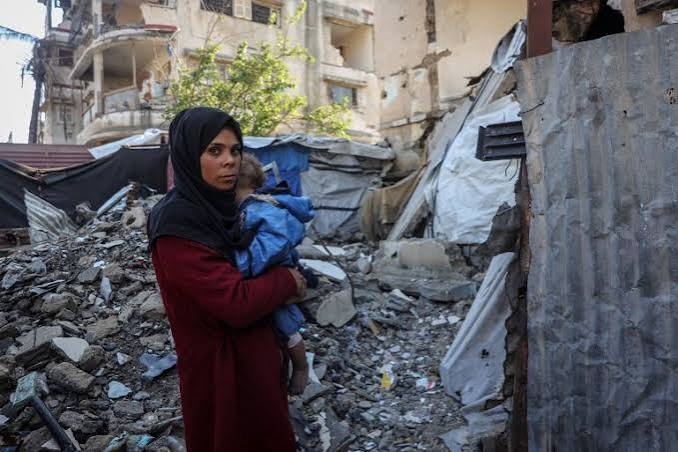
We keep returning to the people standing at either end of this supply chain, because it is easy for a crisis measured in metric tons and futures prices to feel abstract. On one end sits a Ukrainian farmer who has spent months growing a crop now facing the real possibility of storage overflow, with harvest already 49 percent complete at 26.1 million metric tons and potential storage overflow above 11 million metric tons by early November if export routes do not reopen. On the other end sits a family in a wheat importing country watching grocery prices climb because a shipping lane thousands of miles away has become too dangerous for vessels to cross.
Trade bodies meeting this week face a narrow set of tools, alternative shipping corridors, emergency export financing, coordinated release of strategic grain reserves, and diplomatic pressure aimed at securing safe passage for agricultural vessels. None of those options offer a quick fix. Analysts monitoring the region caution that military claims, casualty figures, port status and market prices in an active conflict can change rapidly, and that forward looking scenarios remain analysis rather than prediction. What does seem certain, based on the trajectory of the past several weeks, is that global food security is no longer a background concern for trade negotiators. It has moved to the center of the table, and we expect it to stay there until shipping lanes through the Black Sea and the wider Middle East find a measure of stability that has, so far this year, remained frustratingly out of reach.