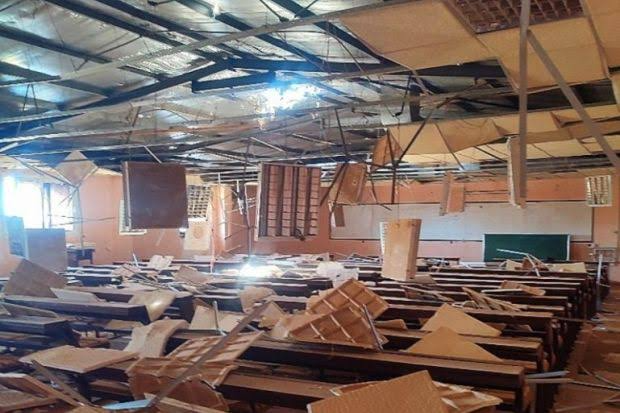
After weeks of sustained protests on campuses from Madrid to Mumbai, a coalition of major international universities announced on July 2, 2026 that they will standardize remote and hybrid technology platforms to safeguard instructional continuity during periods of political unrest. I report from the intersection of activism and education technology to explain what this rapid shift means for students, faculty, and the wider purpose of higher education.
Why universities moved so quickly
Universities have long balanced commitments to free expression with duties to protect students and maintain academic programs. What changed in recent months was the scale and persistence of protests sparked by multiple geopolitical crises. Thousands of students staged walkouts, occupation of administrative buildings, and teach outs that made in person instruction impossible on many campuses. The immediate challenge for provosts and registration offices was practical and urgent. How do you ensure degree progression, lab continuity, and assessment fairness when lecture halls are closed or access is restricted for safety reasons?
Universities adopted or expanded standardized remote learning stacks so that instruction could continue uninterrupted while on campus protests proceeded. Standardization means common learning management systems, shared video conferencing standards, centralized authentication, and unified protocols for lab virtualization and remote access to research resources. The move was not purely technological. It reflected administrative pressure to reduce variability in course delivery and to provide a clear, equitable path for students who could not attend in person.
What standardization looks like in practice
The new model centers on several coordinated elements. First, every course syllabus must include a remote contingency plan that details how lectures, seminars, and assessments will proceed if in person sessions are canceled. Second, universities are investing in virtualized labs, remote desktop services, and cloud credits so that students in engineering, computer science, and the natural sciences can continue hands on work when physical facilities are inaccessible. Third, institutions are scaling unified authentication and single sign on so students can move across services without repeated registration steps.
Faculty training is another pillar. Professors are required to complete short courses on hybrid pedagogy, equitable grading practices, and digital accessibility. The goal is not to replace campus education but to make it resilient to disruption. For students who rely on campus facilities for internet access, quiet study, or disability accommodations, institutions promise enhanced support services, including distributed study hubs and loaner equipment programs.
Voices from the ground
At a late night town hall at a large public university I visited, a student described the sensory contrast between campus protests and remote classes. She said the air vibrated with chanting outside while her laptop screen showed a muted grid of faces. That gulf captures the emotional complexity of the transition. For many protesters, the physical occupation of space is itself a pedagogical act, a way to demand curricular change and institutional accountability. Moving instruction online risks sidelining that embodied dimension of dissent even as it preserves academic continuity.
Faculty reactions have been mixed. Some see standardized remote platforms as a necessary infrastructure that benefits students with caregiving responsibilities, long commutes, or health vulnerabilities. Others worry that administrative mandates will flatten pedagogical creativity and privilege measurable compliance over deep learning. Several tenured professors told me they welcomed the new cloud based lab tools because they allow complex simulations that were previously limited by classroom schedules. Adjunct faculty raised concerns about monitoring, workload, and the adequacy of compensation for learning new platforms.
Equity and access concerns
Equity sits at the center of the debate. Remote standardization can widen access for some while creating new exclusions for others. Students without reliable broadband, private study space, or modern devices face real barriers when courses pivot online. Universities are responding by expanding device loan programs, allocating emergency broadband stipends, and establishing local partner sites with supervised study pods. Still, these measures are often reactive and unevenly distributed across regions and institutions.
Accessibility advocates pressed for universal design principles to be embedded in every standardized platform. Captioning, screen reader compatibility, and asynchronous learning options are now mandatory elements of course design in many universities. That requirement moves equity beyond an afterthought toward a baseline condition for resilience.
Academic freedom and the politics of continuity
The policy shift raises thorny questions about academic freedom and the role of higher education. Protesters argue that universities cannot be neutral bystanders when geopolitical crises affect their communities. Administrators counter that uninterrupted instruction preserves students rights to complete courses and graduate on time. I heard a historian frame the tension this way: the campus is a political forum and a workplace for learning. Neither identity can be erased; the challenge is to govern both fairly.
To strike that balance, several universities established joint oversight committees including student activists, faculty representatives, and administrators to review any restrictions on campus gatherings while remote provisions were enacted. Those committees aim to avoid ad hoc decisions that could suppress protest under the guise of continuity. The committees also developed protocols that prioritize transparency and allow rapid appeals when students or faculty believe remote policies are being misused to limit expression.
Implications for research and technical disciplines
Research workflows posed unique challenges. Wet labs, fabrication facilities, and high performance computing clusters cannot be fully virtualized. Institutions are creating tiered access systems where essential experimental work continues under strict safety and equity criteria while data analysis, modeling, and literature work move online. Shared instrument scheduling, expanded off peak access, and portable kits for certain laboratory tasks help preserve research momentum without compromising safety.
Computer science departments accelerated adoption of containerized environments and cloud based GPU allocations so machine learning research can persist remotely. That technical work required new procurement strategies and inter university agreements to share scarce compute resources during crises. I spoke with a systems administrator who said the rapid scaling was a technical triumph but also exposed brittle supply chains for specialized equipment.
Longer term consequences for higher education
Standardized remote and hybrid platforms are likely to remain part of university practice beyond the immediate protest cycle. The infrastructure investments represent sunk costs that can be repurposed for flexible learning models, international collaboration, and lifelong education pathways. Yet these expansions will also reshape budgeting priorities, faculty workload norms, and student expectations about when and how instruction occurs.
Policymakers and accreditation bodies will play a role in settling new norms. Clear guidance on learning outcomes, proctoring standards, and the recognition of hybrid credits will reduce uncertainty for employers and graduate programs. Institutions that enforce strong equity safeguards and clear governance models are more likely to preserve trust while benefiting from technological resilience.
What students and faculty can do now
Stakeholders can take practical steps. Students should document access limitations and seek accommodations through disability services. Faculty should incorporate asynchronous elements and low bandwidth alternatives in syllabi. Both groups should insist on transparent grievance procedures and participate in oversight committees to ensure that emergency policies are not weaponized against dissent.
Universities must also measure outcomes. Collecting data on course completion, learning retention, and equity metrics will determine whether standardized platforms truly serve learners or merely sustain enrollment numbers during disruption.
Where to learn more
For empirical analysis of remote learning and equity, readers can consult resources from UNESCO and research from the Learning Policy Institute that examine how digital access and pedagogy affect student outcomes. These bodies offer evidence based recommendations that universities can adapt to local contexts.
UNESCO education policy resources and Learning Policy Institute research provide authoritative guidance on digital equity and instructional resilience.