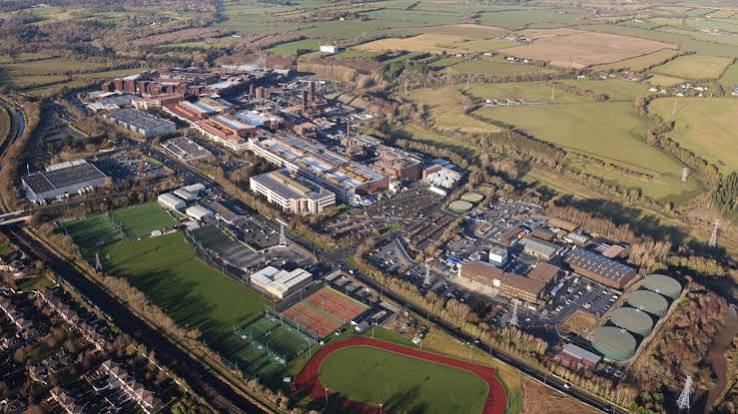
On July 13 2026 Intel unveiled a $5.7 billion capital expansion in Ireland designed to scale AI driven semiconductor chip manufacturing as global demand for advanced processors surges. The move positions the Leixlip campus as a strategic hub for next generation AI silicon and signals a long term commitment to European production capacity. For workers, suppliers, and communities the announcement carries immediate implications for jobs, skills, and the rhythm of life around one of the country’s most important technology sites.
What the investment covers and why it matters
The funding is earmarked for new cleanroom space, advanced packaging lines, and test facilities that support AI workloads ranging from data center accelerators to edge inference chips. Intel described the expansion as a response to spiking orders from cloud providers, enterprise customers, and AI application developers who need reliable supply and shorter lead times. By adding capacity in Ireland the company aims to diversify its global footprint and reduce bottlenecks that have constrained shipments during previous demand cycles.
The timing reflects broader shifts in the semiconductor industry. AI models are growing in size and complexity, which drives demand for chips that can handle massive parallel computation with high memory bandwidth. Packaging technologies that stack dies and connect them with ultra fine interposers are becoming critical to performance. Investing in these capabilities now allows Intel to capture value across the stack and to offer customers integrated solutions that combine compute, memory, and networking in a single package.
Jobs, skills, and the human side of the expansion
Construction will begin within months and will create thousands of temporary roles in civil works, electrical fit out, and specialized cleanroom installation. Over the longer term the site will hire engineers, technicians, and operators to run new lines and support advanced packaging processes. For local residents the news brings a familiar mix of hope and pressure. Hope for stable careers and pressure on housing, schools, and transport as the workforce grows.
Intel said it will work with local colleges and training providers to build pipelines for the skills needed on site. Apprenticeships in mechatronics, process control, and cleanroom operations are expected to expand. Short courses in data analysis and predictive maintenance will help existing staff transition to more automated environments. The emphasis is on practical training that leads directly to employment and on partnerships that keep curricula aligned with the equipment and methods used on the floor.
Voices from the community and the factory floor
On a bright morning outside the Leixlip campus a long time supplier described the cadence of shifts changing and the hum of ventilation that never stops. He spoke of the pride that comes from building components that end up in servers and devices used around the world. A young technician shared her excitement about working with new packaging tools that require steady hands and sharp attention to detail. For many the expansion is not abstract. It is extra shifts, new uniforms, and the chance to plan for a family with a steady paycheck.
Community leaders noted the need for balanced growth. They called for investment in housing, public transport, and healthcare to match the influx of workers. They also highlighted the opportunity to attract downstream suppliers and service firms that can create a broader industrial cluster. The goal is to ensure that the benefits of the expansion are felt beyond the factory gates and that growth does not outstrip local capacity.
Supply chain and infrastructure implications
A project of this scale touches many sectors. Construction firms will source materials and equipment from across Europe. Utilities will need to plan for higher power and water demand. Logistics providers will adjust routes and schedules to handle increased inbound and outbound freight. Each link in the chain must be ready to avoid delays that could push back commissioning and ramp up.
Intel said it will work with government agencies and utilities to secure reliable energy and water supplies. The company is exploring on site generation and storage options to improve resilience and reduce emissions. Water recycling systems will be expanded to minimize freshwater use. These measures are not only environmental but operational. Stable utilities are essential for a fab that runs 24 hours a day and cannot tolerate interruptions.
Strategic context and global competition
The investment arrives as governments around the world are pouring funds into semiconductor capacity to secure supply chains and reduce dependence on single regions. Incentives and policy support have accelerated fab construction and encouraged companies to locate advanced processes closer to key customers. Ireland’s role in this landscape is shaped by its skilled workforce, regulatory environment, and connectivity to European markets.
Intel’s expansion also reflects internal strategy. The company is pushing to regain technology leadership and to offer customers a full suite of AI solutions. By adding advanced packaging in Ireland it can combine chips from different nodes and partners into high performance modules. This flexibility is a competitive advantage in a market where customers want tailored solutions and fast time to market.
Resources and further context
For background on semiconductor manufacturing and advanced packaging see resources from the Semiconductor Industry Association and the European Commission pages on chips and digital sovereignty. These institutions provide frameworks and policy context that help explain the strategic importance of investments like this one.
What to watch next
Monitor permitting timelines and construction milestones as the project moves from announcement to ground breaking. Track hiring notices and training partnerships that indicate the pace of workforce development. Watch for customer announcements that signal which AI products will be supported by the new capacity. The success of the expansion will be measured not only by the speed of build out but by the quality of jobs created and the reliability of supply that results.
Would you like a concise timeline of expected construction and hiring phases or a short explainer on how advanced packaging improves AI chip performance and why it is in high demand