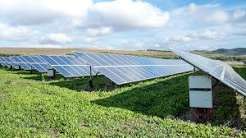
On August 3, 2026, agrivoltaics moved closer to the mainstream, and with it came a simple but powerful idea: the same piece of land can produce both food and electricity. New regulatory approvals and fresh trial results have given dual use solar projects a stronger footing, showing gains in energy capture and crop yield that could reshape how homeowners, farmers, and rural communities think about solar power.
A wider market for one field
For years, solar debates have often been framed as a choice between panels and farmland. That argument is beginning to soften. Agrivoltaic systems, which place solar arrays above or alongside working fields, are now proving that careful design can allow crops to grow under partial shade while solar panels collect power overhead. The result is not a compromise so much as a second harvest, one measured in kilowatt hours as well as bushels, berries, or grazing value.
The latest approvals matter because policy often decides whether promising technology remains a pilot or becomes a practical option. Once regulators recognize dual use systems as legitimate agricultural and energy assets, financing becomes easier, landowners gain more confidence, and local officials have clearer rules to follow. That is how a promising concept turns into a repeatable model.
Public interest has also sharpened as households look for ways to lower bills and farmers look for ways to stabilize income. A solar setup that helps a farm remain productive while feeding nearby homes and the wider grid has a very different appeal from a conventional ground mounted array sitting alone on open land. It feels less like a takeover and more like cooperation.
What the trials are showing
Recent field trials have pointed to stronger energy capture and, in some cases, healthier crop performance under the right conditions. That combination is the heart of the agrivoltaic case. Panels can reduce heat stress, slow evaporation, and create a more forgiving microclimate for certain crops, especially those that do well with partial shade. At the same time, bifacial modules and improved mounting systems can capture more reflected light and make better use of the available sun.
Results do not suggest that every crop benefits equally. Some staples still demand more direct sunlight than others, and design details matter enormously. Panel height, spacing, tilt, soil type, irrigation method, and crop choice all influence whether the land performs better as a dual use site or as a conventional field. Still, the direction of the evidence is encouraging, especially for vegetables, berries, pasture, and pollinator friendly plantings.
Researchers and developers have been especially attentive to the way shade changes a growing environment. In summer heat, a canopy can spare plants from stress and help farmworkers avoid exhausting conditions in the field. The same structure that generates electricity can also lower the temperature around a crop row or a grazing lane, which is why agrivoltaics increasingly looks less like a niche experiment and more like climate adaptation in plain sight.
Key benefits now drawing attention
- Higher land productivity from one parcel producing food and electricity.
- Better moisture retention and lower heat stress for certain crops.
- New income streams for farmers through power sales or site leases.
- Improved local acceptance when solar is tied to active agricultural use.
Why regulators are moving
One of the most important shifts in 2026 has been regulatory clarity. Agrivoltaic projects often stalled in the past because they sat awkwardly between agriculture policy and energy permitting. That uncertainty could scare off lenders and slow approvals. New rules are beginning to reduce that friction by setting standards for what counts as dual use, how crop performance should be measured, and what types of installations deserve support.
That legal recognition may sound technical, but it shapes the entire market. A project that counts as agricultural land can preserve tax treatment, avoid conversion penalties, and secure local buy in more easily. In practical terms, a clear rulebook is what allows a farmer to ask, with confidence, whether a solar investment will still let the land remain a farm.
For readers wanting a broader view of the research and policy landscape, the National Renewable Energy Laboratory has become a central reference point for agrivoltaics research in the United States, while the International Energy Agency tracks how solar deployment fits into wider energy transition planning.
What dual use means at home
The phrase residential agricultural hybrid solar may sound like a niche term, but the practical meaning is broad. For homeowners with acreage, hobby farms, orchards, or small livestock operations, agrivoltaics can help turn a single property into a more resilient energy site. Instead of placing panels on a separate lot or sacrificing productive ground, a family can potentially keep farming while offsetting household consumption.
That matters in rural communities where electricity costs, weather volatility, and land pressure all hit at once. A dual use system can support refrigeration, irrigation pumps, water heating, or EV charging for the home, while the land beneath continues to serve a crop or pasture. For some owners, the value lies in steady income. For others, it is the reassurance that a farm can generate cash flow without giving up its agricultural identity.
The emotional case is easy to miss in policy discussions, but it is real. Farmers are stewards, not just operators. Many want to see their land keep working and their children inherit something still alive and useful. A well designed agrivoltaic site can feel less like a surrender to utility scale development and more like a continuation of the farm’s story.
What crops and sites work best
Not every farm is a fit, and that honesty is part of the technology’s credibility. Shade tolerant vegetables, certain berry varieties, managed grazing, and pollinator habitats have shown some of the strongest promise. In many cases, livestock under panels can be especially practical because animals do not need wide turning radii the way harvest machinery does, and the panels can reduce heat stress during hot months.
Row crops remain more complicated. Fields planted in corn, soybeans, or wheat may need wider spacing, taller structures, or modified layouts to avoid hurting yields or equipment access. That means agrivoltaics is not a universal replacement for existing solar or agriculture models. It is a tool, and like any tool, it works best in the right hands and the right setting.
What makes this moment different is that the project design conversation has become much more specific. Developers are no longer asking only whether a solar farm can fit on agricultural land. They are asking what the crop needs, how the soil behaves, how shade moves through the day, and whether the farmer wants electricity as a primary income stream or a supplemental one. Those are healthier questions, because they start with the land rather than the hardware.
The economics behind the optimism
For farmers and landowners, the appeal often comes down to risk management. Agricultural income can be unpredictable, shaped by weather, disease, commodity pricing, and labor costs. Solar, by contrast, can offer long term revenue with a much steadier profile. When the two uses are combined thoughtfully, the land may generate a more balanced financial return than either activity alone.
That does not mean agrivoltaics is cheap. Elevated structures, customized racking, and careful site design can raise upfront costs. Permitting can still be slow. Insurance and financing can be more complex than for a standard solar project. Yet the market is beginning to respond because the long term case is stronger than it was even a few years ago, especially where crop losses from heat or drought are rising.
There is also a broader social economy at work. Communities often resist solar projects when they fear losing farmland or seeing rural landscapes converted into industrial sites. Agrivoltaics can ease that conflict by keeping production visible on the ground. The land still looks and behaves like working land, not a fenced off field of steel and glass.
What to watch next
The next phase will likely hinge on standards, financing, and proof at scale. Regulators will want measurable crop data, utility planners will want reliable output, and farmers will want evidence that the promised gains hold up outside carefully managed trials. If those pieces align, agrivoltaics could move from headline novelty to ordinary infrastructure, especially in regions where water stress and land competition are worsening.
We are also likely to see more public attention on rural resilience. Solar energy that supports the home, the farm, and the local grid is an unusually attractive idea because it speaks to three concerns at once: affordability, food security, and climate adaptation. That combination gives agrivoltaics a human story as well as a technical one, and that may be the reason it is gaining ground now.
The field is still evolving, and it should be treated with the discipline any serious energy or agricultural policy deserves. But the signal from August is hard to ignore. Dual use solar is no longer a fringe idea. It is becoming a practical answer to one of the most stubborn questions in the clean energy transition: how do we power more homes without asking farms to disappear?