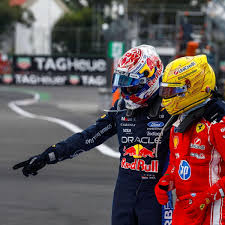
Max Verstappen delivered a commanding performance in final practice at the 2026 São Paulo Grand Prix on November 7, setting the fastest lap at the famous Interlagos circuit while several championship contenders faced significant starting grid penalties. The Red Bull driver edged Mercedes newcomer Kimi Antonelli by just 0.025 seconds, demonstrating impressive pace ahead of qualifying. However, engine related penalties involving Verstappen and both Ferrari drivers added another layer of uncertainty to an already competitive weekend, leaving teams with difficult strategic decisions ahead of Sunday’s race.
The session provided an exciting glimpse of the competitive order, with Mercedes, McLaren, Red Bull and Ferrari all showing promising speed. Yet the fastest practice time was only part of the story. With major power unit changes affecting several leading drivers, the starting positions promised to look considerably different from the final practice classification.
Verstappen Finds the Pace at Interlagos
Verstappen secured the top position in Free Practice 3 with a fastest lap of 1 minute, 11.622 seconds. Driving for Red Bull, the Dutchman finished just ahead of Antonelli, who recorded 1 minute, 11.647 seconds for Mercedes.
The exceptionally small gap between the two drivers demonstrated how competitive the leading teams had become. McLaren’s Lando Norris completed the top three with a time of 1 minute, 11.753 seconds, while Mercedes teammate George Russell finished fourth in 1 minute, 11.806 seconds.
Charles Leclerc placed fifth for Ferrari, recording 1 minute, 11.896 seconds. Oscar Piastri followed in sixth for McLaren, ensuring that the leading four teams occupied the first six positions in a tightly contested session.
For Verstappen, the result offered encouragement after a challenging weekend in which Red Bull needed to evaluate its performance across different tire compounds and changing track conditions. However, the driver also reported heavy steering when turning right and experienced a moment outside the track at Turn 4 while attempting to improve his lap time.
Despite those concerns, his final performance confirmed that Red Bull had sufficient speed to remain competitive. The bigger question was whether that pace could translate into a strong race result given the penalties awaiting him.
Ferrari Faces Engine Problems and Significant Grid Penalties
Ferrari entered the final practice session with considerable pressure surrounding its power unit performance. Both Lewis Hamilton and Charles Leclerc had exceeded the permitted seasonal allocation for internal combustion engines, resulting in 10 place grid penalties for each driver.
The situation was particularly difficult for Hamilton, whose practice session was interrupted by technical concerns. The seven time world champion reported unusual vibrations and excessive engine braking before returning to the garage. After heading back onto the circuit, he reported smoke inside the cockpit and concerning engine noise, eventually ending his session with approximately 25 minutes remaining.
Hamilton completed only seven laps and finished 12th in the practice classification with a time of 1 minute, 12.833 seconds. His limited running time left Ferrari with additional questions about the car’s reliability and preparation for qualifying.
Leclerc experienced a more productive session, completing 30 laps and finishing fifth. His performance suggested that Ferrari retained competitive speed, although the 10 place penalty would complicate his chances of securing a favorable starting position.
For the Italian team, the priority was balancing performance with reliability. A competitive qualifying result would still matter, but the penalties meant both drivers needed to approach the weekend with a carefully planned race strategy.
Multiple Power Unit Penalties Change the Competitive Picture
Ferrari was not the only team dealing with power unit restrictions. Verstappen also faced a substantial cumulative grid penalty following changes to multiple components of his Red Bull power unit.
The Dutchman was set to receive a 30 place grid penalty, placing him in a difficult position regardless of his qualifying performance. Mercedes driver Russell faced a five place penalty following fresh engine components, while Cadillac’s Sergio Perez was also expected to start from the back after several power unit changes.
These penalties highlighted the importance of managing Formula One’s technical regulations throughout a demanding season. Teams must balance performance improvements against component allocation limits, reliability concerns and the sporting consequences of introducing additional parts.
For drivers, the challenge is especially frustrating when strong practice or qualifying performances cannot translate directly into favorable starting positions. A driver might deliver an exceptional lap but still begin the race several positions behind competitors who qualified more slowly.
2026 São Paulo Grand Prix Final Practice Results
The leading positions in Saturday’s final practice session reflected an extremely close contest among the major Formula One teams.
- 1. Max Verstappen: Red Bull, 1:11.622.
- 2. Kimi Antonelli: Mercedes, 1:11.647.
- 3. Lando Norris: McLaren, 1:11.753.
- 4. George Russell: Mercedes, 1:11.806.
- 5. Charles Leclerc: Ferrari, 1:11.896.
- 6. Oscar Piastri: McLaren, 1:11.935.
- 7. Arvid Lindblad: Racing Bulls, 1:12.060.
- 8. Liam Lawson: Racing Bulls, 1:12.171.
- 9. Isack Hadjar: Red Bull, 1:12.213.
- 10. Gabriel Bortoleto: Audi, 1:12.644.
The complete classification showed how little separated the leading contenders. Verstappen held an advantage of only 0.274 seconds over fifth placed Leclerc, suggesting that small differences in tire preparation, driving precision and setup could have a considerable effect during qualifying.
The full session classification is available through the FIA São Paulo Grand Prix results.
Interlagos Weather Adds Another Challenge
Weather conditions introduced another important consideration as final practice came to an end. Rain began falling over the Interlagos circuit shortly after the session, raising questions about the conditions teams might encounter during qualifying.
The Autódromo José Carlos Pace is known for its challenging layout, elevation changes and unpredictable weather. Rain can significantly alter the balance of a Formula One car, making braking zones more difficult and reducing available grip through important corners.
For drivers already facing grid penalties, changing conditions could create both opportunities and additional risks. A wet qualifying session rewards confidence, precision and the ability to judge grip levels under pressure. It can also produce unexpected results when drivers from smaller teams find the right conditions at the right moment.
Teams therefore needed to consider more than outright speed. Tire selection, timing, visibility and communication between drivers and engineers could all influence the final qualifying order.
Why the Starting Grid Could Look Very Different
Saturday’s practice results provided a useful indication of performance, but the penalties meant that the eventual starting grid would not necessarily reflect the fastest drivers at the front.
Verstappen’s 30 place penalty created a particularly difficult situation for Red Bull. Even if he secured a strong qualifying result, his starting position would be affected by the cumulative punishment. Ferrari faced similar difficulties with Hamilton and Leclerc, while Russell also needed to account for his five place demotion.
This situation opened opportunities for drivers from teams such as McLaren, Mercedes and Racing Bulls to secure valuable starting positions. Norris and Antonelli had demonstrated competitive pace, while other midfield drivers could potentially benefit from penalties affecting the established frontrunners.
For spectators, this combination of close lap times, technical penalties and uncertain weather made the qualifying session particularly significant. Rather than simply rewarding the fastest car, the weekend was becoming a test of preparation, adaptability and strategic judgment.
What Verstappen and Ferrari Must Deliver on Race Day
Verstappen’s practice performance offered Red Bull an encouraging starting point, but recovering positions during Sunday’s 71 lap race would require careful tire management and effective overtaking. Interlagos provides opportunities for wheel to wheel racing, particularly around the main straight and the Senna S section, although traffic and changing weather can make overtaking complicated.
Ferrari also needed to find answers to its reliability concerns. Leclerc’s fifth place suggested that the team had sufficient speed to compete, but Hamilton’s interrupted practice session created additional uncertainty. Both drivers would need a competitive race strategy to limit the damage caused by their penalties.
Meanwhile, Mercedes and McLaren had reasons to remain optimistic. Antonelli’s second place and Norris’s third place demonstrated that both teams possessed the pace to challenge for strong qualifying positions. Russell’s fourth place was also encouraging despite his impending penalty.
A Competitive Weekend Awaits at the São Paulo Grand Prix
Verstappen’s fastest lap in final practice established Red Bull as a serious contender at Interlagos, but the broader competitive picture remained complicated. The narrow gaps between the leading drivers, Ferrari’s engine concerns, multiple grid penalties and the possibility of rain created several unanswered questions ahead of qualifying.
As the teams prepared for the next stage of the weekend, attention shifted toward how effectively they could convert practice performance into competitive starting positions. For Verstappen, the challenge was preparing for a recovery drive. For Ferrari, reliability and strategic execution were essential. For Mercedes and McLaren, the opportunity to capitalize on their rivals’ difficulties was becoming increasingly attractive.
The São Paulo Grand Prix once again demonstrated why Formula One is about much more than a single fast lap. Technical regulations, driver ability, weather conditions and race strategy all contribute to the final result. With several leading competitors facing penalties, the November 8 race promised an intriguing contest in which preparation and execution could prove just as important as outright speed.