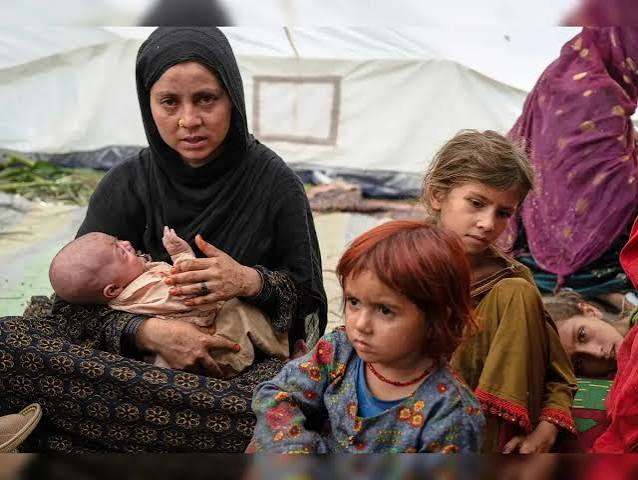
The United States has restored nearly 2 billion dollars in funding to international aid agencies, a move that could steady food assistance and childhood immunization supply chains at a moment when both are under severe strain. The commitment includes support for the World Food Programme and Gavi, and it comes as global humanitarian needs remain high, with hunger and disease still shaping daily life in fragile regions from the Horn of Africa to conflict affected parts of Asia and Latin America.
A major reversal for aid groups
This latest funding commitment matters because it restores a measure of predictability to organizations that depend on large scale public backing to move food, medicine, and vaccines through difficult terrain. The World Food Programme, which relies on donor financing to deliver emergency food and nutrition support, has said that flexible funding helps it act quickly in countries facing acute hunger, natural disasters, and protracted crises. For an agency built on logistics and speed, cash flow is not a bureaucratic detail. It is the difference between a convoy leaving on time and a warehouse waiting for supplies that never arrive.
[wfp](https://www.wfp.org/news/wfp-welcomes-announcement-major-us-contribution-global-hunger-reaches-record-levels)
The World Food Programme’s 2026 funding page shows the United States remains its largest donor this year, with total U.S. contributions already approaching 770 million dollars as of late July. That figure does not capture every recent pledge announced publicly, but it shows how central Washington remains to the agency’s operations. In humanitarian finance, even a partial restoration from a major donor can change what is possible in the field.
[wfp](https://www.wfp.org/funding/2026)
The announcement also reflects a wider recognition that hunger and disease are tightly linked. Food insecurity weakens immune systems, complicates treatment, and leaves children more vulnerable to preventable illness. Restoring support to Gavi, the global vaccine alliance, is therefore not separate from food aid. It is part of the same effort to keep supply chains moving and prevent one crisis from deepening another.
Why food aid funding matters now
The World Food Programme has warned that global hunger remains at record levels, with millions of families in fragile settings at risk of being pushed deeper into severe need. Its 2026 outlook has described a world in which humanitarian demand is running far ahead of available resources. That imbalance creates hard choices on the ground, where agencies often must decide which communities receive help first and how long assistance can continue before supplies run thin.
[wfp](https://www.wfp.org/news/wfp-welcomes-announcement-major-us-contribution-global-hunger-reaches-record-levels)
That is why the restored U.S. money lands with such force. WFP says flexible donor support allows the agency to reach people on the brink of famine, provide nutritional support to mothers and children, and position food in advance of emergencies. In the field, those capabilities are not abstract. They show up as sacks of grain in a loading bay, fortified food in a clinic, and a lifeline for a family waiting out another week of uncertainty.
[wfp](https://www.wfp.org/news/wfp-welcomes-announcement-major-us-contribution-global-hunger-reaches-record-levels)
The organization’s funding snapshot also makes clear how large the need is relative to available resources. As of July 27, WFP reported total 2026 contributions of 3.69 billion dollars, while its broader operational requirements remain much higher. The gap between need and funding is exactly what keeps agencies in a constant state of triage. A restored U.S. commitment does not erase that gap, but it narrows it enough to matter.
[wfp](https://www.wfp.org/funding/2026)
What the restored money can support
According to WFP, the new funding will support early and rapid action in countries prone to natural disasters, as well as lifesaving emergency response and nutrition work in complex humanitarian crises. That means the money can help before a disaster becomes a catastrophe and before food shortages harden into famine conditions. It can also help maintain the supply chain architecture that gets aid from ports and warehouses into the hands of families who need it most.
[wfp](https://www.wfp.org/news/wfp-welcomes-announcement-major-us-contribution-global-hunger-reaches-record-levels)
The agency has specifically pointed to operations in places such as Lebanon, Haiti, and the Democratic Republic of the Congo, where funds can support cash assistance, food supply lines, and emergency nutrition work. Those examples show the broad reach of humanitarian logistics. A single contribution can help a displaced family buy food, sustain a clinic feeding program for malnourished children, or keep transport routes open in a crisis zone.
[wfp](https://www.wfp.org/news/wfp-welcomes-announcement-major-us-contribution-global-hunger-reaches-record-levels)
In practical terms, this kind of support can be felt in small, intimate ways. It can mean a mother no longer has to dilute a child’s meal to make it last another day. It can mean a displaced father can buy rice or beans in a local market instead of waiting for the next ration distribution. It can mean a nurse in a rural clinic still has the supplies needed to treat a child whose body is already weak from hunger.
The immunization connection
The aid package is not limited to food security. It also supports childhood immunization systems through Gavi, which is critical for keeping vaccines moving to the places where they are needed most. Vaccine programs depend on cold chain equipment, transport, procurement planning, and country level delivery networks. When funding stalls, those systems do not simply slow down. They fracture.
That is why the restored support should be seen as part of a broader health security strategy. A child who is undernourished is more vulnerable to infection, and a child who misses routine vaccines faces a higher risk of preventable disease. Food assistance and immunization therefore reinforce each other, especially in communities already stretched by conflict, displacement, or repeated climate shocks. In that sense, the restored funding is not just humanitarian generosity. It is a stabilizing investment in public health infrastructure.
For more context on the World Food Programme’s global funding and operational priorities, the agency’s own announcement on the U.S. contribution explains how the funds are expected to support emergency food and nutrition work. The broader WFP funding dashboard also shows the scale of donor commitments across 2026.
[wfp](https://www.wfp.org/funding/2026)
Why this reversal matters politically
Foreign aid budgets often rise and fall with domestic politics, but the consequences of those changes are felt far from Washington. Restoring nearly 2 billion dollars sends a message that the United States still sees a strategic value in preventing hunger and disease abroad. It also signals that humanitarian funding is not merely charitable spending. It is part of crisis prevention, migration management, and global stability.
When food systems fail, the effects do not stay in one country. Families move, markets weaken, and local tensions intensify. When vaccination systems break down, outbreaks can spread across borders faster than governments can respond. Aid agencies often speak in the language of logistics because logistics are where lives are saved or lost. A restored U.S. contribution gives them more room to work before the pipeline breaks.
That does not mean the funding environment is healthy. WFP and other agencies have warned repeatedly that global needs remain far above available resources, and that donor fatigue has already forced cuts in some operations. The restored money is welcome, but it is still a partial answer to a very large problem.
[reuters](https://www.reuters.com/world/middle-east/wfp-warns-deeper-cuts-gaza-aid-due-donor-fatigue-2026-07-24/)
What aid workers need most
Aid workers usually ask for three things: predictability, flexibility, and speed. Predictability lets them plan months ahead. Flexibility lets them move resources to the places where conditions change fastest. Speed lets them respond before a hunger crisis turns deadly or an outbreak outruns the clinic system. The restored U.S. funding helps on all three fronts, especially because it is directed toward agencies that already have the networks to move quickly.
WFP has said that bilateral funding of this kind is vital in a humanitarian landscape where extreme hunger is destabilizing communities and causing migration, insecurity, and economic loss. That observation rings true because food insecurity is rarely isolated. It affects school attendance, labor capacity, maternal health, and local markets. A full ration can keep a child in school or a family from selling off its last assets. Aid is not a headline. It is often the thin line between survival and collapse.
[wfp](https://www.wfp.org/news/wfp-welcomes-announcement-major-us-contribution-global-hunger-reaches-record-levels)
At the same time, organizations like WFP still face hard choices. Even after major donations, they must decide where to direct supplies, which crises are most urgent, and how to stretch every dollar. That is why the size of the U.S. contribution matters, but so does the timing. When money arrives before pipeline breaks deepen, agencies can act with less waste and less emergency scrambling.
What to watch next
The biggest question now is whether this restored funding will be followed by a longer term commitment or whether it will remain a one time correction. Humanitarian agencies can plan around a known donor pattern. They struggle when funding swings sharply from month to month. If the U.S. wants these programs to stay resilient, consistency will matter as much as total dollars.
Another issue is whether other major donors will follow the same lead. WFP’s 2026 contribution data show a diverse donor base, including the European Commission, the United Kingdom, private donors, Canada, Sweden, Germany, and several others. That spread helps, but no single donor alone can close the gap between the need WFP describes and the resources it has in hand.
[wfp](https://www.wfp.org/funding/2026)
For now, the restored U.S. funding offers relief to agencies that have been operating under severe pressure. It will not end global hunger, and it will not solve vaccine inequity overnight. But it does give aid workers something they have been asking for for months: enough certainty to keep moving, enough resources to keep warehouses open, and enough support to keep food and health supplies flowing to people who cannot wait any longer.