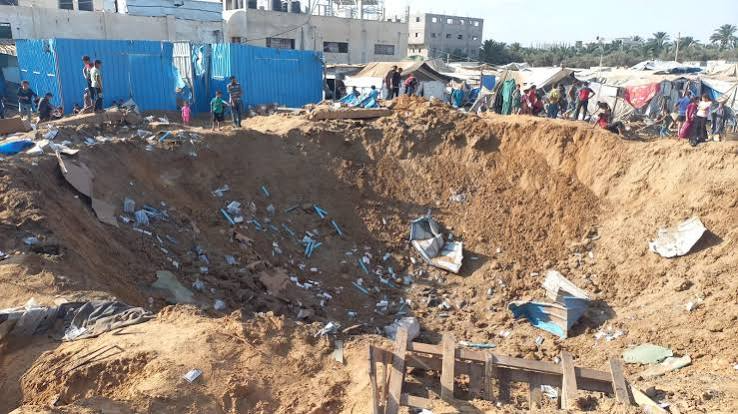
The World Health Organization is again warning that hospitals, clinics and medicine stores are not just part of the war zone. They are being turned into its victims. In a forceful global appeal on August 4, the agency called for an immediate end to military strikes on health facilities after the destruction of essential medicine warehouses in Gaza, saying the right to care cannot survive if the places that provide it are left unprotected.
A plea born from collapsing capacity
The message from WHO carries the weight of a health system under relentless strain. When medicine warehouses are destroyed, the damage goes far beyond bricks, metal shelving and cartons of supplies. It reaches into operating rooms, maternity wards, emergency tents and the hands of nurses who must decide how to ration care when even the most basic treatments are no longer available. WHO has repeatedly warned that health care facilities must never be attacked or militarized, and that call now sounds less like a policy position than a last line of defense.
[middleeastmonitor](https://www.middleeastmonitor.com/20260804-who-demands-protection-for-gaza-health-care-facilities-amid-israeli-attacks/)
In Gaza, the loss of stored medicines can quickly become a loss of life. Antibiotics, pain relief, anesthetics, insulin and trauma supplies are not abstract inventory items. They are the difference between a wound that heals and one that turns septic, between a safe delivery and a fatal complication, between a patient being stabilized and a patient being lost. Once those supplies are destroyed, replacement is not simple, and in a conflict setting it is often painfully slow.
[middleeastmonitor](https://www.middleeastmonitor.com/20260804-who-demands-protection-for-gaza-health-care-facilities-amid-israeli-attacks/)
Why WHO is sounding the alarm now
WHO’s warning comes amid continuing reports of strikes on health related infrastructure in Gaza and a wider collapse in the conditions needed for medical care. The agency has said repeatedly that the health system is already close to breaking point, with hostilities, displacement, shortages of fuel and medical goods, and repeated attacks leaving many facilities unable to function safely. In its own reporting on the crisis, WHO said only a fraction of hospitals remain operational and that health workers are trying to serve patients in conditions that are both dangerous and depleted.
[who](https://www.who.int/news/item/22-05-2025-health-system-at-breaking-point-as-hostilities-further-intensify–who-warns)
The destruction of medicine storage sites is especially alarming because it strips hospitals of flexibility. A health system can sometimes absorb a damaged building or a temporary power cut. It cannot easily absorb the loss of the supplies that make day to day treatment possible. For families waiting outside crowded wards, that means longer delays, fewer available medicines and a growing fear that arriving at a hospital will not guarantee care.
[middleeastmonitor](https://www.middleeastmonitor.com/20260804-who-demands-protection-for-gaza-health-care-facilities-amid-israeli-attacks/)
What international law requires
The WHO appeal also points to a principle that should not need repeating, but does. Medical facilities are protected under international humanitarian law. They are meant to remain safe spaces for the wounded, the sick and the workers who care for them. When those protections are ignored, the result is not only physical destruction but a collapse of trust, as patients begin to wonder whether a hospital can still be considered a refuge.
[who](https://www.who.int/news/item/22-05-2025-health-system-at-breaking-point-as-hostilities-further-intensify–who-warns)
This is one reason the language from WHO remains so blunt. The organization is not describing a routine wartime disruption. It is describing a situation where the basic rules meant to preserve life are under severe pressure. The agency has said health care must be actively protected and never targeted, and it has urged a sustained halt to attacks on medical infrastructure.
[who](https://www.who.int/news/item/22-05-2025-health-system-at-breaking-point-as-hostilities-further-intensify–who-warns)
What is at stake
- Emergency care for war injuries and burn victims.
- Chronic disease treatment for patients who need uninterrupted medicine.
- Safe childbirth and neonatal care for pregnant women and newborns.
- Infection control, sterilization and surgical readiness in overwhelmed hospitals.
The human cost behind the headline
It is one thing to read that a warehouse has been destroyed. It is another to imagine the real life consequences. A mother with a feverish child may travel for hours to reach a clinic only to find antibiotics out of stock. A surgeon may prepare for a life saving procedure without enough anesthetic. A diabetic patient may have to ration insulin because replenishment is uncertain. These are not theoretical harms. They are the quiet, cumulative tragedies that follow when medical supply chains are shattered.
[middleeastmonitor](https://www.middleeastmonitor.com/20260804-who-demands-protection-for-gaza-health-care-facilities-amid-israeli-attacks/)
For health workers, the strain is both physical and emotional. Doctors and nurses are expected to improvise, improvise again, and then somehow continue. Their work becomes an exercise in triage under pressure, where every shortage forces a painful decision. That is why protection of health facilities matters so deeply. A hospital is not only a building. It is a promise that suffering people will be met with care rather than violence. When that promise breaks, the social damage reaches far beyond the walls of the ward.
WHO’s wider warning for Gaza
WHO has been issuing similar warnings for months, and the latest appeal fits a broader pattern of alarm about the medical situation in Gaza. The agency has repeatedly said hospitals have been damaged, reduced to partial function or forced to close because of conflict conditions. It has also called for humanitarian access, safe movement for medical staff and uninterrupted delivery of fuel and essential supplies.
[who](https://www.who.int/news/item/22-05-2025-health-system-at-breaking-point-as-hostilities-further-intensify–who-warns)
The organization’s position is clear. Health care must be protected, not treated as collateral damage. In practical terms, that means no attacks on hospitals, no strikes on medicine warehouses, and no military use of facilities that are supposed to serve civilians. It also means allowing the international community to support a health system that is being pushed far beyond normal capacity.
[middleeastmonitor](https://www.middleeastmonitor.com/20260804-who-demands-protection-for-gaza-health-care-facilities-amid-israeli-attacks/)
Why the world should pay attention
When a health system is weakened in one conflict zone, the consequences rarely stay neatly inside its borders. Outbreak control worsens, chronic disease care collapses and psychological trauma deepens across an entire population. Children miss vaccinations, pregnant women lose access to safe delivery care, and older patients with heart disease or cancer are left waiting for treatment that may never arrive. The destruction of medicine warehouses is therefore not only a humanitarian issue. It is a public health warning with regional and long term consequences.
[middleeastmonitor](https://www.middleeastmonitor.com/20260804-who-demands-protection-for-gaza-health-care-facilities-amid-israeli-attacks/)
That is why WHO’s demand for international protection is so important. The agency is asking governments, armed actors and humanitarian partners to treat medical infrastructure as a protected civilian lifeline, not a strategic target. The world has the legal and moral language for this already. The urgent question is whether it has the will to enforce it.
For readers seeking the agency’s broader position on safeguarding medical care in conflict, WHO’s own health system warning from Gaza and its regional statements on the protection of hospitals provide the clearest official record of the crisis.
[who](https://www.who.int/news/item/22-05-2025-health-system-at-breaking-point-as-hostilities-further-intensify–who-warns)
What remains after the smoke clears should be simple: hospitals must heal, ambulances must move, medicines must be stored safely and health workers must be protected while doing the work that keeps people alive. That is not a political luxury. It is the minimum that civilization owes itself.