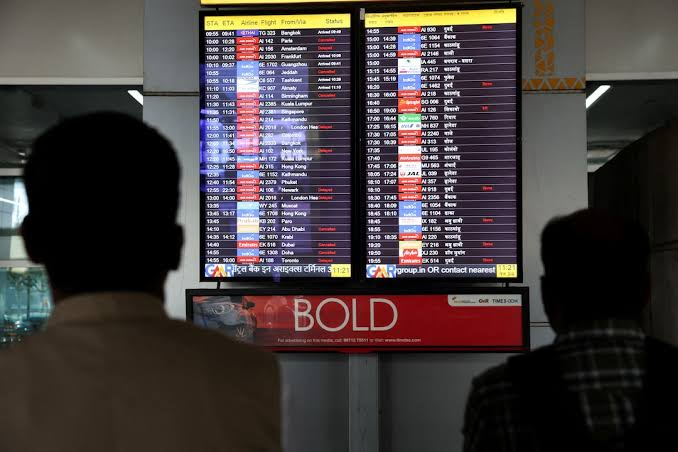
International Airlines Adjust Middle East Flight Routes as Regional Security Notices Prompt Aviation Caution
October 8, 2026 | International airlines are reviewing flight routes through Middle Eastern airspace following revised aviation guidance related to regional security developments. The notices highlight the importance of careful route planning across major international transit corridors, where changing security assessments can affect flight paths, journey times and airline operations. For passengers connecting between Europe, Asia, Africa and other global destinations, even a limited adjustment to an aircraft’s route can influence arrival schedules, connecting flights and travel arrangements.
The reported developments reflect a central responsibility of commercial aviation: keeping passengers and crew away from unacceptable risks while maintaining reliable international services wherever conditions permit. Airlines, aviation authorities and air traffic management organizations must assess available information, coordinate operational decisions and respond when the safety of a particular airspace corridor becomes uncertain. Although revised routing guidance does not automatically mean that every flight is suspended or that an entire region is closed to aviation, it can lead carriers to avoid specific areas, use alternative corridors or reconsider departure schedules.
For travelers, the practical message is straightforward. A ticket confirmation does not guarantee that a flight will follow its originally planned route, and schedules can change when safety assessments evolve. Passengers traveling through Middle Eastern hubs should monitor airline notifications, confirm connecting arrangements and consult current official travel and aviation advisories before leaving for the airport.
Why Middle Eastern Airspace Matters to International Aviation
The Middle East occupies a strategically important position between Europe, Asia and Africa. Its airports serve as major connecting points for passengers traveling between continents, while the surrounding airspace supports long distance commercial flights, cargo operations and other international aviation services. For many journeys, the region offers efficient connections that reduce the need for lengthy detours.
That geographic advantage also means that security developments affecting one airspace corridor can have consequences far beyond the country where those developments occur. When an airline avoids a particular area, its flight planners may need to identify another approved route, assess additional fuel requirements and coordinate with air traffic control authorities along the revised journey. Several airlines making similar adjustments can also increase demand on alternative corridors, potentially affecting traffic management and arrival times.
Flight planning is therefore more complicated than drawing a straight line between two airports. Aircraft must operate within authorized airspace, comply with applicable restrictions and consider weather, fuel reserves, airport capabilities and operational requirements. A route that appears shorter on a map may not be the safest or most practical option under current conditions.
How Revised Aviation Guidance Can Affect Airline Operations
International commercial airlines generally assess airspace risks using information from civil aviation authorities, government advisories, operational security teams and relevant air traffic management organizations. Depending on the nature of a notice, an airline may continue operating through an area with additional precautions, avoid a particular corridor or suspend selected services until conditions become clearer.
Revised routing guidance can lead to several operational changes. Flights may travel farther than planned, remain airborne for additional time or require changes to departure slots and arrival coordination. In some cases, airlines may alter aircraft assignments or adjust crew arrangements to account for longer operating hours. If a disruption affects a major connecting hub, the effects can extend to passengers whose final destinations are thousands of miles from the original security concern.
Alternative routes and longer journey times
When a route is no longer considered suitable, dispatchers and flight crews must work within the available safe and authorized alternatives. Depending on the departure and destination airports, an aircraft may travel through different national airspace or follow a more southerly or northerly corridor. The appropriate option depends on the specific flight, current restrictions, weather and operational approvals.
Longer routes can increase fuel consumption and operating costs. Airlines must also account for payload limitations, airport congestion and the availability of suitable alternate airports. These considerations are especially important on long haul services, where small changes in routing can affect fuel planning and the timing of connections.
Schedule changes, cancellations and passenger connections
Not every airspace advisory results in a cancellation. Some flights can continue with revised routes, while others may experience delays or changes to departure times. Cancellations become more likely when safe alternatives are unavailable, operational constraints cannot be resolved or an airline determines that a service should not operate under the circumstances.
Passengers connecting through major international hubs may face additional uncertainty if their inbound flight arrives late. Even when the onward flight operates normally, a shorter connection window can leave travelers at risk of missing their departure. Airlines may need to rebook affected passengers, arrange alternative connections or provide assistance under the applicable ticket conditions and passenger protection rules.
What Regional Security Notices Mean for Flight Safety
Aviation safety decisions rely on assessments of specific risks rather than broad assumptions about an entire geographic region. A notice may concern a defined area, a particular altitude range, a limited period or a set of operating conditions. Its meaning depends on the wording, issuing authority and current operational context.
One important source of aviation information is a Notice to Airmen, commonly known as a NOTAM. These notices communicate time sensitive information that pilots, dispatchers and other aviation professionals need for safe flight operations. They can cover airspace restrictions, airport conditions, navigation facilities and other matters relevant to a planned journey. Separate security advisories may provide assessments of risks that require airlines to reconsider whether or how they operate in a particular area.
Travelers should not assume that a notice affecting one corridor applies to every airport or flight in the Middle East. Equally, the absence of a public cancellation announcement does not mean that a particular route is unaffected. Airline decisions can vary according to departure and destination points, aircraft capabilities, insurance requirements and the latest information available to the operator.
The International Civil Aviation Organization provides a global framework for cooperation on international aviation safety and standards. National aviation authorities and air traffic service providers also play essential roles in issuing operational information, managing airspace and coordinating responses to changing conditions.
How Airlines Decide Whether to Reroute or Suspend Flights
Airlines must balance operational efficiency with their obligation to protect passengers and crew. When new security information emerges, flight operations teams evaluate whether an existing route remains acceptable and whether a practical alternative is available. Decisions may differ between carriers because they operate different aircraft, serve different destinations and follow distinct internal risk management procedures.
Several factors can influence these decisions. The first is the nature and credibility of the security information. The second is whether authorities have imposed formal restrictions or recommended additional caution. The third is the availability of alternative routes that satisfy safety, fuel and operational requirements. Airlines may also consider the expected duration of a restriction and whether uncertainty makes it difficult to operate a reliable schedule.
These assessments can change quickly. A route that is available in the morning may become unsuitable later, while restrictions affecting one area may be revised as authorities receive new information. Flight dispatchers therefore need current operational data rather than relying solely on the original flight plan or information published when a passenger purchased a ticket.
The importance of official aviation information
Passengers looking for reliable updates should prioritize information from their airline and the relevant national aviation authority. The Federal Aviation Administration’s NOTAM resources explain how aviation notices communicate operational information, although travelers should consult the authority responsible for the airspace relevant to their journey.
Government travel advisories can provide additional information about security conditions and travel risks. However, a general travel advisory and an operational airspace restriction are not interchangeable. An advisory may warn travelers about conditions in a country without closing its airspace, while a flight restriction may apply to aircraft even when commercial travel to nearby destinations continues.
What Passengers Traveling Through the Middle East Should Do
For travelers with upcoming international journeys, uncertainty can be stressful. Families may be coordinating airport transfers, hotel reservations and onward transportation, while business travelers may have important meetings scheduled soon after arrival. A flight reroute may seem like a minor operational change, but a delay of several hours can disrupt an entire itinerary.
The most useful response is to prepare for possible changes without assuming that every flight will be affected. Passengers should check their booking status before departing for the airport and ensure that the airline has current contact details. Email and text notifications can provide early warnings about schedule changes, while the airline’s official website or application may contain more recent information than third party travel platforms.
Travelers can take several practical steps to reduce avoidable disruption:
- Check the flight status directly with the operating airline before leaving home and again before boarding.
- Review connection times, particularly when separate tickets are involved or the itinerary includes multiple international flights.
- Keep essential medication, travel documents, chargers and necessary personal items in carry on baggage in case checked luggage is delayed.
- Review accommodation and transportation cancellation conditions if arrival times change substantially.
- Save the airline’s customer service contact details and retain receipts for reasonable expenses that may be relevant to a later assistance or reimbursement request.
Passengers should avoid canceling their own bookings solely because of general reports about regional security developments. Depending on the ticket conditions and applicable consumer protections, voluntarily canceling a flight can produce different financial consequences from a cancellation initiated by the airline. Travelers who are concerned should contact the carrier to establish whether their particular service is affected and what alternatives are available.
Will Rerouting Increase Airfares and Travel Costs?
Changes to flight paths can increase airline operating expenses, particularly when aircraft must travel farther or carry additional fuel. Airlines may also incur costs associated with crew scheduling, aircraft positioning and disrupted connections. The effect on an individual ticket price, however, is not automatic.
Airfares are influenced by several variables, including demand, available seats, competition, booking timing and the carrier’s pricing policies. A security related route adjustment may contribute to higher operating costs, but it does not establish that every airline will increase fares or introduce a specific surcharge. Any such claim requires confirmation from the airline concerned.
Travelers considering a new booking should compare the complete itinerary rather than focusing exclusively on the lowest advertised price. A slightly more expensive ticket with a direct flight or a longer connection window may offer greater flexibility if schedules become uncertain. Passengers should also review change conditions and determine whether the fare includes assistance options that could be useful during a disruption.
Possible Effects on Cargo and Global Supply Chains
Passenger services are only one part of the international aviation network. Cargo aircraft transport medicines, electronics, industrial components, perishable goods and other products that depend on predictable delivery schedules. Many passenger aircraft also carry freight in their lower cargo compartments, linking commercial passenger operations with international supply chains.
When airspace restrictions force aircraft onto longer routes, cargo operators may face additional fuel expenses, reduced payload flexibility or changes to delivery schedules. If several major services are affected simultaneously, freight forwarders may need to revise connections and find alternative capacity. Time sensitive shipments can be particularly vulnerable because even a relatively short delay may affect product quality or the availability of essential supplies.
These consequences should be assessed carefully rather than assumed. The impact depends on which routes are affected, how long the changes remain in place and whether alternative transport capacity is available. A limited adjustment to one corridor may have a manageable effect, while a prolonged disruption affecting several important routes could create broader logistical challenges.
How Travelers Can Interpret News About Middle Eastern Airspace
Reports about aviation restrictions often circulate quickly, especially when they involve international travel hubs. However, headlines may describe precautionary guidance, a temporary restriction or a decision by one airline without clearly distinguishing between them. Travelers can make better decisions by checking the original notice, identifying the geographic area involved and confirming whether the information applies to their specific itinerary.
Three distinctions are particularly useful. First, an airline choosing to avoid an area does not necessarily mean that all carriers are prohibited from using it. Second, a warning about potential risk is not always equivalent to a formal airspace closure. Third, an operational update published at one time may become outdated as authorities revise their assessments.
For the reported developments dated October 8, 2026, the available summary establishes that revised routing guidance was issued amid regional security developments. It does not identify the specific airspace notices, the countries or corridors affected, the airlines changing their routes or the number of services disrupted. Without those details, it would be premature to attribute the changes to a particular incident or claim that a specific route has been closed.
This distinction matters because accurate aviation reporting must separate confirmed operational developments from speculation. Travelers deserve clear information about what has changed, which services are affected and what practical options are available. General statements about regional risk cannot substitute for flight specific confirmation.
What to Watch in the Coming Days
The next stage of the situation will depend on updated assessments from aviation authorities, the availability of approved flight corridors and decisions made by individual carriers. Airlines may restore normal routes when conditions permit, continue using alternatives or extend precautionary measures if uncertainty persists. The timing of any return to previous operations cannot be established without further official information.
Passengers should watch for changes to departure times, revised flight numbers, altered connection arrangements and updated baggage or rebooking instructions. Those traveling on multi city itineraries should confirm each segment separately, especially when different airlines operate different parts of the journey. Travelers who booked through an agency may also need to contact the agency to coordinate changes, depending on their booking arrangements.
Airlines, meanwhile, will need to communicate changes clearly and provide realistic expectations about delays. Timely notifications can help passengers arrange transportation, contact family members and make decisions about onward travel. Clear communication is particularly important when a flight remains scheduled but its expected departure or arrival time has changed.
Aviation Safety Remains the Priority as Routes Change
The reported adjustments to Middle Eastern flight routing illustrate the close relationship between regional security conditions and international aviation planning. Commercial flights depend on a network of coordinated decisions involving airlines, aviation authorities, air traffic controllers and flight crews. When circumstances change, that coordination allows operators to reconsider routes and make decisions intended to protect those on board.
For passengers, the possibility of a longer journey or a delayed connection is understandably frustrating. Yet route efficiency must remain secondary to safety when credible risks affect an aircraft’s planned path. A carefully managed detour can be preferable to maintaining a schedule that no longer meets an airline’s operational safety requirements.
As of October 8, 2026, the reported guidance points to increased caution in Middle Eastern transit corridors, but the precise operational impact remains unclear from the available information. Travelers should rely on current airline updates and official aviation notices rather than assume that every regional service has been suspended or rerouted.
The central message is that international aviation can adapt when security conditions require changes, although those adjustments may carry costs for airlines and inconvenience for travelers. Staying informed, maintaining flexible travel plans where possible and confirming details directly with the operating carrier are the most practical ways for passengers to navigate uncertainty while authorities and airlines continue assessing the situation.
\
\October 8, 2026\ | International airlines are reviewing flight routes through Middle Eastern airspace following revised aviation guidance related to regional security developments. The notices highlight the importance of careful route planning across major international transit corridors, where changing security assessments can affect flight paths, journey times and airline operations. For passengers connecting between Europe, Asia, Africa and other global destinations, even a limited adjustment to an aircraft’s route can influence arrival schedules, connecting flights and travel arrangements.\
\
The reported developments reflect a central responsibility of commercial aviation: keeping passengers and crew away from unacceptable risks while maintaining reliable international services wherever conditions permit. Airlines, aviation authorities and air traffic management organizations must assess available information, coordinate operational decisions and respond when the safety of a particular airspace corridor becomes uncertain. Although revised routing guidance does not automatically mean that every flight is suspended or that an entire region is closed to aviation, it can lead carriers to avoid specific areas, use alternative corridors or reconsider departure schedules.\
\
For travelers, the practical message is straightforward. A ticket confirmation does not guarantee that a flight will follow its originally planned route, and schedules can change when safety assessments evolve. Passengers traveling through Middle Eastern hubs should monitor airline notifications, confirm connecting arrangements and consult current official travel and aviation advisories before leaving for the airport.\
\
Why Middle Eastern Airspace Matters to International Aviation\
\
The Middle East occupies a strategically important position between Europe, Asia and Africa. Its airports serve as major connecting points for passengers traveling between continents, while the surrounding airspace supports long distance commercial flights, cargo operations and other international aviation services. For many journeys, the region offers efficient connections that reduce the need for lengthy detours.\
\
That geographic advantage also means that security developments affecting one airspace corridor can have consequences far beyond the country where those developments occur. When an airline avoids a particular area, its flight planners may need to identify another approved route, assess additional fuel requirements and coordinate with air traffic control authorities along the revised journey. Several airlines making similar adjustments can also increase demand on alternative corridors, potentially affecting traffic management and arrival times.\
\
Flight planning is therefore more complicated than drawing a straight line between two airports. Aircraft must operate within authorized airspace, comply with applicable restrictions and consider weather, fuel reserves, airport capabilities and operational requirements. A route that appears shorter on a map may not be the safest or most practical option under current conditions.\
\
How Revised Aviation Guidance Can Affect Airline Operations\
\
International commercial airlines generally assess airspace risks using information from civil aviation authorities, government advisories, operational security teams and relevant air traffic management organizations. Depending on the nature of a notice, an airline may continue operating through an area with additional precautions, avoid a particular corridor or suspend selected services until conditions become clearer.\
\
Revised routing guidance can lead to several operational changes. Flights may travel farther than planned, remain airborne for additional time or require changes to departure slots and arrival coordination. In some cases, airlines may alter aircraft assignments or adjust crew arrangements to account for longer operating hours. If a disruption affects a major connecting hub, the effects can extend to passengers whose final destinations are thousands of miles from the original security concern.\
\
Alternative routes and longer journey times\
\
When a route is no longer considered suitable, dispatchers and flight crews must work within the available safe and authorized alternatives. Depending on the departure and destination airports, an aircraft may travel through different national airspace or follow a more southerly or northerly corridor. The appropriate option depends on the specific flight, current restrictions, weather and operational approvals.\
\
Longer routes can increase fuel consumption and operating costs. Airlines must also account for payload limitations, airport congestion and the availability of suitable alternate airports. These considerations are especially important on long haul services, where small changes in routing can affect fuel planning and the timing of connections.\
\
Schedule changes, cancellations and passenger connections\
\
Not every airspace advisory results in a cancellation. Some flights can continue with revised routes, while others may experience delays or changes to departure times. Cancellations become more likely when safe alternatives are unavailable, operational constraints cannot be resolved or an airline determines that a service should not operate under the circumstances.\
\
Passengers connecting through major international hubs may face additional uncertainty if their inbound flight arrives late. Even when the onward flight operates normally, a shorter connection window can leave travelers at risk of missing their departure. Airlines may need to rebook affected passengers, arrange alternative connections or provide assistance under the applicable ticket conditions and passenger protection rules.\
\
What Regional Security Notices Mean for Flight Safety\
\
Aviation safety decisions rely on assessments of specific risks rather than broad assumptions about an entire geographic region. A notice may concern a defined area, a particular altitude range, a limited period or a set of operating conditions. Its meaning depends on the wording, issuing authority and current operational context.\
\
One important source of aviation information is a Notice to Airmen, commonly known as a NOTAM. These notices communicate time sensitive information that pilots, dispatchers and other aviation professionals need for safe flight operations. They can cover airspace restrictions, airport conditions, navigation facilities and other matters relevant to a planned journey. Separate security advisories may provide assessments of risks that require airlines to reconsider whether or how they operate in a particular area.\
\
Travelers should not assume that a notice affecting one corridor applies to every airport or flight in the Middle East. Equally, the absence of a public cancellation announcement does not mean that a particular route is unaffected. Airline decisions can vary according to departure and destination points, aircraft capabilities, insurance requirements and the latest information available to the operator.\
\
The \International Civil Aviation Organization\ provides a global framework for cooperation on international aviation safety and standards. National aviation authorities and air traffic service providers also play essential roles in issuing operational information, managing airspace and coordinating responses to changing conditions.\
\
How Airlines Decide Whether to Reroute or Suspend Flights\
\
Airlines must balance operational efficiency with their obligation to protect passengers and crew. When new security information emerges, flight operations teams evaluate whether an existing route remains acceptable and whether a practical alternative is available. Decisions may differ between carriers because they operate different aircraft, serve different destinations and follow distinct internal risk management procedures.\
\
Several factors can influence these decisions. The first is the nature and credibility of the security information. The second is whether authorities have imposed formal restrictions or recommended additional caution. The third is the availability of alternative routes that satisfy safety, fuel and operational requirements. Airlines may also consider the expected duration of a restriction and whether uncertainty makes it difficult to operate a reliable schedule.\
\
These assessments can change quickly. A route that is available in the morning may become unsuitable later, while restrictions affecting one area may be revised as authorities receive new information. Flight dispatchers therefore need current operational data rather than relying solely on the original flight plan or information published when a passenger purchased a ticket.\
\
The importance of official aviation information\
\
Passengers looking for reliable updates should prioritize information from their airline and the relevant national aviation authority. The \Federal Aviation Administration’s NOTAM resources\ explain how aviation notices communicate operational information, although travelers should consult the authority responsible for the airspace relevant to their journey.\
\
Government travel advisories can provide additional information about security conditions and travel risks. However, a general travel advisory and an operational airspace restriction are not interchangeable. An advisory may warn travelers about conditions in a country without closing its airspace, while a flight restriction may apply to aircraft even when commercial travel to nearby destinations continues.\
\
What Passengers Traveling Through the Middle East Should Do\
\
For travelers with upcoming international journeys, uncertainty can be stressful. Families may be coordinating airport transfers, hotel reservations and onward transportation, while business travelers may have important meetings scheduled soon after arrival. A flight reroute may seem like a minor operational change, but a delay of several hours can disrupt an entire itinerary.\
\
The most useful response is to prepare for possible changes without assuming that every flight will be affected. Passengers should check their booking status before departing for the airport and ensure that the airline has current contact details. Email and text notifications can provide early warnings about schedule changes, while the airline’s official website or application may contain more recent information than third party travel platforms.\
\
Travelers can take several practical steps to reduce avoidable disruption:\
\
- \
- Check the flight status directly with the operating airline before leaving home and again before boarding.\
- Review connection times, particularly when separate tickets are involved or the itinerary includes multiple international flights.\
- Keep essential medication, travel documents, chargers and necessary personal items in carry on baggage in case checked luggage is delayed.\
- Review accommodation and transportation cancellation conditions if arrival times change substantially.\
- Save the airline’s customer service contact details and retain receipts for reasonable expenses that may be relevant to a later assistance or reimbursement request.\
\
\
\
\
\
\
Passengers should avoid canceling their own bookings solely because of general reports about regional security developments. Depending on the ticket conditions and applicable consumer protections, voluntarily canceling a flight can produce different financial consequences from a cancellation initiated by the airline. Travelers who are concerned should contact the carrier to establish whether their particular service is affected and what alternatives are available.\
\
Will Rerouting Increase Airfares and Travel Costs?\
\
Changes to flight paths can increase airline operating expenses, particularly when aircraft must travel farther or carry additional fuel. Airlines may also incur costs associated with crew scheduling, aircraft positioning and disrupted connections. The effect on an individual ticket price, however, is not automatic.\
\
Airfares are influenced by several variables, including demand, available seats, competition, booking timing and the carrier’s pricing policies. A security related route adjustment may contribute to higher operating costs, but it does not establish that every airline will increase fares or introduce a specific surcharge. Any such claim requires confirmation from the airline concerned.\
\
Travelers considering a new booking should compare the complete itinerary rather than focusing exclusively on the lowest advertised price. A slightly more expensive ticket with a direct flight or a longer connection window may offer greater flexibility if schedules become uncertain. Passengers should also review change conditions and determine whether the fare includes assistance options that could be useful during a disruption.\
\
Possible Effects on Cargo and Global Supply Chains\
\
Passenger services are only one part of the international aviation network. Cargo aircraft transport medicines, electronics, industrial components, perishable goods and other products that depend on predictable delivery schedules. Many passenger aircraft also carry freight in their lower cargo compartments, linking commercial passenger operations with international supply chains.\
\
When airspace restrictions force aircraft onto longer routes, cargo operators may face additional fuel expenses, reduced payload flexibility or changes to delivery schedules. If several major services are affected simultaneously, freight forwarders may need to revise connections and find alternative capacity. Time sensitive shipments can be particularly vulnerable because even a relatively short delay may affect product quality or the availability of essential supplies.\
\
These consequences should be assessed carefully rather than assumed. The impact depends on which routes are affected, how long the changes remain in place and whether alternative transport capacity is available. A limited adjustment to one corridor may have a manageable effect, while a prolonged disruption affecting several important routes could create broader logistical challenges.\
\
How Travelers Can Interpret News About Middle Eastern Airspace\
\
Reports about aviation restrictions often circulate quickly, especially when they involve international travel hubs. However, headlines may describe precautionary guidance, a temporary restriction or a decision by one airline without clearly distinguishing between them. Travelers can make better decisions by checking the original notice, identifying the geographic area involved and confirming whether the information applies to their specific itinerary.\
\
Three distinctions are particularly useful. First, an airline choosing to avoid an area does not necessarily mean that all carriers are prohibited from using it. Second, a warning about potential risk is not always equivalent to a formal airspace closure. Third, an operational update published at one time may become outdated as authorities revise their assessments.\
\
For the reported developments dated October 8, 2026, the available summary establishes that revised routing guidance was issued amid regional security developments. It does not identify the specific airspace notices, the countries or corridors affected, the airlines changing their routes or the number of services disrupted. Without those details, it would be premature to attribute the changes to a particular incident or claim that a specific route has been closed.\
\
This distinction matters because accurate aviation reporting must separate confirmed operational developments from speculation. Travelers deserve clear information about what has changed, which services are affected and what practical options are available. General statements about regional risk cannot substitute for flight specific confirmation.\
\
What to Watch in the Coming Days\
\
The next stage of the situation will depend on updated assessments from aviation authorities, the availability of approved flight corridors and decisions made by individual carriers. Airlines may restore normal routes when conditions permit, continue using alternatives or extend precautionary measures if uncertainty persists. The timing of any return to previous operations cannot be established without further official information.\
\
Passengers should watch for changes to departure times, revised flight numbers, altered connection arrangements and updated baggage or rebooking instructions. Those traveling on multi city itineraries should confirm each segment separately, especially when different airlines operate different parts of the journey. Travelers who booked through an agency may also need to contact the agency to coordinate changes, depending on their booking arrangements.\
\
Airlines, meanwhile, will need to communicate changes clearly and provide realistic expectations about delays. Timely notifications can help passengers arrange transportation, contact family members and make decisions about onward travel. Clear communication is particularly important when a flight remains scheduled but its expected departure or arrival time has changed.\
\
Aviation Safety Remains the Priority as Routes Change\
\
The reported adjustments to Middle Eastern flight routing illustrate the close relationship between regional security conditions and international aviation planning. Commercial flights depend on a network of coordinated decisions involving airlines, aviation authorities, air traffic controllers and flight crews. When circumstances change, that coordination allows operators to reconsider routes and make decisions intended to protect those on board.\
\
For passengers, the possibility of a longer journey or a delayed connection is understandably frustrating. Yet route efficiency must remain secondary to safety when credible risks affect an aircraft’s planned path. A carefully managed detour can be preferable to maintaining a schedule that no longer meets an airline’s operational safety requirements.\
\
As of October 8, 2026, the reported guidance points to increased caution in Middle Eastern transit corridors, but the precise operational impact remains unclear from the available information. Travelers should rely on current airline updates and official aviation notices rather than assume that every regional service has been suspended or rerouted.\
\
The central message is that international aviation can adapt when security conditions require changes, although those adjustments may carry costs for airlines and inconvenience for travelers. Staying informed, maintaining flexible travel plans where possible and confirming details directly with the operating carrier are the most practical ways for passengers to navigate uncertainty while authorities and airlines continue assessing the situation.\