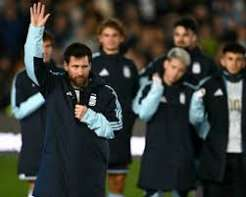
October 8, 2026 | Lionel Messi has brought his extraordinary international football career to a close, leaving the Argentina national team with a final performance worthy of his remarkable legacy. The World Cup champion played his last match for Argentina on October 6, scoring a penalty and contributing two assists as the team defeated Benin 3 to 0 at Buenos Aires’ Monumental Stadium. In front of a packed crowd, the 39 year old captain received an emotional farewell that celebrated more than two decades of commitment to his country.
For Argentina, Messi’s departure represents far more than the end of a celebrated playing career. He became the face of a generation, carried the hopes of millions and ultimately helped deliver the international trophies that had eluded the country for years. As supporters filled the stadium with familiar songs and waves of blue and white, the occasion offered a rare opportunity to reflect on a sporting journey marked by extraordinary success, painful setbacks and an enduring connection between a player and his nation.
The farewell also attracted tributes from prominent figures across world football, including Cristiano Ronaldo, Messi’s longtime rival and fellow global superstar. Their exchanges of mutual respect reflected a broader appreciation for a player whose influence extended well beyond Argentina, Barcelona and Inter Miami.
A Final Performance Worthy of a Legendary Career
Argentina’s 3 to 0 victory over Benin provided a fitting conclusion to Messi’s international story. The friendly match at Estadio Monumental brought together the national team, devoted supporters and the family members who had witnessed the personal sacrifices behind his success. The atmosphere was celebratory, but there was an unmistakable sense that the occasion marked the closing of an important chapter in Argentine sporting history.
After a goalless first half, Argentina found its rhythm following the break. Veteran defender Nicolás Otamendi opened the scoring in the 49th minute, connecting with a corner delivered by Messi. Young midfielder Nico Paz doubled the advantage in the 61st minute, again benefiting from Messi’s creative contribution. Messi then scored from the penalty spot in the 71st minute, bringing his international goal tally to 126.
The final goal carried particular significance. It was not simply another entry in an extraordinary statistical record. It gave the captain one last opportunity to celebrate with his teammates while the supporters in the stands responded with the kind of noise usually reserved for a championship victory.
Messi finished his international career with 208 appearances for Argentina, making him the country’s most capped player, and 126 goals, the national team’s all time scoring record. His involvement in all three goals against Benin offered a final demonstration of the qualities that had defined his career: vision, precision, composure and the ability to influence a match in several different ways.
An Emotional Goodbye at the Monumental Stadium
The significance of the evening extended beyond the result. Before kickoff, Messi appeared visibly emotional as he approached the stadium amid crowds of supporters. During the national anthem, he struggled to contain his feelings while standing alongside his three sons. His wife, Antonela Roccuzzo, and other family members watched from the stands as thousands of fans celebrated the player who had represented their hopes for more than two decades.
Following the final whistle, the celebration became a tribute to the relationship between Messi and the Argentine public. The stadium remained focused on its captain as he addressed the crowd, thanked his teammates and reflected on the privilege of representing his country. The emotion was understandable. For a player who had experienced some of football’s greatest triumphs and most painful defeats in Argentina’s colors, leaving the national team meant saying goodbye to a part of his identity.
Messi described the decision as deeply painful and reflected on the pride he felt in representing Argentina for more than 20 years. His farewell was not simply about the number of matches played or goals scored. It was about the experiences that connected him to generations of supporters, from children watching their first international match to adults who had followed his career since his teenage years.
That connection was not always uncomplicated. Early disappointments and repeated defeats in major finals brought intense scrutiny, and Messi experienced periods when his relationship with the national team and its supporters appeared strained. His eventual triumphs changed that story, turning years of frustration into a legacy defined by resilience and achievement.
From International Heartbreak to World Cup Glory
Messi’s international career began in 2005, when he made his senior debut for Argentina as a teenager. His extraordinary technical ability quickly attracted attention, but succeeding with the national team proved more complicated than his achievements at club level might have suggested.
Argentina lost the 2014 World Cup final to Germany, a defeat that left Messi and his teammates devastated. Subsequent losses in the 2015 and 2016 Copa América finals deepened the disappointment. After the 2016 defeat, Messi briefly announced his retirement from international football before reversing his decision and returning to the national team.
That return ultimately became one of the defining chapters of his career. Argentina won the 2021 Copa América, defeating Brazil in the final at the Maracanã in Rio de Janeiro. The victory ended a long wait for a major senior international trophy and provided Messi with the first major title of his career with Argentina.
Argentina then defeated Italy in the 2022 Finalissima before reaching the pinnacle of international football at the FIFA World Cup in Qatar. The tournament featured some of Messi’s most memorable performances, including two goals in the final against France. Argentina prevailed on penalties after a dramatic 3 to 3 draw, giving Messi the World Cup trophy that had eluded him for so long.
The triumph transformed the way his international career was remembered. A player who had faced years of comparisons with Argentine icon Diego Maradona could now point to a world championship of his own. Messi had become the leader of a team that combined experience, emerging talent and a collective belief that Argentina could once again rule world football.
Argentina added another Copa América title in 2024, reinforcing the success of the generation built around Messi. These achievements established an extraordinary international record and gave his farewell a sense of completion that had once seemed uncertain.
Cristiano Ronaldo and Other Football Figures Pay Tribute
Messi’s influence has always extended beyond his own team. His rivalry with Cristiano Ronaldo defined an era of elite football, with supporters around the world debating their respective records, playing styles and achievements. Although their careers often placed them on opposite sides of the sport’s most intense competitions, both players have repeatedly demonstrated respect for one another’s accomplishments.
Following Messi’s international farewell, Ronaldo offered a message of admiration, recognizing the Argentine’s lasting contribution to football. The tribute carried symbolic weight because their rivalry had become one of the defining narratives of modern sports. Rather than diminishing either player’s achievements, their competition pushed expectations higher and encouraged millions of fans to follow the game more closely.
Tributes from fellow athletes and football figures also reflected the broader importance of Messi’s career. His ability to control the ball in tight spaces, identify passing opportunities before defenders could react and deliver decisive finishes made him a reference point for aspiring players. Coaches and teammates have often valued not only his technical ability but also the calmness he brings to moments when the pressure is greatest.
The strongest measure of Messi’s influence may be the number of people who came to love football through watching him play. Young supporters have copied his movements on neighborhood pitches, worn his number 10 shirt and studied his performances to understand how intelligence and technique can overcome physical disadvantages.
What Messi’s International Records Tell Us
Statistics alone cannot explain the emotional weight of Messi’s departure, but they help establish the scale of his achievements. He leaves Argentina as its leading international scorer and most capped player, with a record built across tournaments, qualifying campaigns and friendly matches over more than two decades.
- 208 international appearances: Messi finished as Argentina’s most capped senior men’s player.
- 126 international goals: His final penalty against Benin brought his national team scoring record to its final total.
- 2022 FIFA World Cup champion: He captained Argentina to victory in Qatar after a dramatic final against France.
- Two Copa América titles: Argentina won the competition in 2021 and 2024 during his international career.
- More than 20 years of service: His international journey stretched from his debut in 2005 to his farewell in October 2026.
These figures tell only part of the story. Messi also played a decisive role in changing Argentina’s expectations of what the national team could achieve. His later years with the squad demonstrated that individual brilliance could work alongside collective discipline, with experienced leaders supporting younger players as the team pursued major honors.
Readers can explore official tournament records, historical results and international football coverage through FIFA’s official website, which documents the competitions that have shaped Messi’s career and the wider history of the sport.
Argentina Faces the Challenge of a Future Without Its Captain
Replacing Messi will not be a straightforward task. Argentina has talented young players capable of carrying the team forward, but no single individual can be expected to reproduce the same combination of creativity, leadership, experience and international production. The national team’s next phase will require a collective response rather than an attempt to find an exact replacement for its most influential player.
Nico Paz, who scored against Benin, represents part of the emerging generation that supporters will watch closely. Other young players will have opportunities to establish themselves as Argentina adjusts its attacking combinations and leadership structure. Their progress will depend on regular playing time, tactical development and the ability to handle the expectations that come with representing a successful football nation.
Head coach Lionel Scaloni also faces the challenge of preserving the team’s identity while allowing new leaders to emerge. Argentina’s recent success has depended on teamwork, defensive organization and the ability to perform under pressure. Those qualities can continue even after Messi’s departure, but the team will need time to establish how it can create opportunities and control matches without its familiar captain.
There will inevitably be comparisons between future Argentina teams and the side led by Messi. Such comparisons are understandable, but they can also place unreasonable pressure on young players. The next generation deserves the opportunity to develop its own identity rather than being judged exclusively against one of the greatest footballers in history.
Messi’s Club Career Continues Beyond Argentina
Retiring from international football does not mean Messi has retired from professional football altogether. He remains associated with Inter Miami in Major League Soccer, where his influence has helped bring international attention to the club and the wider American soccer landscape.
His club career has already included historic achievements at Barcelona, a period at Paris Saint Germain and a new chapter in the United States. At Barcelona, Messi developed into one of the most prolific players the sport has seen, winning numerous domestic and European titles while establishing records for goals and individual awards. His move to Inter Miami in 2023 introduced a new audience to his performances and helped increase interest in Major League Soccer.
Without the demands of international duty, Messi may have greater flexibility in managing the final stages of his playing career. The decision could allow him to concentrate on club commitments, recovery and family life while continuing to contribute on the pitch. However, his future playing schedule and eventual retirement from club football remain separate questions.
His influence is also likely to continue beyond his active playing years. Through his performances, public profile and relationships across the sport, Messi has become a figure whose significance extends into coaching discussions, youth development, commercial partnerships and the broader business of football.
A Legacy Defined by Perseverance as Much as Talent
Messi’s farewell offers a reminder that sporting greatness is rarely a simple story of uninterrupted victories. His international career included years of criticism, painful defeats and doubts about whether Argentina would ever win the major trophies that supporters expected. The eventual triumphs were meaningful precisely because they followed so many disappointments.
His experience also illustrates the value of persistence. After announcing his international retirement in 2016, he returned and continued working toward the goals that had defined his career. That decision gave Argentina a leader who would eventually guide the team to Copa América and World Cup glory. The story is therefore not only about extraordinary natural ability, but also about the willingness to continue after setbacks.
For supporters, the farewell against Benin offered a chance to express gratitude to a player whose career has been intertwined with some of their most powerful football memories. The final goal, the packed stands and the emotional address after the match gave the evening a sense of closure without diminishing the years of uncertainty that came before it.
Goodbye to Argentina’s Number 10
Lionel Messi’s final international appearance was a fitting conclusion to a career that reshaped Argentina’s place in modern football. A 3 to 0 victory over Benin, a final goal from the penalty spot and two assists provided a memorable sporting ending. More importantly, the farewell allowed supporters to celebrate a player who had given the national team more than 20 years of extraordinary service.
Argentina will now move forward without its most recognizable footballing figure, while Messi begins a new chapter focused on club football and life beyond the national team. His records may eventually be challenged, and future players will have opportunities to create their own histories, but the combination of achievements, resilience and emotional connection that defined his international career will remain difficult to replicate.
For millions of fans, the final image will be Messi in Argentina’s blue and white, surrounded by teammates and listening to the roar of a stadium that had followed him through triumph and disappointment. The farewell was bittersweet, but it was also a celebration of a remarkable journey. As the final applause faded at the Monumental, Argentina said goodbye to its captain, while football gained another enduring chapter in the story of one of its greatest players.