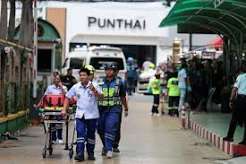
The morning of August 7, 2026 began like any other at Debsirin Nonthaburi School, a prestigious secondary institution on the northern outskirts of Bangkok. By midday, the campus had become the scene of Thailand’s deadliest school shooting in nearly four years, leaving eight people dead, including the teenage gunman, and more than 20 others injured. In the hours that followed, education ministries, international school networks, and regional authorities across Southeast Asia and beyond launched urgent reviews of campus emergency protocols, security infrastructure, and student mental health support systems.
[freepressjournal](https://www.freepressjournal.in/world/thailand-school-shooting-death-toll-rises-to-7-after-student-opens-fire-at-high-school-near-bangkok-gunman-killed-grandparents-first-at-home)
This tragedy is not confined to a single nation or a lone perpetrator. It is a stark reminder that the sanctity of educational spaces can be shattered in moments, and that the safeguards we assume are in place often prove insufficient when tested by real world violence. As we grapple with the loss of students, teachers, and family members, the question before us is not whether to act but how swiftly and comprehensively we can reform the systems meant to protect our children.
What Happened at Debsirin Nonthaburi School
The shooting unfolded on Friday morning at approximately 10:12 a.m. local time inside Building 5 of the Debsirin Nonthaburi campus, which serves roughly 3,100 students and employs 147 teachers. A 14 year old Grade 9 student, armed with a CZ 75 Compact handgun believed to have belonged to a family member, opened fire in a busy corridor and multiple classrooms before turning the weapon on himself.
[streamlinefeed.co](https://streamlinefeed.co.ke/news/teen-gunman-kills-six-thailand-school-attack-bangkok)
Authorities confirmed that the teenager first killed his grandparents at their home before proceeding to the school, where he fired 26 rounds into classrooms and hallways. Police recovered an additional 34 rounds of ammunition at the scene, underscoring the scale of the attack and the potential for even greater loss of life. Provincial police commander Dechrapee Kongdee stated that the gunman died by suicide at the scene, bringing the total fatalities to eight, including three students, three teachers, and the two grandparents.
[freepressjournal](https://www.freepressjournal.in/world/thailand-school-shooting-death-toll-rises-to-7-after-student-opens-fire-at-high-school-near-bangkok-gunman-killed-grandparents-first-at-home)
The incident marked Thailand’s worst mass shooting since 2022 and the second fatal school shooting in the country within six months, following a February 2026 attack in Hat Yai that killed a teacher and injured a student. Each of these tragedies has reignited debates over firearm accessibility, school security protocols, and the mental health resources available to adolescents in crisis.
[streamlinefeed.co](https://streamlinefeed.co.ke/news/teen-gunman-kills-six-thailand-school-attack-bangkok)
Immediate Government Response and Policy Shifts
Within hours of the shooting, the Thai government initiated the most comprehensive school security revision the nation has undertaken in modern history. Prime Minister Anutin Charnvirakul announced that the Ministry of Education would conduct a nationwide review of security procedures, with special emphasis on preventing weapons and other dangerous items from entering educational facilities.
[heythailandnews](https://heythailandnews.com/posts/thailands-schools-transform-after-nonthaburi-tragedy-what-parents-and-residents-must-know)
Education Minister Prasert Jantararuangtong issued three binding directives to take effect immediately. First, information containment protocols were established, requesting that journalists and social media users refrain from broadcasting tactical details or response footage that could compromise ongoing investigations or future security measures. Second, trauma intervention was prioritized, with the Thailand Department of Mental Health dispatching mobile crisis teams to schools nationwide to offer free counseling to any student displaying signs of distress, not just direct witnesses. Third, operational security was elevated across all 30,000 plus schools serving more than 10 million students, mandating daily backpack inspections, controlled entry systems, security personnel at main entrances, continuous CCTV recording, and quarterly active shooter response drills.
[heythailandnews](https://heythailandnews.com/posts/thailands-schools-transform-after-nonthaburi-tragedy-what-parents-and-residents-must-know)
The Bangkok Metropolitan Administration accelerated implementation, directing immediate daily bag searches at all municipal schools and establishing disciplinary protocols for the discovery of prohibited items. Each deceased victim’s family was promised 1 million baht in government compensation, while injured individuals would receive 5,000 baht to help cover expenses derived from the attack.
[heythailandnews](https://heythailandnews.com/posts/thailands-schools-transform-after-nonthaburi-tragedy-what-parents-and-residents-must-know)
Firearm Access and Regulatory Reform
The tragedy has thrust Thailand’s gun ownership crisis into the global spotlight. The kingdom possesses one of the highest rates of civilian firearm possession in Southeast Asia, with an estimated 10.3 million guns in circulation, of which approximately 4.1 million are unregistered and circulating through illicit black markets. This translates to roughly one firearm for every seven inhabitants, a density that experts say creates a permissive environment for impulsive violence, particularly among adolescents with access to household weapons.
[streamlinefeed.co](https://streamlinefeed.co.ke/news/teen-gunman-kills-six-thailand-school-attack-bangkok)
In response, the Thai government is considering legislation that would limit civilian gun ownership to state officials only, marking the most aggressive regulatory push in the nation’s modern history. Additional measures under review include suspending civilian license renewals immediately, banning replica weapons such as blank guns and airsoft rifles that can be modified into functional firearms, implementing mandatory safe storage requirements with criminal penalties, and tightening background check protocols to screen for mental health risk factors.
[heythailandnews](https://heythailandnews.com/posts/thailands-schools-transform-after-nonthaburi-tragedy-what-parents-and-residents-must-know)
The recurring nature of these attacks indicates a systemic failure by the Ministry of Interior to enforce stringent background checks or intercept the flow of modified blank firing pistols and 3D printed weapon components. Addressing these gaps will require not only legislative action but sustained enforcement and cultural shifts around firearm storage and access within households.
[streamlinefeed.co](https://streamlinefeed.co.ke/news/thailand-school-shooting-debsirin-nonthaburi-leaves-two-dead-exposes-security-gaps)
International Repercussions and Safety Reviews
The ripple effects of the Nonthaburi shooting extend far beyond Thailand’s borders. Education ministries and international school networks across Southeast Asia, East Africa, and other regions have begun reevaluating their own campus security infrastructure and emergency response protocols. For schools in Nairobi, Lagos, London, and beyond, the tragedy underscores the critical necessity of robust physical security measures paired with early psychological intervention programs.
[streamlinefeed.co](https://streamlinefeed.co.ke/news/seven-dead-nonthaburi-thailand-school-shooting)
The Association of International Schools, which comprises 179 member institutions, has already begun discussions on enhancing active shooter preparedness training as part of crisis management courses for students and faculty. Many schools have added security features including additional CCTV cameras, increased security guard presence, and closer cooperation with local police departments.
[bangkokpost](https://www.bangkokpost.com/thailand/general/2535566/schools-discuss-active-shooter-drills)
The United States Centers for Disease Control and Prevention has long categorized school shootings as a severe public health epidemic, a classification that is increasingly applicable globally as incidents rise in frequency and geographic spread. Addressing mental health resource deficits in educational institutions is paramount to preventing similar domestic tragedies, experts say, and requires sustained investment in counseling services, threat assessment teams, and community based support networks.
[streamlinefeed.co](https://streamlinefeed.co.ke/news/teen-gunman-kills-six-thailand-school-attack-bangkok)
Mental Health and Early Intervention
The investigation into the Nonthaburi shooting is focused not only on how the minor obtained the firearm but also on whether there were observable psychological warning signs that school counselors or family members missed. Experts in protective intelligence emphasize that physical barriers such as metal detectors and armed resource officers must be paired with robust psychological support systems to be effective.
[streamlinefeed.co](https://streamlinefeed.co.ke/news/thailand-school-shooting-kills-teacher-global-safety-concerns-mount)
UNICEF has called for strengthening mental health services aimed at children and adolescents, urging governments to work toward ensuring that schools remain free from any form of violence, both physical and emotional. The Thai Deputy Prime Minister reported that the government will present a new national mental health plan to provide psychological support to students, teachers, and communities affected by the tragedy.
[deultimominuto](https://deultimominuto.net/en/international/thailand-to-strengthen-school-security-following-deadly-shooting-at-an-educational-center/)
For parents and educators, the lesson is clear: vigilance must extend beyond physical security to include attentive monitoring of behavioral changes, academic decline, social withdrawal, and expressions of distress. Early intervention can save lives, but it requires resources, training, and a cultural commitment to prioritizing student well being over convenience or cost.
[heythailandnews](https://heythailandnews.com/posts/thailands-schools-transform-after-nonthaburi-tragedy-what-parents-and-residents-must-know)
What Schools and Families Can Do Now
In the wake of this tragedy, schools and families are seeking actionable steps to enhance safety and preparedness. Resources like the Education Under Attack 2026 initiative provide data driven insights and policy recommendations for protecting educational spaces from violence. Similarly, organizations such as the CDC offer guidance on school safety planning, threat assessment, and mental health support that can be adapted to local contexts.
[streamlinefeed.co](https://streamlinefeed.co.ke/news/teen-gunman-kills-six-thailand-school-attack-bangkok)
- Schools should implement controlled entry systems with visitor protocols and security personnel stationed at main entrances.
- Daily backpack inspections and clear bag policies can deter the introduction of weapons while maintaining a balance with student privacy.
- Quarterly active shooter drills, conducted with sensitivity to student trauma, help prepare faculty and students for emergency scenarios.
- Mental health screening and counseling services must be accessible to all students, with clear pathways for reporting concerning behavior.
- Parents should secure firearms in locked safes, separate from ammunition, and monitor their children’s access to weapons within the household.
These measures are not guarantees, but they reduce risk and create layers of protection that can mean the difference between life and death in a crisis.
[heythailandnews](https://heythailandnews.com/posts/thailands-schools-transform-after-nonthaburi-tragedy-what-parents-and-residents-must-know)
A Call for Sustained Action
The deaths at Debsirin Nonthaburi School are a devastating indictment of legislative inertia and inadequate enforcement, demanding immediate, aggressive structural change before another campus becomes a crime scene. Thailand’s current crisis mirrors struggles in other nations, prompting demands for metal detectors, biometric access controls, and armed school resource officers in Bangkok academies and beyond.
[streamlinefeed.co](https://streamlinefeed.co.ke/news/thailand-school-shooting-debsirin-nonthaburi-leaves-two-dead-exposes-security-gaps)
But hardware alone will not solve this problem. The path forward requires a holistic approach that combines physical security, mental health support, responsible firearm regulation, and community engagement. It requires lawmakers to act with courage, educators to advocate relentlessly, and families to remain vigilant. Most of all, it requires us to acknowledge that the safety of our children is not a political issue but a moral imperative.
The global education community is watching. The reforms enacted in Thailand in the coming weeks will set a precedent for how nations respond to school violence in an era of heightened risk. We owe it to the victims, their families, and the students who will walk through school doors tomorrow to ensure that this tragedy becomes a catalyst for meaningful, lasting change.
[heythailandnews](https://heythailandnews.com/posts/thailands-schools-transform-after-nonthaburi-tragedy-what-parents-and-residents-must-know)