Saudi Arabia, Turkey and Pakistan signed a landmark mutual defense agreement in Mecca on August 7, 2026, declaring that an armed attack against one of the three countries would be regarded as an attack against all. The Mecca Joint Defense Agreement creates a new security framework linking a major Gulf power, a NATO member and a nuclear armed South Asian state at a moment of heightened military tension across the region.
Leaders formalize a new security relationship
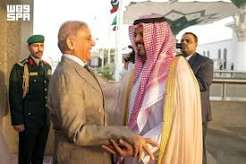
The agreement was signed by Saudi Crown Prince Mohammed bin Salman, Turkish President Recep Tayyip Erdogan and Pakistani Prime Minister Shehbaz Sharif during a summit in the holy city of Mecca. The three governments described the pact as a way to strengthen collective deterrence, deepen defense cooperation and support peace and stability in the region and beyond.
[aljazeera](https://www.aljazeera.com/news/2026/8/7/saudi-%E2%81%A0arabia-pakistan-and-turkiye-sign-defence-deal-amid-regional-turmoil)
The wording is powerful, but the public announcement leaves important questions unanswered. The full text has not been released, and officials have not explained precisely how the three countries would respond if one member came under attack. It remains unclear whether the agreement would require an automatic military response, consultations among the governments or a separate decision based on the nature of the threat.
That distinction matters. The statement creates a clear political commitment, but political commitments can operate differently from detailed military treaties. The practical meaning of the pact will depend on command arrangements, intelligence procedures, defense planning, rules for the use of force and the ability of each country to provide support quickly during a crisis.
What the agreement covers
Officials say the framework is intended to expand cooperation across several areas of national security. These include joint exercises, intelligence sharing, counterterrorism efforts, military coordination and cooperation between defense industries.
Turkey brings extensive experience in military production, drone technology, armored systems and regional security operations. Pakistan contributes a large and experienced military establishment, a strategic location between South Asia and the Middle East and long standing defense ties with Saudi Arabia. Saudi Arabia provides financial resources, advanced infrastructure and a central position connecting the Gulf, the Red Sea and wider trade routes.
In combination, the three countries could create a broad network for training, intelligence and defense production. The arrangement may also support the exchange of equipment, maintenance services and technical knowledge. Yet cooperation on paper does not guarantee compatibility in practice. Different military doctrines, communications systems and procurement rules can make joint operations difficult unless governments invest steadily in training and planning.
A pact described as defensive
Turkish officials said the agreement is defensive and is not directed at any particular country. They also said it does not replace existing bilateral or multilateral agreements and remains open to other regional countries that share the stated goal of peace, prosperity and stability.
[reuters](https://www.reuters.com/world/asia-pacific/saudi-arabia-turkey-pakistan-sign-joint-defence-deal-amid-regional-turmoil-2026-08-07/)
This language appears designed to reassure partners while preserving the agreement’s deterrent purpose. The three governments want potential adversaries to believe that aggression could trigger a wider response, but they also want to avoid presenting the pact as the first step toward a new military bloc aimed at a named opponent.
The challenge will be maintaining that balance. A collective defense promise can reduce the temptation to attack one member in isolation, but it can also make a local incident more dangerous if leaders fear that restraint will be interpreted as weakness. Clear communication channels will therefore be as important as weapons and troop deployments.
Regional tensions raise the stakes
The agreement was concluded against a backdrop of military tensions and conflict across the Middle East. Gulf states have faced concerns about missile attacks, drone strikes, maritime insecurity and threats to energy infrastructure. The possibility of wider escalation has encouraged governments to reconsider how they protect airports, ports, refineries, pipelines, telecommunications facilities and major population centers.
For Saudi Arabia, the pact offers another layer of security around critical economic and transportation hubs. The country is investing heavily in logistics, tourism, entertainment, technology and major construction projects. Those developments depend on public confidence, safe air routes and reliable access to roads, ports and airports.
Turkey’s involvement expands the agreement’s geographic reach. With territory linking Europe, the Middle East and the Black Sea, Turkey can provide an important bridge for military planning and regional diplomacy. Pakistan adds a South Asian dimension and gives the partnership a connection to the Arabian Sea and the wider Indian Ocean.
The arrangement does not mean that the three countries share identical interests. Their relationships with neighboring states, major powers and regional movements differ. The pact may therefore be strongest in areas where the members already agree, such as counterterrorism, protection of infrastructure and defense industry cooperation.
Possible effects on sports and major events
The agreement could affect the security planning surrounding regional sports venues and international events. Stadiums, training centers, hotels, airports and public transportation networks are increasingly treated as part of the same security environment because large gatherings depend on the safe movement of spectators, athletes, staff and media.
Saudi Arabia, Turkey and Pakistan each host major sporting competitions and large public events. A defense framework that improves intelligence sharing and coordination could help authorities identify threats affecting stadiums, fan zones, transport corridors and accommodation districts. Joint planning may also improve emergency response if a serious incident occurs near a major venue.
However, the pact does not automatically guarantee safer events. Event security still depends on local police, emergency medical services, venue operators, border agencies and private contractors. The usefulness of the agreement will be measured by whether national level information reaches local officials in time and whether agencies can act without confusion over authority.
For international sports organizations, the development may encourage closer discussions about risk assessments, evacuation plans, cyber protection and the security of athletes and spectators. A stadium can be physically secure while its ticketing systems, communications networks or surrounding transport links remain vulnerable. Defense cooperation may help address those connected risks, but only if civilian agencies are included in the planning.
Infrastructure protection becomes central
Modern security threats rarely focus only on traditional military targets. Electricity networks, water systems, data centers, undersea cables, airports and financial infrastructure can all be disrupted without a conventional invasion. The new agreement’s emphasis on intelligence and defense cooperation could support a more coordinated approach to protecting these systems.
Energy infrastructure will be especially important for Saudi Arabia. Oil facilities, export terminals and power stations are essential to the country’s economy and to global markets. Turkey’s position along major energy and transport routes gives it a related interest in protecting pipelines, ports and transit networks. Pakistan faces its own challenges involving roads, ports, power systems and communications infrastructure.
Cooperation could include shared threat assessments, exercises for responding to drone attacks and stronger protection for digital systems. It could also involve the development of locally produced equipment, reducing dependence on outside suppliers during a crisis.
What remains uncertain
The agreement’s public language has not answered several questions that will determine its significance:
- What event would qualify as an armed attack?
- Would a cyberattack or attack by a nonstate group activate the collective response?
- How quickly would the three governments consult one another?
- What military, financial or intelligence support would each member provide?
- Would another country be allowed to join, and under what conditions?
These details may emerge through later protocols, military exercises or separate defense agreements. Until then, analysts and neighboring governments will be assessing the pact primarily through official statements and the actions that follow.
A significant signal, not yet a tested alliance
The Mecca agreement is a major diplomatic signal because it brings together three influential countries that have previously cooperated through bilateral channels. It strengthens the political cost of attacking any one member and could give the three governments a platform for closer work on intelligence, defense production and emergency planning.
At the same time, the pact has not yet been tested by a crisis. Its credibility will depend on whether the members conduct meaningful joint exercises, establish secure communication systems and clarify how decisions would be made under pressure. The Saudi Press Agency and the Associated Press report on the signing provide reference points as further details emerge.
For people living near major infrastructure and sports centers, the agreement may eventually be felt through stronger screening, more visible security and expanded emergency exercises. For the wider region, its deeper importance lies in whether collective defense becomes a working system rather than a phrase used at a ceremony. The next stage will show whether Saudi Arabia, Turkey and Pakistan can convert a powerful promise into dependable cooperation that protects civilians while reducing the risk of wider conflict.