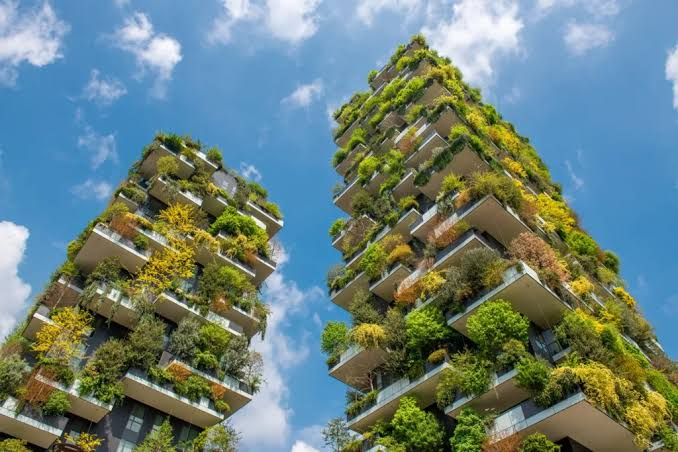
Walk through the lobby of almost any newly leased office tower in a major financial hub this year and you will likely notice something that would have seemed like a footnote five years ago, a certification plaque near the elevator bank, a real time energy dashboard in the leasing office, a building management team that can tell you the structure’s water usage down to the gallon. That is not decoration anymore. It is the new language institutional capital speaks when deciding where billions of dollars land next. We are watching global commercial real estate markets recalibrate in real time, and the driving force is not glamorous, it is the blunt, unavoidable math of energy costs and geopolitical volatility.
The Capital Shift Nobody Can Ignore
Institutional investors are moving money into high efficiency, green certified commercial assets across financial hubs, and they are doing it as a hedge, not a gesture. Rising operational costs and unpredictable energy markets have turned what used to be an environmental, social, and governance talking point into a straightforward underwriting decision. A building that consumes less power per square foot is simply cheaper to operate when a geopolitical shock sends electricity or gas prices climbing, and cheaper operations mean steadier net income for whoever owns the asset.
The scale of this pivot is becoming difficult to overstate. Sustainability was once treated as a premium feature that tenants might appreciate, but it has quietly become an operational necessity, with tenants increasingly comparing monthly utility costs when choosing where to lease and municipal regulators tightening building performance standards year after year. That shift shows up in how executives across the industry now talk about the asset class. One real estate leader recently described energy performance as something that directly shapes asset value and operating stability, framing sustainable buildings not as a values statement but as financially disciplined investments in their own right.
From Optional Upgrade to Underwriting Requirement
What makes this cycle different from earlier green building pushes is how deeply the standard has embedded itself into lending and underwriting criteria. Institutional capital is increasingly expected to satisfy environmental, social, and governance requirements, and green certified assets give investors a documented path to meet that mandate while also unlocking more favorable financing terms. Analysts tracking the sector expect that by this point in 2026, institutional capital will effectively require ESG compliance across nearly all top tier commercial assets, a shift that is already devaluing older, inefficient properties that lenders now consider higher risk.
We think it is worth pausing on what that devaluation actually means for the people managing these portfolios. It is not abstract. A property manager overseeing an aging tower built decades ago now has to reckon with the possibility that the building’s outdated mechanical systems, its leaky envelope, its inefficient lighting, are not just maintenance headaches but genuine drags on resale value and refinancing terms. That reality is pushing owners toward retrofits they might have delayed indefinitely in a lower rate, lower energy cost environment.
The Data Behind the Trend
Investor expectations are converging around a consistent set of operational behaviors, including expanding asset level utility coverage, engaging tenants directly on performance, and tying results to credible third party certifications. Industry researchers point to strong empirical evidence connecting sustainability performance scores with occupancy rates, cost of capital, and transaction pricing, which is precisely why these scores now shape decisions well beyond simple regulatory compliance. Owners who move from the middle of the pack to the top quartile of performance tend to do three things consistently, they deepen the quality of their performance data, they strengthen tenant engagement programs, and they integrate embodied carbon measurement into their standard reporting rhythm alongside energy and water figures.
Financing Tools Are Accelerating the Shift
None of this capital reallocation would move as quickly without financing structures built specifically to support it. Programs like the federal Section 179D commercial buildings energy efficiency tax deduction, along with the LEED certification framework administered by the U.S. Green Building Council, have given investors and developers concrete financial incentives to prioritize efficiency work now rather than later. Lenders and institutional investors are factoring sustainability directly into their underwriting criteria, and properties carrying recognized green certifications frequently benefit from more favorable financing terms, which only reinforces the capital flow toward these assets.
There is a timing pressure layered on top of all this too. Certain federal incentive structures are shifting or narrowing in scope through 2026, which means investors who might have spread retrofit spending across several years are instead front loading decisions now, before financing windows close or incentive levels step down. That urgency is part of why the capital shift feels less like a gradual trend and more like a rush this particular summer.
What This Means for Financial Hubs Globally
We see this playing out most visibly in the world’s dense financial centers, where office towers compete fiercely for a shrinking pool of top tier tenants and every operating cost advantage matters. Green certified buildings in these markets are increasingly commanding higher rents, stronger occupancy, and better lease renewal probabilities compared to their less efficient counterparts, according to research tracked through resources like the GRESB benchmarking platform that institutional investors rely on to compare sustainability performance across portfolios. For a tenant deciding between two comparable office spaces, the building with lower utility exposure and a documented efficiency track record increasingly wins the lease, and landlords know it.
None of this unfolds evenly across every market or every investor type. Large institutional capital sources, particularly those based in Europe and along the coasts of the United States, remain deeply focused on ESG performance and are asking increasingly detailed questions about carbon intensity, resilience measures, and transparent reporting rather than accepting certification labels at face value. Smaller domestic investors in some regions have moderated their sustainability emphasis somewhat, prioritizing yield and liquidity instead. That divergence matters, because it means the green premium is not universal, it is concentrated most heavily where institutional, globally minded capital dominates the buyer pool.
A Market Finding Its Footing Under Pressure
We do not think this shift is simply a trend that will fade once energy prices stabilize, if they ever do. Geopolitical volatility has made energy cost predictability feel like a luxury rather than a given, and once institutional investors build that uncertainty into their underwriting models, it tends to stay there. Buildings that can demonstrate real, measurable efficiency, not just a certification plaque in the lobby, are positioning themselves as the safer long term bet in a market where operating costs have become as important a variable as location once was on its own.
For property owners still weighing whether to invest in retrofits, upgraded metering, or a formal certification pathway, the message coming from institutional capital this year is about as clear as it gets. The buildings that adapt now are the ones likely to hold their value, attract quality tenants, and stay liquid whenever the next round of market turbulence arrives. The ones that wait may find themselves competing for a shrinking pool of buyers willing to take on the operational risk that comes with an aging, energy hungry asset.