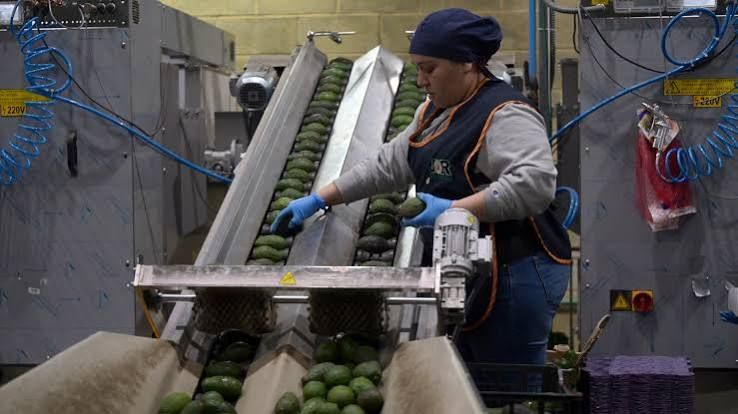
Global food distributors are increasingly turning toward localized sourcing as fluctuating maritime fuel costs and regional trade tariffs make long distance agricultural supply chains more difficult to manage. The shift is changing how food moves from farms to processors, wholesalers, retailers, and consumers, while creating new opportunities for regional producers. For households, the effects may eventually appear in everything from supermarket prices to the seasonal availability of familiar foods.
Food Companies Are Rethinking Long Distance Sourcing
For years, large food distribution networks have depended on international supply chains designed around scale. Agricultural products could travel thousands of miles if production costs, seasonal conditions, and transportation expenses made the arrangement financially attractive.
That model becomes harder to maintain when maritime fuel prices fluctuate sharply or tariffs increase the cost of imported agricultural goods. A shipment that once appeared economical can become considerably less attractive when transportation and trade expenses rise between the moment a purchase agreement is signed and the moment products reach a distribution center.
We are now seeing distributors place greater attention on regional suppliers. Instead of relying exclusively on distant producers, companies are exploring networks of farms, processors, storage facilities, and transportation providers located closer to their principal markets.
The goal is not necessarily to eliminate international trade. Global sourcing remains essential for many foods and regions. Rather, distributors are looking for a more balanced system in which local and regional suppliers can provide alternatives when international costs become unpredictable.
Why Maritime Fuel Costs Matter to Grocery Supply Chains
Shipping costs can influence the final price of agricultural products long before consumers see them on store shelves. Ocean freight connects major food producing regions with import markets, but vessels consume substantial amounts of fuel during long journeys.
When maritime fuel expenses rise, the additional cost can move through multiple stages of the supply chain. Importers may pay more for transportation, wholesalers may adjust purchasing decisions, and retailers may eventually face higher procurement costs.
Localized sourcing reduces exposure to some of those international transportation expenses. A distributor sourcing vegetables from a farm within a few hundred miles of a regional warehouse does not face the same ocean freight exposure as a company importing comparable products from another continent.
Distance is not the only consideration. Local transportation can also be affected by fuel prices, labor availability, road conditions, refrigeration requirements, and storage capacity. Yet shorter supply routes can provide greater visibility and allow distributors to respond more quickly when conditions change.
Regional Tariffs Are Adding Another Layer of Uncertainty
Trade tariffs can alter sourcing decisions just as significantly. Agricultural products often cross multiple borders before reaching consumers, and each change in trade policy can affect the economics of those transactions.
A tariff does not necessarily mean that imported food becomes unavailable. Instead, it can change the relative cost between domestic, regional, and international suppliers. When imported products become more expensive, distributors have a stronger incentive to examine whether suitable alternatives are available closer to their markets.
This process can benefit local agricultural producers, particularly those capable of supplying consistent quantities and meeting food safety, packaging, storage, and delivery requirements. However, shifting to regional sourcing is not as simple as calling a nearby farm and placing a large commercial order.
Local Producers Face Their Own Challenges
Small and medium sized farms can benefit from stronger local demand, but they may also face significant limitations. Large distributors often require reliable volumes, standardized packaging, predictable delivery schedules, digital documentation, and strict quality controls.
A farm producing excellent food may not have the refrigerated storage or transportation capacity needed to supply a supermarket chain consistently. Regional sourcing therefore requires investment beyond the farm itself.
Distributors may need to develop relationships with agricultural cooperatives, regional warehouses, food processors, and specialized logistics companies. These connections can turn fragmented local production into a dependable commercial supply network.
Localized Supply Chains Could Improve Resilience
One of the strongest arguments for local sourcing is resilience. A supply chain that depends heavily on one distant production region can become vulnerable to weather events, geopolitical disruptions, transportation delays, labor shortages, or changes in trade policy.
A diversified network gives distributors more options. If one supplier experiences a problem, another regional source may be able to fill part of the gap.
This does not mean that local sourcing is automatically safer. Regional agriculture can also be affected by drought, floods, disease, extreme temperatures, and other disruptions. The real advantage comes from diversification rather than distance alone.
A resilient food system may therefore combine international imports with domestic production and regional sourcing. The objective is to avoid depending too heavily on any single route, supplier, or geographical area.
Fresh Produce Could Benefit Most From Regional Distribution
Fresh agricultural products are particularly sensitive to transportation time. Fruits, vegetables, dairy products, and other perishable foods require careful temperature management and efficient logistics from the moment they leave a farm.
Shorter routes can reduce the amount of time products spend in transit. That can help distributors manage freshness and reduce losses caused by delays.
For consumers, the result could be more visible seasonal sourcing. Supermarkets may increasingly promote regional produce when local harvests are available, while relying on international suppliers when domestic production cannot meet demand.
The concept of seasonal food is not new, but modern distribution systems have made many products available throughout much of the year. A renewed focus on local supply could make seasonal availability more relevant to purchasing decisions.
Technology Is Helping Local Networks Compete
Localized sourcing becomes easier when distributors can see what is available across a fragmented network of producers. Digital inventory systems, agricultural forecasting tools, transportation management software, and real time supply monitoring can help connect farms with buyers more efficiently.
A distributor that knows how much produce is available from several farms can make purchasing decisions based on current conditions rather than relying entirely on long term estimates.
Technology can also help smaller producers meet the administrative requirements of larger buyers. Digital records can simplify traceability, quality documentation, shipment scheduling, and inventory management.
Resources from the Food and Agriculture Organization of the United Nations provide broader information about food systems, agricultural production, trade, logistics, and food security.
Sustainability Is Becoming Part of the Logistics Calculation
Local sourcing is also being discussed in connection with environmental sustainability. Shorter transportation routes can reduce some emissions associated with long distance freight, although the environmental impact of a food product depends on much more than transportation distance.
Production methods, refrigeration, storage, packaging, agricultural inputs, vehicle efficiency, and food waste all contribute to the overall environmental footprint.
A locally produced food item that requires energy intensive production or inefficient distribution is not automatically more sustainable than an imported product transported through an efficient supply chain. This is why distributors are increasingly looking at the entire logistics network rather than using distance as the only measure.
Nevertheless, regional sourcing can create opportunities to reduce unnecessary transportation and food loss when it is supported by efficient storage and distribution systems.
Consumers May Notice Changes in Prices and Availability
The shift toward local sourcing will not necessarily make groceries cheaper immediately. Regional producers may have higher production costs, limited economies of scale, or seasonal constraints. In some markets, locally sourced products could therefore carry a premium.
At the same time, stronger local competition can provide distributors with an alternative when international sourcing becomes unusually expensive. That flexibility may help limit exposure to sudden changes in shipping and trade costs.
Consumers could also see more variation in product availability. Instead of expecting every agricultural product to remain continuously available at identical prices, shoppers may encounter greater seasonal differences.
For families managing tight budgets, those changes could matter. Food represents a major household expense, and even small increases across staple products can become significant over the course of a year.
Small Farms Could Gain Greater Market Access
If distributors continue expanding regional networks, smaller agricultural producers could gain access to markets that were previously dominated by large suppliers.
That opportunity comes with responsibilities. Farms seeking larger commercial contracts may need to improve storage, packaging, food safety procedures, delivery reliability, and production planning. Cooperatives can help by allowing several producers to combine output and share infrastructure.
This model can create a stronger connection between regional agriculture and urban consumers. Instead of every farm attempting to manage distribution independently, producers can participate in organized networks capable of supplying larger buyers.
Food Logistics Is Becoming More Flexible
The most important change may be that food distribution is becoming less dependent on a single sourcing strategy. International trade will remain essential, particularly for products that cannot be produced economically in every region.
However, distributors now have stronger reasons to maintain multiple options. Regional suppliers can provide flexibility, international markets can provide scale, and diversified logistics can reduce the consequences of sudden disruption.
We should expect companies to continue examining their supply chains at a much more detailed level. Procurement teams may evaluate not only the price of an agricultural product but also transportation exposure, tariff risk, delivery reliability, storage requirements, seasonal availability, and the number of alternative suppliers available.
The Future of Food Distribution May Be Both Local and Global
The current movement toward localized sourcing should not be viewed as the end of global food trade. The more likely outcome is a hybrid system in which international and regional supply networks support each other.
A supermarket in a major city may source vegetables from nearby farms during the local growing season, purchase additional supplies from other regions when necessary, and rely on international producers for products that cannot be grown economically nearby. This approach can provide both variety and resilience.
The strategy also gives distributors more room to respond when costs change. If maritime fuel expenses rise, regional sourcing may become more attractive. If local production faces a poor harvest, international suppliers can help fill the shortage.
That flexibility is increasingly valuable in an agricultural economy where transportation costs, trade policies, weather conditions, and consumer expectations can change rapidly.
A More Resilient Food System Could Start Closer to Home
The movement toward localized agricultural sourcing is ultimately about more than reducing shipping expenses. It reflects a broader effort to build food networks that can withstand uncertainty while maintaining reliable access to essential products.
For distributors, that means developing relationships with more suppliers and investing in smarter logistics. For farmers, it can create new commercial opportunities while requiring stronger production and distribution capabilities. For consumers, it may mean seeing more regional products, more seasonal variation, and potentially greater transparency about where food comes from.
We believe the strongest food supply chains will not be those that choose local or global sourcing exclusively. They will be the networks capable of combining both approaches intelligently. International trade can provide scale and variety, while regional agriculture can provide flexibility, shorter routes, and stronger connections between producers and nearby markets.
As food distributors respond to changing maritime fuel costs and regional trade tariffs, the agricultural supply chain is quietly being redesigned. The result may be a food system that is less dependent on any single route and better prepared for the next disruption, while giving local producers a larger role in feeding the cities around them.