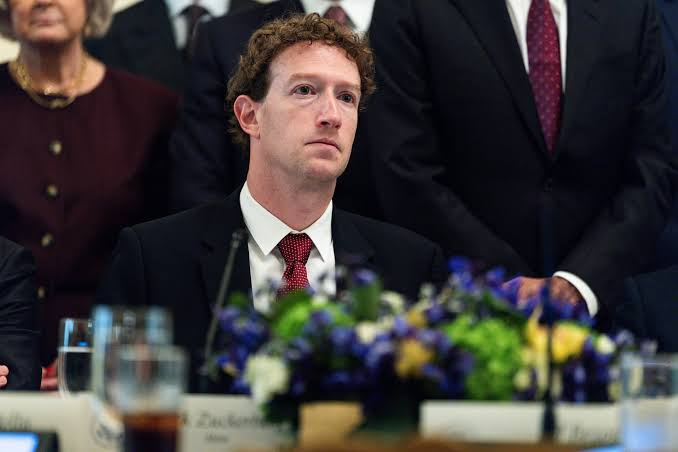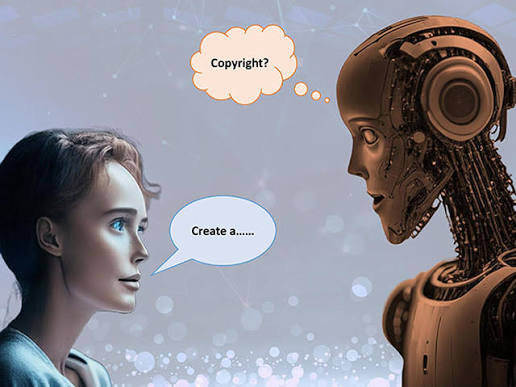
On August 20, 2026, some of the world’s most influential judicial bodies and cross border intellectual property courts sat down together to tackle a question that sounds almost philosophical until you realize billions of dollars and countless creative careers hinge on the answer. Who actually owns a song, a design, or an invention when the entity that produced it was not a person at all, but an autonomous artificial intelligence system operating with minimal human input? We have followed this debate for years, and this convening marks the closest the international legal community has come to setting a unified precedent.
A Question That Refuses To Wait
Courts move slowly by design, built on precedent and careful deliberation, but generative and autonomous AI systems have not extended that same patience. Music generated entirely by algorithmic composition, pharmaceutical compounds identified by machine learning models without a chemist ever touching the process, and visual artwork produced by systems that require only a vague prompt to begin working independently have all landed on the desks of patent examiners and copyright offices faster than existing law can accommodate them. We spoke with several attorneys practicing in this space who described a growing backlog of applications that simply do not fit neatly into categories written decades before anyone imagined a machine could originate something without direct human authorship.
What made this particular gathering significant was not just the subject matter but the participants. Supreme judicial representatives from multiple jurisdictions, alongside specialized cross border IP tribunals, came together specifically to discuss harmonizing standards rather than allowing each country to continue drafting its own patchwork of rules. Anyone who has tried to protect intellectual property across multiple countries knows how exhausting that patchwork can be, and how costly the inconsistencies become for businesses trying to operate globally.
The Core Disagreement Driving The Debate
At the heart of the discussion sits a genuinely difficult philosophical split. One camp argues that copyright and patent protections exist to reward human creativity and labor, meaning a work produced without meaningful human authorship simply should not qualify for protection at all, regardless of how commercially valuable it becomes. The opposing camp contends that denying protection altogether would create a strange incentive structure, essentially telling companies and individual creators that anything touched too heavily by AI becomes public domain the moment it exists, which could discourage responsible disclosure and push development further underground.
We find ourselves genuinely sympathetic to both sides of this argument, and we suspect most thoughtful observers do too. There is something instinctively troubling about granting a machine legal personhood in any form, yet there is also something impractical about pretending these creations do not need any framework at all when they are already flooding into commercial markets.
What Existing Law Actually Says (And Where It Falls Short)
Current copyright frameworks in most major jurisdictions, including the United States, were built around the assumption that a human author must exist for protection to apply. The U.S. Copyright Office has already issued guidance addressing AI generated content, generally requiring that applicants disclose the extent of AI involvement and demonstrate meaningful human creative control over the final work. Readers wanting the specifics of how this plays out in practice can review the official guidance published by the U.S. Copyright Office, which has become something of a reference point for other nations still drafting their own positions.
Patent law faces a parallel but distinct challenge. Several high profile cases involving an AI system named as the sole inventor on patent applications have already been litigated in courts across multiple countries, with most rulings so far rejecting the notion that a non human entity can be legally recognized as an inventor. Yet the underlying question of who, if anyone, deserves credit and ownership when a human merely supervises an autonomous discovery process remains largely unsettled.
Why This Matters Beyond The Courtroom
It is tempting to treat this as an abstract legal puzzle relevant only to lawyers and technologists, but the human stakes here run deeper than headlines suggest. Independent musicians worry that AI generated compositions flooding streaming platforms without clear ownership rules could dilute their livelihoods. Small biotech firms fear that larger competitors with access to powerful AI discovery tools could patent compounds faster and cheaper, potentially locking out researchers who lack the same computational resources. Visual artists, many of whom have already spent recent years fighting to protect their work from being used as unlicensed training data, now face the added anxiety of AI generated competitors that can produce derivative style pieces at a volume no human could match.
We think it is worth pausing here to acknowledge the emotional weight many creators carry into this conversation. For someone who has spent a lifetime building a craft, watching a machine replicate stylistic elements in seconds understandably feels disorienting, even threatening. A fair legal framework needs to account for that lived experience, not just the abstract economics of innovation policy.
What A Global Precedent Might Actually Look Like
Several proposals emerged from discussions among the participating bodies, though none have yet solidified into binding international law. One approach gaining traction involves a tiered ownership model, where the degree of human involvement in directing, curating, or refining an AI output determines the strength and duration of legal protection available. Under this model, a work produced through extensive human guidance and creative decision making would receive protections closer to traditional copyright, while a fully autonomous output with minimal human direction might receive a shorter, more limited form of protection, or none at all.
Another proposal under discussion centers on mandatory disclosure requirements, obligating creators and companies to clearly label the extent of AI involvement at the point of registration. Proponents argue this would preserve transparency for consumers and competitors alike, while critics worry it could create enforcement challenges given how difficult it already is to verify the precise degree of AI contribution in a hybrid creative process.
Practical Guidance For Creators And Businesses Today
While the international legal community continues working toward consensus, individuals and companies producing AI assisted work do not need to wait passively for clarity. We would encourage anyone in this position to start documenting their creative and decision making process thoroughly, since demonstrating meaningful human involvement is likely to remain central to protection eligibility under nearly any framework that eventually emerges. Businesses relying on AI for product design or research should also consult intellectual property counsel early, well before filing, to understand how current guidance in their specific jurisdiction applies to their particular use case.
Organizations such as the World Intellectual Property Organization continue publishing evolving frameworks and policy discussions that offer useful signals for where international consensus may eventually land, making them a worthwhile resource for anyone trying to stay ahead of regulatory shifts rather than reacting after the fact.
A Debate Still Being Written
We walk away from this convening with a sense that meaningful progress was made, even without a final ruling in hand. Bringing supreme judicial bodies and specialized IP courts to the same table to discuss harmonization at all represents a shift from the fragmented, reactive approach that has defined AI copyright discussions until now. The path forward will require balancing innovation incentives against genuine protection for human creators, and we suspect no single framework will satisfy everyone completely.
What seems certain is that the world can no longer afford to treat this as a distant hypothetical. The inventions and artistic works in question already exist, already circulate commercially, and already affect real livelihoods. The question before these regulators is not whether to act, but how to act in a way that respects both the astonishing capability of these systems and the deeply human value of original creative and inventive work.