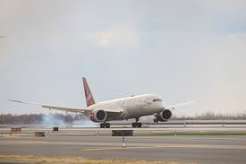
On August 20, 2026, several major international carriers rolled out upgraded long haul flight schedules built around significantly higher blends of sustainable aviation fuel, a shift driven largely by mandatory global decarbonization targets that airlines can no longer afford to postpone. We have tracked this transition for years, watching it move slowly from experimental test flights to something now embedded directly into the daily operations of the world’s largest airlines. This latest expansion feels like a genuine inflection point rather than another incremental announcement.
What Sustainable Aviation Fuel Actually Is And Why It Took So Long
Sustainable aviation fuel, commonly shortened to SAF, refers to jet fuel produced from renewable feedstocks such as used cooking oil, agricultural residue, algae, and increasingly, captured carbon combined with green hydrogen. Unlike electric vehicles, which benefited from a relatively straightforward path toward battery improvement and charging infrastructure, aviation faced a much harder physics problem. Commercial aircraft require fuel dense enough to power flights spanning oceans and continents, and battery technology remains nowhere close to matching that energy density for long haul routes. SAF emerged as the most viable near term solution precisely because it can be blended into existing jet engines without requiring entirely new aircraft designs, which is part of why its adoption has accelerated so quickly once production capacity began catching up with demand.
We think it is worth acknowledging just how difficult the supply chain challenge behind SAF has been. Producing renewable fuel at the scale required to meaningfully offset global aviation emissions demands enormous feedstock volumes, specialized refining infrastructure, and consistent quality standards that took years of collaboration between fuel producers, regulators, and airlines to establish. The International Air Transport Association has published detailed tracking of this production ramp up, offering useful context for anyone curious about how far the industry has come from its earliest pilot programs.
The Regulatory Pressure Driving This Moment
This expansion did not happen purely out of environmental goodwill, and we think honesty about that motivation actually strengthens rather than weakens the story. International aviation bodies and individual national governments have imposed increasingly strict decarbonization mandates on the industry, with specific blending percentage requirements and firm compliance deadlines that carry real financial penalties for airlines who fall short. Facing those mandates, carriers that once treated SAF adoption as a public relations initiative have shifted toward treating it as an unavoidable operational necessity.
We have spoken with aviation industry analysts who describe this shift candidly as a case where regulation succeeded in accelerating a transition that market forces alone likely would have delayed for years. Airlines operate on notoriously thin margins, and without mandatory targets forcing coordinated investment across the entire industry, the higher cost of SAF compared to conventional jet fuel might have kept adoption limited to a handful of environmentally branded carriers rather than becoming an industry wide standard.
What Passengers Will Actually Notice (And What They Won’t)
For most travelers boarding these upgraded long haul flights, the experience in the cabin will feel entirely unchanged, and we think that is actually one of the more reassuring aspects of this story. SAF is designed to be a drop in replacement, meaning it performs identically to conventional jet fuel within existing engine systems, requiring no changes to aircraft, no differences in flight performance, and no compromises in safety standards. Passengers will not feel a different takeoff or notice altered cabin pressure because the fuel powering their flight came from a renewable source rather than a traditional one.
What passengers might notice, over time, are ticket pricing structures that begin to reflect the genuinely higher production cost of sustainable fuel, along with more transparent emissions reporting from airlines eager to demonstrate their compliance with new targets. Several carriers have already begun offering passengers the option to view estimated emissions reductions associated with specific flights, a transparency measure that would have seemed unusual just a few years ago but is quickly becoming standard practice across the industry.
The Emotional Weight Of Flying Differently
There is something worth sitting with here beyond the technical and regulatory details. Air travel has long carried an uncomfortable tension for environmentally conscious travelers, the joy and necessity of connecting with distant family, exploring unfamiliar places, or attending important life events, weighed against a genuine awareness of aviation’s outsized carbon footprint relative to other forms of transportation. We have heard from frequent travelers who describe a real sense of guilt tied to boarding long haul flights, even when the trip itself carries deep personal meaning.
This expansion of SAF powered routes will not eliminate that tension entirely, since sustainable fuel still produces emissions, just meaningfully fewer than conventional alternatives depending on the feedstock and blend ratio used. But for many travelers, knowing that their airline has made tangible, verifiable investments in reducing that footprint offers a measure of emotional relief that pure carbon offset programs, which have faced increasing scrutiny over their actual effectiveness, have struggled to provide.
Challenges That Remain Ahead
We would be doing readers a disservice if we presented this transition as a fully solved problem rather than an ongoing process with real obstacles still ahead. Current SAF production, even with recent capacity expansions, still meets only a fraction of global aviation fuel demand, meaning most flights worldwide continue relying predominantly on conventional jet fuel blended with smaller SAF percentages rather than the higher ratios featured in these newly launched long haul routes. Scaling production further will require continued investment in refining infrastructure and, in many cases, competition for the same renewable feedstocks that other industries, including renewable diesel production, are also pursuing.
Cost remains another significant hurdle. SAF continues to carry a meaningful price premium over conventional jet fuel, and while that gap has narrowed as production scales, it has not closed entirely. Airlines will need continued policy support, whether through tax incentives, production subsidies, or long term purchase agreements, to keep expanding SAF adoption without passing disproportionate cost increases onto passengers.
What Comes Next For The Industry
Looking toward the coming years, we expect additional carriers to announce similar long haul schedule expansions as production capacity continues growing and regulatory deadlines draw closer. Airlines that move early on these transitions are likely to gain a genuine competitive advantage, both in regulatory compliance and in appealing to a growing segment of travelers who actively factor sustainability credentials into their booking decisions.
We remain cautiously optimistic about where this trajectory leads, tempered by realistic awareness of the production and cost challenges still ahead. What feels different about this particular announcement, compared to earlier SAF pilot programs, is the scale and permanence of the commitment. These are not test flights or limited demonstration routes. They represent a structural shift in how major carriers plan to operate their long haul networks going forward, and that shift matters for anyone who cares about the future of air travel.