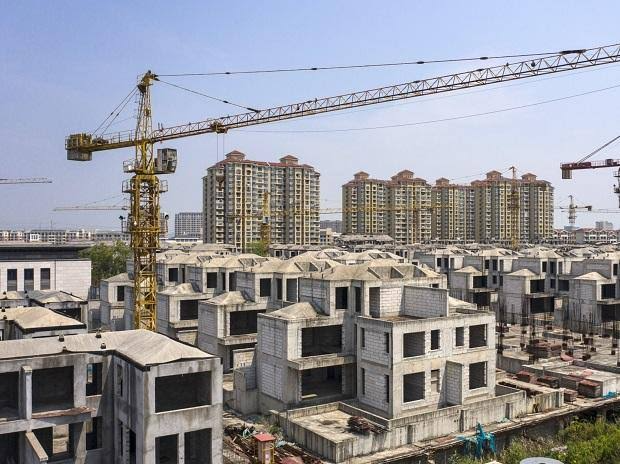
China’s prolonged property downturn continues to cast a heavy shadow over the country’s broader economic outlook, with weakness across commercial and residential real estate affecting construction, household confidence, local government finances and business investment. High profile corporate failures and legal action against executives have added another layer of uncertainty to a sector that has already spent years struggling with excessive debt, unfinished developments and weak demand.
China’s Property Problem Has Become a Broader Economic Problem
We should not view the property downturn as a problem confined to developers and homebuyers. Real estate has long been deeply connected to China’s economic activity. Construction companies, banks, materials suppliers, local governments, household wealth and millions of workers are all exposed to the health of the property market.
When new apartments sell quickly, developers receive cash, construction firms remain busy and local authorities collect revenue associated with land transactions and development. When sales weaken, that cycle can move in the opposite direction.
Developers delay projects, suppliers wait longer for payments, construction activity slows and households become more cautious about spending. The effects can spread through the economy even when the original problem begins with a single property company.
Why the Residential Market Remains Under Pressure
China’s housing market entered its prolonged downturn after years of rapid expansion fueled by borrowing, rising land values and strong expectations that property prices would continue climbing. Many households treated apartments as an important store of wealth, while developers relied heavily on debt to finance additional projects.
That model became increasingly difficult to sustain as sales weakened and financing conditions tightened. Developers that once depended on continuous property sales to support new construction found themselves facing large debt obligations at the same time that buyers became more cautious.
For ordinary families, the situation is deeply personal. Buying an apartment in China is often one of the largest financial decisions a household makes. Concerns about falling prices are difficult enough, but uncertainty surrounding unfinished projects can be even more distressing for buyers who have already committed savings to a home.
Developer Insolvencies Continue to Reshape the Industry
The failure of heavily indebted developers has become one of the defining features of China’s property adjustment. Some companies have entered restructuring processes, while others have faced liquidation or prolonged negotiations with creditors.
Structural insolvency is particularly difficult because a property developer may own valuable land and partially completed buildings while simultaneously carrying liabilities that exceed what those assets can realistically generate.
Resolving such cases requires more than finding a buyer for a company. Authorities and creditors may need to determine how unfinished developments will be completed, how suppliers will be paid and how financial losses will be distributed.
The process can take years. That prolonged uncertainty can keep buyers and investors cautious even when policymakers introduce measures designed to support the housing market.
High Profile Executive Cases Add to the Uncertainty
Legal action involving senior executives has also attracted attention because it illustrates the seriousness with which authorities are addressing financial misconduct and corporate risk. For investors, such cases can raise questions about governance, accountability and the reliability of information provided by troubled companies.
Corporate accountability can ultimately strengthen a financial system when it discourages reckless behavior. At the same time, high profile prosecutions can add uncertainty during an already difficult restructuring process if investors become less willing to provide capital to companies operating in the sector.
The challenge for policymakers is to separate legitimate accountability from the broader objective of maintaining an orderly property market. Creditors need confidence that contracts will be respected, while homeowners need confidence that construction will continue.
Commercial Property Faces Its Own Challenges
The weakness is not limited to residential housing. Commercial real estate has also been affected by slower economic activity, changing consumer behavior and reduced demand for some types of office and retail space.
Vacant commercial buildings can create a particularly visible sign of economic weakness. A newly constructed office tower may appear impressive from the outside, but if floors remain empty for extended periods, the investment can generate far less income than originally expected.
Retail property faces similar pressures. Changes in consumer habits and the growth of online commerce have altered the economics of traditional shopping centers. Some locations may recover as demand improves, while others may require conversion into different uses.
Local Governments Are Closely Connected to the Property Market
One of the more complicated consequences of the property downturn involves local government finances. Chinese local authorities have historically relied heavily on land related revenue to support spending and infrastructure development.
When developers are unwilling or unable to purchase land at previous prices, local governments can lose an important source of income. That can create pressure on public budgets at precisely the time when authorities are expected to support economic activity.
This connection helps explain why property weakness can affect growth estimates beyond the construction industry itself. Lower land revenue can influence infrastructure investment, public services and the financial health of local government financing structures.
Household Confidence Is Central to the Recovery
China’s property market cannot fully stabilize through developer financing alone. Household confidence is equally important.
People are more likely to purchase homes when they believe their income is secure, the property will be completed and the investment will retain reasonable value. When those expectations weaken, households may delay purchases even when mortgage rates fall or government incentives become more attractive.
That caution can become self reinforcing. Lower home sales weaken developers, weaker developers reduce new construction and falling activity makes households even more hesitant about committing money to property.
Breaking that cycle requires confidence as much as financial support.
Why Property Weakness Matters for China’s Growth Outlook
The property sector has traditionally played a major role in China’s economic expansion. Construction requires steel, cement, glass, machinery, transportation and professional services. Housing transactions also generate demand for furniture, appliances, renovations and other household goods.
When the sector contracts, those related industries can experience weaker demand. That creates a wider drag on economic activity and makes it harder for other parts of the economy to compensate immediately.
China has been trying to shift toward growth driven more heavily by advanced manufacturing, technology, exports and consumer spending. Those areas can provide new sources of economic activity, but replacing the contribution of a massive property sector is not a simple process.
Policy Support Can Help, But It Cannot Solve Every Problem
Chinese authorities have introduced measures aimed at supporting housing demand, improving financing conditions and helping complete unfinished projects. These policies can reduce immediate stress, particularly for households waiting for homes to be delivered.
However, the deeper issue is the financial structure of the property industry. If developers remain heavily indebted and buyers remain cautious, short term incentives may not be enough to restore the previous growth model.
The more sustainable path is likely to involve allowing the property sector to become smaller and more financially disciplined while protecting homeowners and limiting damage to the broader banking system.
What a Healthier Property Market Could Look Like
A recovery does not necessarily mean returning to the rapid construction and rising property prices seen during earlier periods. A healthier market could instead involve slower development, more realistic prices and developers with stronger balance sheets.
Several changes would be particularly significant:
- Faster completion of unfinished residential projects.
- More transparent restructuring of distressed developers.
- Greater protection for homebuyers who have already paid for properties.
- Reduced dependence on excessive developer borrowing.
- More sustainable sources of revenue for local governments.
These changes could take time, but they would address some of the structural weaknesses that allowed the property boom to become heavily dependent on debt.
Investors Are Watching Banks and Credit Markets
The health of China’s banking system is another major consideration. Banks have significant exposure to property developers, mortgages and businesses connected to construction. A prolonged downturn can therefore increase pressure on asset quality.
The financial system has substantial tools for managing losses, and policymakers have considerable influence over major financial institutions. Nevertheless, widespread property weakness can make credit allocation more difficult.
Investors are likely to watch whether banks can manage distressed property loans while continuing to provide credit to productive parts of the economy. The ability to redirect capital toward technology, manufacturing and consumer businesses could be an important part of China’s economic transition.
The International Impact Should Not Be Ignored
China’s property weakness also matters outside the country. China is one of the world’s largest consumers of industrial commodities, and a prolonged reduction in construction activity can affect demand for materials and equipment from international suppliers.
The effects can move through global trade, commodity markets and corporate earnings. Countries that depend heavily on exports to China may feel the impact differently from economies that benefit from lower commodity costs.
The International Monetary Fund continues to track China’s structural economic challenges alongside broader global growth risks through its China economic analysis and country data.
Consumers Are Likely to Remain at the Center of the Story
Ultimately, the property downturn is not only about developers, banks or economic forecasts. It is also about families making decisions around homes, savings and financial security.
A young couple deciding whether to buy an apartment may think about far more than the advertised price. They may wonder whether construction will finish on schedule, whether the neighborhood will develop as promised and whether the property will retain enough value to protect their savings.
Those concerns can influence economic behavior across millions of households. When families delay major purchases, the effect can reach furniture stores, appliance manufacturers, contractors and financial institutions.
China’s Property Adjustment Could Take Years
The evidence points toward a property sector undergoing a long structural adjustment rather than a short downturn that can be reversed with a single policy announcement. Excess supply, high developer debt, weak confidence and changing demographic conditions all complicate the recovery.
That does not mean the Chinese economy cannot continue growing. It means the composition of growth may have to change. Advanced manufacturing, technology, exports and domestic consumption will have to carry more weight as property investment becomes less dominant.
We should therefore judge China’s property recovery by more than monthly sales figures. The more meaningful indicators include whether unfinished homes are being delivered, whether distressed developers are being resolved, whether household confidence improves and whether local governments can stabilize their finances.
A Property Recovery Will Require Confidence as Well as Capital
China has the financial resources and policy tools to manage a prolonged property adjustment, but rebuilding confidence is a different challenge. Homebuyers need to believe that promised apartments will be completed. Investors need clearer information about corporate finances. Banks need mechanisms for dealing with troubled loans. Local governments need more sustainable revenue sources.
The high profile corporate failures and executive cases surrounding the property sector underline how far the industry has moved from its previous growth model. The priority now is not simply to restore construction at any cost. It is to create a property market that can function without excessive borrowing and unrealistic expectations.
Until that transition is further along, China’s property downturn is likely to remain an important constraint on broader growth. The eventual recovery may be slower and less dramatic than the property booms of the past, but a more stable housing market could provide something the old model struggled to deliver: sustainable growth built on healthier financial foundations.