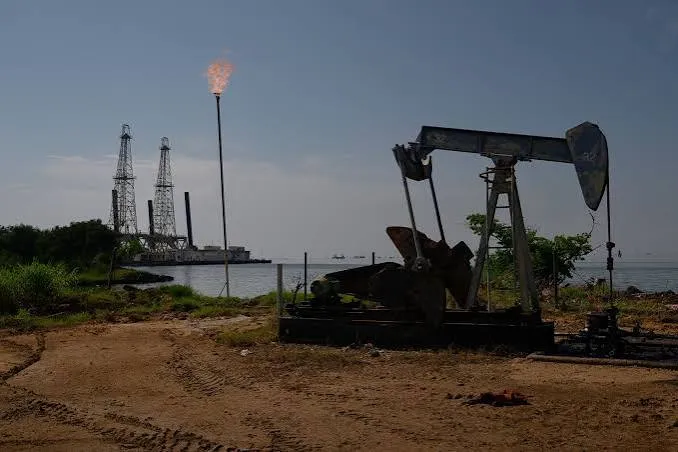
We watched the announcement land late Friday afternoon, and within minutes energy desks across the country were scrambling to make sense of what President Trump had just described as a sweeping new agreement between the United States and Venezuela. The deal, unveiled on August 28, 2026, centers on access to roughly 65 billion barrels of Venezuela’s proven crude oil reserves, a figure so large it is difficult to fully picture without context. For comparison, that volume rivals the reserves of some of the largest producing nations on earth. What makes this moment feel different from prior overtures toward Caracas is the structure being described: a new private company, jointly benefiting American and Venezuelan interests, built specifically to unlock oil fields that have sat underdeveloped for years.
What Was Actually Agreed To
According to details shared by a US official familiar with the matter, the arrangement allows the United States to partner with an unnamed private operator inside Venezuela to stand up a new company that would hold rights to the reserves. Venezuela’s acting president, Delcy Rodriguez, is reported to have granted this new entity 100 year development rights, an extraordinary time horizon that signals both sides are betting on a long runway of extraction and infrastructure rebuilding rather than a quick, transactional fix. Under the terms as described, the United States would hold 55 percent effective output of the new company, combining an ownership stake with the right to purchase oil directly at cost.
Trump announced the agreement in a social media post, crediting Secretary of State Marco Rubio and Defense Secretary Pete Hegseth with negotiating the terms alongside Rodriguez. It is a notable detail that the Pentagon’s top official was involved in what is, on its face, a commercial energy negotiation, and it hints at how tightly security considerations and oil diplomacy have become intertwined in this relationship over the past several years.
Why Venezuela’s Reserves Have Sat Idle for So Long
We think it is worth pausing here, because the headline number, 65 billion barrels, can obscure just how complicated it has been to get oil out of the ground in Venezuela. The country holds some of the largest proven crude reserves anywhere on the planet, concentrated heavily in the Orinoco Belt. Yet years of underinvestment, aging pipelines, deteriorating refining capacity, and a long stretch of sanctions have left much of that potential untouched. Production levels have fallen dramatically from the country’s peak decades ago, and rebuilding the physical infrastructure, from pumping stations to export terminals, will require enormous capital and time, not a signature on a press release.
That is the tension sitting underneath this announcement. A deal on paper is meaningfully different from oil actually flowing to global markets. Analysts covering the US Energy Information Administration’s data on Venezuelan output have long noted that any serious production increase would likely take years of sustained investment before it meaningfully changes global supply dynamics.
What Remains Unclear
Reuters, which broke additional reporting on the arrangement, noted that several key details remain undefined, including the precise legal structure of the new company, how ownership will actually be enforced, and what implementation looks like on the ground in the months ahead. We would encourage readers to treat the 65 billion barrel figure as a description of potential access rather than oil that is suddenly available for purchase tomorrow. Deals of this scale in the energy sector often go through extended periods of legal drafting, regulatory review, and on the ground verification before a single additional barrel reaches a tanker.
The Human Stakes Behind the Numbers
It is easy to talk about barrels and percentages and lose sight of what this could mean for ordinary people, both in Venezuela and in the United States. For Venezuelan communities near the oil fields, particularly in regions that have watched refineries rust and jobs disappear over the past two decades, a genuine infrastructure rebuild could mean employment, restored public services, and a slow return of economic activity that has been dormant for a generation. We have spoken with energy analysts who describe the country’s oil workforce as holding onto institutional knowledge that has had nowhere to go, waiting for exactly this kind of capital infusion.
On the American side, the appeal is straightforward even if the politics are not. Access to a massive new source of crude, purchased at cost through an ownership stake, could offer a hedge against global price volatility and reduce reliance on other geopolitically sensitive suppliers. Whether that promise translates into lower prices at the pump for American drivers is a separate question entirely, one that depends on how quickly production actually scales and how global markets absorb the change.
How This Fits Into the Broader US Venezuela Relationship
This agreement does not exist in isolation. It follows years of on again, off again engagement between Washington and Caracas, shaped by sanctions policy, disputed elections, and shifting diplomatic postures. The involvement of Defense Secretary Hegseth in the negotiations suggests that broader security and regional stability discussions were part of the conversation, even if the public framing has centered almost entirely on oil. We think it is fair to say that energy access has become one of the few areas where both governments see enough mutual benefit to move forward, even amid deep disagreements on other fronts.
For global energy markets, the announcement adds a new variable to an already complex picture. Traders and analysts will be watching closely for:
- Formal documentation clarifying the legal ownership structure of the new company
- Any response from OPEC members regarding how this shift might affect production quotas
- Signs of actual capital deployment into Venezuelan infrastructure rather than announcements alone
- Reaction from within Venezuela’s political landscape, given the sensitivity around foreign control of national resources
What Happens Next
We expect the coming weeks to bring far more clarity than the initial announcement provided. Deals of this magnitude typically require follow up agreements, technical assessments of the oil fields in question, and coordination with international partners who may play a role in financing or engineering the infrastructure rebuild. Organizations tracking global crude benchmarks, including reporting from Reuters energy coverage, will likely offer the clearest ongoing picture of whether this translates into real barrels reaching real markets.
For now, what we can say with confidence is that this is one of the most significant announcements involving Venezuelan oil in recent memory, both in the scale of reserves under discussion and in the depth of American involvement being proposed. Whether it becomes a genuine turning point for Venezuela’s energy sector or another chapter in a long history of ambitious announcements that outpace execution will depend entirely on what happens next, not on what was said on a Friday afternoon in August.