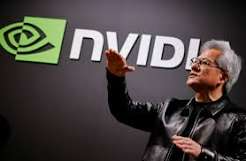
Nvidia has made its largest acquisition in company history by purchasing artificial intelligence platform Hugging Face for $12.9 billion, according to the September 4, 2026 announcement. The deal brings one of the world’s most influential open source AI communities under the control of the dominant supplier of AI computing hardware, creating a powerful combination of chips, software, models, developer tools, and global AI infrastructure.
For developers and businesses building artificial intelligence systems, the significance goes well beyond the purchase price. Hugging Face has become a central destination for sharing, discovering, testing, and deploying machine learning models and datasets. Nvidia, meanwhile, has built enormous influence through the computing infrastructure used to train and operate those models. Bringing the two companies together could give Nvidia a much deeper position across the software layer of the AI industry.
Why the Nvidia and Hugging Face Deal Matters
The AI industry has traditionally depended on several different layers. Hardware provides the computing power, cloud platforms provide access to infrastructure, software frameworks help developers build applications, and model repositories provide the tools and models that researchers and companies can actually use.
Nvidia has been particularly powerful on the hardware and accelerated computing side. Hugging Face has established itself much closer to the developer and open source community. Its platform has helped researchers, students, independent developers, startups, and large companies work with thousands of artificial intelligence models and datasets.
The acquisition therefore connects two parts of the AI ecosystem that have become increasingly dependent on one another. Nvidia gains a major software and developer platform, while Hugging Face gains access to the resources of one of the world’s most valuable semiconductor companies.
For Nvidia, this is a much broader move than simply buying another software business. It potentially gives the company greater influence over how developers discover models, select AI tools, run inference workloads, and move projects from experimentation toward production.
Hugging Face Has Become a Major Home for Open Source AI
Hugging Face is widely associated with open source artificial intelligence development. Its model hub allows developers and researchers to publish and access machine learning models, while its broader ecosystem supports datasets, libraries, evaluation tools, and AI applications.
That community driven structure has been particularly valuable because AI development is no longer limited to a small group of technology companies. Independent researchers can publish a model. A university team can release a dataset. A startup can build an application on top of an existing model. Developers can compare approaches without building every component from the beginning.
This accessibility has helped make open source AI an important force in the technology industry. A platform that sits at the center of that activity can influence which models developers discover and which technical approaches become widely adopted.
That is precisely why Nvidia’s acquisition could have such broad consequences.
Nvidia’s Strategy Is Moving Beyond AI Chips
Nvidia remains best known for its graphics processing units and accelerated computing systems, but the company’s position in AI increasingly depends on software as well as silicon. Developers need software libraries, optimized frameworks, deployment systems, and development environments that allow them to take full advantage of specialized computing hardware.
Owning a major AI model platform could extend that ecosystem considerably.
Instead of competing only for the hardware used to train and run models, Nvidia would have a direct relationship with a large community of people creating those models. That could provide valuable insight into emerging AI workloads and developer preferences.
The strategic advantages could include:
- Closer integration between AI models and Nvidia computing infrastructure
- Greater access to developers working on open source artificial intelligence
- Stronger connections between model development and AI deployment
- More influence over software tools used across the machine learning ecosystem
The larger question is how Nvidia will use that influence without damaging the openness that helped make Hugging Face valuable in the first place.
The Open Source Question Will Be Closely Watched
The most sensitive issue surrounding the acquisition is likely to be the future of Hugging Face’s open source ecosystem. Developers have invested years of work in a community where models, datasets, libraries, and research tools can be shared broadly.
That culture depends heavily on trust. Researchers need confidence that their work can remain accessible. Developers need predictable licensing and platform policies. Businesses need to know whether the tools they depend on will continue to support a wide range of computing environments.
Nvidia will therefore face a delicate balancing act. The company can potentially provide Hugging Face with more computing resources and engineering support, but it must also maintain confidence among developers who value platform neutrality and open collaboration.
The direction Nvidia chooses could influence how the broader industry views corporate ownership of open source AI infrastructure.
What Developers Could Gain From the Acquisition
There are several reasons developers may view the deal positively if Nvidia keeps the platform accessible. Hugging Face could potentially gain stronger computing resources, faster infrastructure, improved model deployment capabilities, and deeper optimization for demanding AI workloads.
A developer experimenting with a new language model, computer vision system, speech model, or multimodal application could eventually have a more direct path from model discovery to deployment.
The combination could also make it easier to optimize models for real world performance. Training a model is only one stage of an AI project. Developers must eventually make that model respond quickly, operate efficiently, manage costs, and handle large numbers of users.
Nvidia has considerable expertise in accelerated computing, while Hugging Face has considerable reach among people building and sharing models. Together, those strengths could support a more connected development workflow.
Businesses May See a More Integrated AI Stack
Businesses adopting artificial intelligence are increasingly looking beyond individual models. They want complete systems that can support development, testing, deployment, monitoring, security, and ongoing updates.
The Nvidia and Hugging Face combination could appeal to organizations seeking a more integrated AI infrastructure. Instead of selecting hardware from one provider, models from another platform, and development tools from several separate ecosystems, companies could potentially access more of those components through connected services.
That could simplify certain workflows, particularly for organizations already using Nvidia hardware or software.
However, businesses also have strong reasons to maintain flexibility. Many companies operate across multiple cloud providers and computing platforms. They may also use models from different organizations depending on performance, cost, licensing, and data requirements.
For that reason, interoperability will remain an important test of the acquisition.
Competition Could Become More Intense
The deal also changes the competitive picture across AI infrastructure. Nvidia already holds a powerful position in AI computing, while other technology companies are investing heavily in their own chips, cloud systems, models, and software ecosystems.
By acquiring Hugging Face, Nvidia would strengthen its presence in an area where developers and researchers interact directly with AI models.
That could encourage competitors to invest more heavily in open model repositories, developer platforms, AI libraries, and independent research communities. It could also accelerate competition around AI inference, model optimization, and deployment tools.
From a consumer perspective, stronger competition can be beneficial when it produces better tools, broader compatibility, and lower costs. The opposite can happen if major infrastructure becomes concentrated among a small number of companies.
Why the $12.9 Billion Price Tag Is Significant
A $12.9 billion acquisition represents a substantial commitment to the software side of artificial intelligence. It signals that Nvidia sees strategic value in controlling or closely connecting with the infrastructure surrounding AI models, not simply supplying the processors that power them.
The valuation also reflects the growing importance of developer ecosystems. A technology platform can become extremely valuable when millions of developers, researchers, companies, and projects depend on it.
For Nvidia, the purchase could be viewed as an investment in the future direction of AI development. Hardware performance remains essential, but the software, models, communities, and deployment systems surrounding that hardware increasingly determine how useful the underlying computing power becomes.
What Happens Next for Open Source AI
The immediate focus will be on how Nvidia manages Hugging Face after the acquisition. Developers will likely watch licensing policies, platform access, model hosting rules, infrastructure choices, and support for computing environments outside Nvidia’s own ecosystem.
The company will also need to demonstrate that the acquisition can create value without weakening the community that made Hugging Face influential.
Resources from organizations such as the Nvidia AI platform already show how deeply software has become connected to modern accelerated computing. Meanwhile, the continued growth of open research and shared machine learning resources demonstrates why independent developer communities remain essential to AI progress.
A Defining Moment for the AI Software Ecosystem
Nvidia’s $12.9 billion purchase of Hugging Face marks a major shift in the balance between AI hardware and software. The acquisition places a leading semiconductor company directly alongside one of the most recognizable communities in open source artificial intelligence.
For developers, the outcome will depend on whether the combined company can provide better tools while preserving broad access. For businesses, the opportunity lies in potentially simpler AI development and deployment. For the wider technology industry, the deal raises a larger question about who should control the infrastructure through which future AI systems are created and shared.
We are entering a period when the most important AI companies may not be defined by one product alone. Computing hardware, models, datasets, software libraries, developer communities, and deployment infrastructure are becoming closely connected. Nvidia’s acquisition of Hugging Face shows just how valuable that entire ecosystem has become.
The real measure of the deal will not be its $12.9 billion price tag. It will be whether developers continue to see Hugging Face as an open place to build, share, and experiment while Nvidia gains a stronger role in the infrastructure supporting those efforts. If that balance is maintained, the acquisition could become one of the most consequential moves in the next chapter of global artificial intelligence.