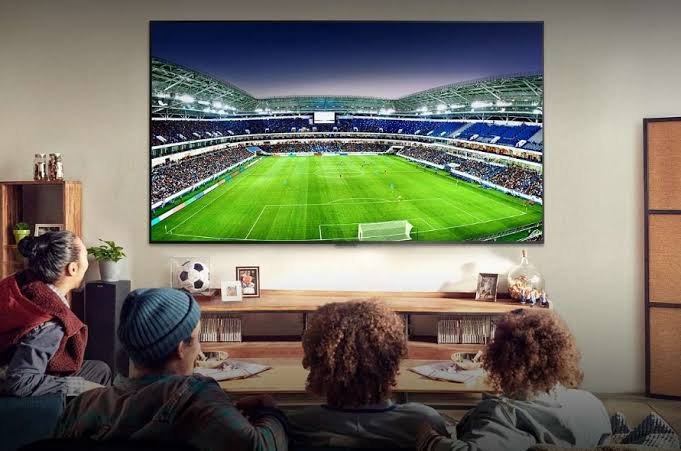
International sporting events are moving toward a more consistent broadcast experience as global sports bodies introduce standardized high frame rate streaming protocols for tournaments involving audiences across multiple nations. The initiative aims to reduce differences in live video quality between markets, giving fans a clearer and more fluid view of fast moving action whether they are watching from a major city or a region with more limited broadcast infrastructure.
For viewers, the change may sound highly technical, but its impact is easy to understand. A football match, tennis rally, basketball play, cycling sprint, or athletics final can change in a fraction of a second. When a broadcast struggles to reproduce that movement smoothly, the experience can feel delayed, blurred, or disconnected from the action inside the stadium. Standardized high frame rate delivery is intended to make those moments appear more natural and consistent across international broadcasts.
Why International Sports Broadcasting Needs Common Technical Standards
Major sporting tournaments often reach viewers through a complicated network of broadcasters, streaming platforms, production companies, satellite services, telecommunications networks, and local distribution partners. Each market can have different technical capabilities, internet conditions, equipment standards, and delivery requirements.
That variation can create noticeable differences in the way the same event appears from one country to another. One audience may receive a smooth high frame rate stream while another receives a lower frame rate version. Some viewers may experience stronger motion clarity, while others see more blur during rapid movement.
The new international approach seeks to reduce these inconsistencies by creating a shared technical framework for live sports video delivery. Rather than leaving every market to develop its own approach, participating sports organizations can work around common expectations for frame rate, video processing, encoding, transmission, and streaming compatibility.
For sports fans, consistency matters because international tournaments are built around shared moments. When millions of people watch the same final, goal, record, save, or finish line result, the broadcast becomes part of the event itself.
High Frame Rate Streaming Could Change the Way Fast Sports Look
Frame rate refers to the number of individual images displayed each second in a video. Higher frame rates can provide smoother motion, particularly when subjects move rapidly across the screen.
This is especially relevant to sports broadcasting. A football player making a sudden turn, a tennis player returning a powerful serve, or a sprinter crossing the finish line can place heavy demands on a live video system. More frequent image capture can help preserve visual detail during those moments.
The benefit is not simply about making a broadcast look sharper. Motion itself can appear more continuous, helping viewers follow the movement of athletes and equipment with less visual disruption.
That difference becomes particularly valuable during close sporting contests. When officials, commentators, coaches, and viewers need to examine a fast incident, improved motion representation can make the broadcast easier to follow.
What Standardized Delivery Could Mean for Global Viewers
The strongest potential benefit is greater consistency. A fan watching an international tournament from the United States should not necessarily receive a dramatically different visual experience from a fan watching the same event elsewhere simply because the broadcast chain uses different technical standards.
Standardization could also make it easier for production teams to prepare international feeds. When broadcasters work from a common technical framework, they can plan equipment, encoding systems, network capacity, and distribution workflows with clearer expectations.
For streaming providers, standardized protocols may also simplify the process of preparing live content for different markets. This does not eliminate regional differences in internet speed or device capability, but it can create a more predictable foundation for adapting video quality to those conditions.
- More consistent motion quality across international broadcasts
- Better support for fast moving sporting action
- Clearer technical coordination between production partners
- Greater compatibility between modern streaming systems and broadcast infrastructure
The Technology Behind a Modern Sports Broadcast
A live sports broadcast involves far more than a camera pointed toward a field. Cameras capture the action, production systems process the footage, encoders prepare video for transmission, networks carry the stream, and platforms deliver it to viewers on televisions, computers, phones, and other connected devices.
Every stage can affect the final viewing experience. If the original footage is captured at a high frame rate but later processed through a system that reduces motion information, some of the intended benefit can disappear. Similarly, a technically strong production can still encounter problems when network capacity or device compatibility becomes a limiting factor.
That is why international broadcast standards need to consider the complete delivery chain rather than focusing only on camera specifications. Consistent results depend on coordination between production, encoding, transmission, distribution, and playback.
Organizations working on global digital communication standards such as the International Telecommunication Union demonstrate how technical coordination can support communication systems that operate across national boundaries.
Streaming Infrastructure Remains a Major Challenge
Standardization does not automatically mean every viewer will receive identical quality. Internet infrastructure remains one of the biggest variables in live streaming. A household with a fast fiber connection may receive a high quality stream with minimal interruption, while another viewer using a congested mobile network may require adaptive streaming at a lower quality.
Sports broadcasters therefore have to balance visual quality with reliability. A technically impressive stream is of little value if it repeatedly freezes during the most important moments of a match.
Adaptive bitrate technology will continue to play a significant role. These systems can adjust video quality according to available network capacity, allowing viewers to continue watching when connection conditions change.
The broader objective is therefore not to force every viewer onto one identical stream. Instead, the goal is to establish common technical foundations that allow different delivery environments to provide the best practical experience available to each viewer.
Why Broadcasters and Sports Organizations Are Paying Attention
International tournaments have become increasingly dependent on digital distribution. Traditional television remains important, but audiences now expect to watch major competitions through streaming platforms, mobile applications, connected televisions, and web services.
That shift creates new technical expectations. Viewers can compare sports streams instantly, switch between platforms, and watch events from almost anywhere. Poor motion quality or inconsistent playback can quickly become frustrating when audiences have become accustomed to high quality digital video.
For sports organizations, broadcast quality also has a direct relationship with the global reach of an event. A tournament that can be delivered reliably across many markets has a stronger opportunity to connect athletes and fans across borders.
The Olympic movement provides a useful example of the scale involved when sporting events need to reach audiences across a wide range of countries, languages, devices, and media environments.
High Frame Rate Is Not a Complete Solution
It would be easy to view higher frame rates as the single answer to better sports streaming, but the reality is more complicated. Frame rate is only one part of image quality. Resolution, compression, latency, color reproduction, camera technology, network stability, audio synchronization, and device performance all influence the final experience.
Latency is particularly important for live sports. A viewer may receive a technically beautiful picture but still see an event several seconds after it happens in the stadium or on another platform. For fans communicating through social media or messaging services, that delay can become obvious very quickly.
Future broadcast standards will therefore need to balance motion quality with low latency and efficient bandwidth use. The challenge is to deliver enough visual information for smooth sports coverage without creating excessive network demands.
What This Could Mean for the Next Generation of Sports Viewing
The move toward standardized high frame rate protocols points toward a broader effort to make international sports broadcasting more predictable. As production equipment becomes more capable and streaming infrastructure continues to expand, technical standards can help different parts of the industry work together more effectively.
For fans, the ideal result is simple. They should be able to focus on the competition rather than the technology carrying it. A spectacular finish should feel immediate. A close rally should remain easy to follow. A decisive moment should appear clearly enough that viewers can appreciate what happened without fighting through motion blur or inconsistent playback.
There will still be differences between devices, networks, and regions. However, shared standards can reduce unnecessary variation and give broadcasters a stronger technical foundation for international coverage.
A More Consistent Future for Global Sports Media
The introduction of standardized high frame rate streaming protocols represents a practical step toward greater consistency in international sports broadcasting. The technology behind live coverage is becoming increasingly complex, yet the purpose remains straightforward: help people watch the events they care about with fewer technical distractions.
We can expect the conversation around sports streaming to continue moving beyond basic picture quality. Future priorities are likely to include lower latency, efficient compression, reliable mobile delivery, improved synchronization, accessible viewing experiences, and stronger compatibility across platforms.
For athletes and fans alike, those developments matter because live sport depends on shared attention. When a stadium erupts after a decisive play, viewers thousands of miles away should feel connected to that moment. Better standards cannot create the emotion of competition, but they can help ensure that technology does not get in its way.