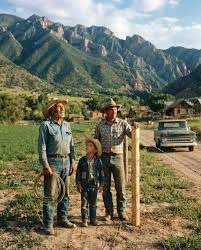
A nearly two century old property dispute in southern Colorado is entering a new chapter as officials seek a path through a conflict rooted in the 1844 Sangre de Cristo Land Grant. At the center is the approximately 80,000 acre property traditionally known as La Sierra and now called Cielo Vista Ranch in Costilla County. The dispute involves descendants of the original land grant, local residents, and the modern property owner, with questions surrounding historic access rights, fencing, grazing, firewood collection, and the continuing legal meaning of promises made under Mexican rule. On September 5, 2026, the fight has become more than a private property disagreement. It has become a test of how American law handles property rights that reach back to a different country, a different legal system, and generations of family history.
Why an 1844 Mexican Land Grant Still Matters
The story begins before Colorado became a state and before the United States controlled the territory involved. In 1844, Mexican authorities granted the larger Sangre de Cristo Land Grant in what was then Mexican territory. After the Mexican American War, the Treaty of Guadalupe Hidalgo transferred the region to the United States while requiring recognition of existing property rights.
The larger Sangre de Cristo grant covered a much greater area than the approximately 80,000 acres now associated with the Cielo Vista Ranch dispute. Historical court records describe the original grant as approximately one million acres, while later divisions and ownership changes produced the tract at the center of the modern conflict. The distinction matters because references to an 80,000 acre property can otherwise make it appear that the original Mexican grant itself was only that size.
The legal history is unusually complicated because the dispute is not simply about a modern deed. It involves historic grants, subsequent ownership, settlement practices, federal confirmation, state property law, and claims that certain traditional community rights survived changes in ownership. The Colorado Supreme Court addressed important aspects of the dispute in Lobato v. Taylor, recognizing certain access rights connected with grazing, firewood, and timber while rejecting broader claims involving hunting, fishing, and recreation.
The Property at the Heart of the Conflict
Cielo Vista Ranch sits in Costilla County in the San Luis Valley, surrounded by the dramatic landscape of southern Colorado. From a distance, the mountains and open terrain can look timeless. On the ground, however, boundaries, fences, roads, water, livestock, and access routes create very modern questions about who can enter private land and for what purpose.
For descendants of families associated with the historic grant, access is not necessarily viewed as a recreational privilege. Supporters of the historic access claims argue that the land grant established communal practices that allowed people to use parts of the mountain property for purposes such as grazing livestock and gathering firewood. Those practices continued across generations and became part of the cultural history of communities in the valley.
For a modern private landowner, the situation presents a different concern. Private property rights normally carry an expectation that the owner can control access, manage fences, protect resources, and determine how the property is used. When historic rights conflict with modern ownership expectations, the result can be a legal problem that cannot be solved simply by pointing to a contemporary deed.
A Legal Battle That Has Already Reached Colorado’s Highest Court
The dispute has a long courtroom history. In the early 1980s, descendants and other claimants filed litigation involving the 80,000 acre tract known as La Sierra. The case eventually developed into a broader examination of whether historical settlement practices and documents connected with the Sangre de Cristo grant created enforceable rights.
In Lobato v. Taylor, the Colorado Supreme Court found evidence supporting implied access rights. The court concluded that traditional settlement practices, historical documents, long term use, reliance, and necessity supported certain rights connected with the property. The ruling recognized access for grazing, firewood, and timber under several legal theories while declining to recognize the broader recreational and hunting rights claimed by some plaintiffs.
That decision did not erase the underlying conflict. Instead, it demonstrated why historic land disputes can remain difficult even after major court rulings. A judgment may define certain rights while leaving the parties to negotiate how those rights work on the ground.
Fencing Has Become a Flashpoint
One of the most visible points of tension has involved fencing. A major fencing project on the property generated concern among local residents and public officials because of its potential effects on historic access, wildlife movement, water resources, and community practices.
The Colorado Attorney General’s Office described the dispute surrounding a large fence as part of a decades long struggle over communal property rights and local traditions. Its 2025 testimony before the state legislature said the fence stretched approximately 20 miles and raised concerns about wildlife passage and environmental disturbance. The testimony also stated that people historically had access to the land for grazing livestock, gathering firewood, and religious practices.
That controversy pushed the issue beyond the courtroom and into the Colorado legislature. Lawmakers adopted HB 25 1023, which established local government review for certain large fencing projects on Sangre de Cristo land grant lands. The legislation requires consideration of factors including fence dimensions, wildlife passage, migration patterns, and the purpose of the project.
The measure does not decide ownership of the ranch. Instead, it gives local authorities a role in reviewing certain large fencing projects. The law illustrates how the dispute has developed into a question involving property law, environmental concerns, local government, and historic community rights at the same time.
Colorado’s Governor Has Now Created a New Path Toward Negotiation
The latest development came on September 2, 2026, when Governor Jared Polis took executive action concerning Cielo Vista Ranch. The governor appointed former U.S. Secretary of the Interior and former Ambassador Ken Salazar as a special envoy to help facilitate discussions among the parties and develop recommendations concerning the long term disagreements over the ranch and access rights.
The governor’s office said the effort is intended to bring together heirs of the original land grant, residents of the wider community, and the property owner. Rather than treating continued litigation as the only available solution, the administration is seeking a negotiated path forward.
That intervention is significant because the dispute has survived multiple generations. It also recognizes that a courtroom victory for one side does not necessarily resolve the practical relationships among families, neighbors, ranchers, wildlife interests, and property owners who must continue living with the consequences.
Why the Dispute Matters Beyond Colorado
We often think of real estate ownership as something established by a clear chain of deeds. Historic land grants challenge that assumption. Across the American West, property boundaries and ownership histories can reach back to Spanish or Mexican rule, creating complicated questions about how historic promises were incorporated into American law.
The Sangre de Cristo dispute is particularly important because it demonstrates how property rights can acquire cultural meaning. A road through a mountain property may appear to be an ordinary access question. For a family whose ancestors used that route for generations, however, it can represent continuity with a community that existed long before modern state boundaries were established.
That is also why the dispute has attracted interest from people beyond the local community. Historic property law affects title research, land development, ranch ownership, conservation, inheritance, and real estate transactions. A claim tied to an old land grant can potentially influence how lawyers and buyers evaluate title history and access rights.
What Property Buyers Can Learn From the Case
The dispute offers a practical lesson for anyone dealing with historic property in the American West. A modern title document may not tell the entire story. Buyers, investors, and property professionals dealing with land that has a Spanish or Mexican grant history may need to examine historical surveys, federal confirmation records, court decisions, easements, community use patterns, and other documents that could affect access.
Several issues deserve particular attention during historic property research:
- Whether the property originated from a Spanish or Mexican land grant
- Whether federal authorities later confirmed or modified the original claim
- Whether courts have recognized historic easements or access rights
- Whether neighboring communities have documented traditional uses
- Whether modern fencing or development is subject to special state or local rules
These questions can become especially important when land is passed through generations. An inheritance dispute may look straightforward until an old grant, easement, or community right appears in the historical record.
The Human Cost Behind the Legal Arguments
Legal documents tend to reduce the conflict to claims, defenses, easements, ownership interests, and access rights. The people living around the ranch experience something very different.
For families connected to the historic grant, the dispute can touch memories of grandparents, livestock, mountain traditions, religious practices, and the physical landscape where generations lived. For the property owner, years of litigation can create uncertainty about the ability to manage land that is legally private property. Neither perspective can be fully captured by a property map.
That human dimension may explain why the latest state intervention is focused on conversation rather than another immediate round of courtroom confrontation. If the parties can agree on practical rules for access, fencing, environmental protection, and property management, the result could address problems that a legal judgment alone cannot resolve.
What Comes Next for Cielo Vista Ranch
The special envoy process does not automatically settle ownership or erase existing court decisions. Instead, it creates an opportunity for the interested parties to discuss a long term arrangement. Any lasting solution will likely have to respect established property law while addressing the historic claims and community interests that have kept the dispute alive.
The Colorado legislature has already demonstrated that the state is willing to address practical consequences of the conflict through regulation. The governor’s new initiative adds another tool by placing greater attention on negotiation and mediation.
For now, the mountains surrounding Cielo Vista Ranch remain much as they have for generations. The legal landscape, however, continues to change. The 1844 Sangre de Cristo Land Grant is no longer simply a chapter in Colorado history. It remains a living legal and cultural issue involving private property, ancestral claims, environmental concerns, and the difficult question of how rights created nearly two centuries ago should operate today.
A Property Dispute That Has Become Part of Colorado History
The significance of this case extends beyond the value of an 80,000 acre ranch. It asks how modern society should balance private ownership with historic rights that were created under an earlier government and preserved through generations of community use.
We can expect the debate surrounding Cielo Vista Ranch to continue because the underlying questions are unusually durable. Who owns land is one question. Who has the right to use it, under what conditions, and because of which historical promise can be far more complicated.
For the families connected to La Sierra, the answer is deeply personal. For Colorado, it is a test of whether a dispute rooted in the nineteenth century can finally find a workable solution in the twenty first century. The appointment of a special envoy does not guarantee that outcome, but it signals that state leaders increasingly see negotiation as a necessary complement to litigation.
Readers seeking primary legal context can review the Colorado Supreme Court record concerning Lobato v. Taylor through a public legal casebook. Information about Colorado’s more recent legislative response is also available through the Colorado General Assembly’s legislative record.