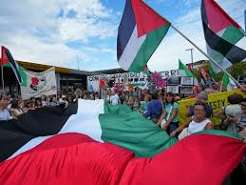
The 83rd Venice International Film Festival has become a striking setting for renewed discussion about Palestine, artistic responsibility, and the response of the international film industry to conflict in the Middle East. With Hollywood figures including Susan Sarandon drawing attention to the subject, conversations surrounding the festival have extended beyond premieres and awards to questions about how artists should respond when humanitarian crises remain impossible to ignore.
Palestine Debate Reaches One of Cinema’s Most Visible Stages
Venice has long been more than a place where films compete for prizes. Each year, directors, actors, producers, journalists, and cultural figures gather on the Lido, creating one of the most closely watched meeting points in international cinema. Against that backdrop, statements about Palestine can carry significance well beyond the festival grounds.
The presence of political and humanitarian discussion within a major film festival reflects a longstanding relationship between cinema and public life. Filmmakers frequently use their work to examine war, displacement, identity, inequality, and political power. When prominent actors speak about such subjects publicly, their words can reach audiences who may never encounter the underlying issues through traditional political reporting.
For supporters of Palestinian causes, the visibility offered by international cultural events can be especially meaningful. For others within the industry, however, the question is more complicated. Some artists argue that cultural institutions should provide space for political expression, while others worry that film festivals should remain focused primarily on cinema and avoid becoming political platforms.
Susan Sarandon’s Voice Reflects a Long History of Activism
Susan Sarandon has spent decades using her public profile to speak about political and humanitarian issues. Her involvement in public causes has made her one of the more recognizable American actors willing to connect entertainment with broader social debates.
Her presence in conversations surrounding Palestine therefore carries a particular weight. Sarandon is not simply another celebrity commenting on an international crisis. She has established a public identity around activism, making her statements part of a much longer record of engagement with controversial subjects.
That history also illustrates why celebrity statements can produce unusually strong reactions. Supporters may see an influential actor using visibility to draw attention toward people experiencing suffering. Critics may argue that celebrities possess limited expertise in complicated geopolitical questions. Both reactions demonstrate the unusual influence that entertainment figures can have when they step outside conventional promotional interviews and address international affairs.
Why Film Festivals Become Political Spaces
Film festivals are often presented as celebrations of artistic expression, but they naturally become places where political and cultural conversations overlap. The films themselves may explore conflict, migration, occupation, family separation, or political repression. The people attending them bring their own experiences and beliefs into those discussions.
Venice is particularly influential because of its international audience. A statement made during a festival can quickly circulate through entertainment publications, television coverage, social media platforms, and international news organizations. A conversation that begins on a red carpet or during a press appearance can reach millions of people within hours.
This visibility creates both opportunity and responsibility. Public figures have the ability to draw attention to issues that might otherwise receive limited coverage, but they also have to recognize that their words can be interpreted differently across political and cultural boundaries.
The Film Industry Faces Difficult Questions About Gaza and Palestine
The broader discussion is connected to a difficult question facing the global entertainment industry: how should cultural institutions respond to war and humanitarian suffering?
Some artists have called for stronger public positions from studios, festivals, production companies, and professional organizations. Others believe that individual artists should be free to express their views without requiring entire institutions to adopt a particular political position.
There is no simple answer. A film festival is simultaneously a cultural institution, a workplace, an international gathering, and a highly visible media event. Decisions involving programming, public statements, sponsorships, invitations, and demonstrations can therefore attract intense scrutiny.
The challenge becomes even greater when a conflict involves deeply contested historical narratives. Palestine and Israel carry profound emotional, religious, cultural, and political significance for millions of people. Any public discussion can quickly become heated, particularly when audiences believe that one community’s suffering is being ignored or minimized.
Artists Can Draw Attention to Human Stories
One of cinema’s greatest strengths is its ability to place individual lives at the center of enormous political events. Statistics can describe displacement and casualties, but films can show what those numbers mean for families, children, artists, workers, and communities.
That human dimension helps explain why Palestine has become an important subject within international cinema. Documentary filmmakers, journalists, directors, and actors have repeatedly explored the personal consequences of conflict and displacement.
When such conversations appear at major festivals, they can encourage audiences to think about the people behind political headlines. A discussion about borders or military operations can become a conversation about a family separated from relatives, a filmmaker unable to return home, or a child growing up surrounded by uncertainty.
Venice Provides a Global Audience
The location of the festival adds another layer to the discussion. Venice is one of the world’s most recognizable cultural destinations, and its film festival attracts participants from Europe, North America, Asia, the Middle East, and many other regions.
That international composition means that statements about Palestine are unlikely to remain confined to an American entertainment audience. They can become part of a broader conversation involving European cultural institutions, Middle Eastern audiences, international filmmakers, and global human rights advocates.
The festival’s connection to the broader history of cinema also matters. Venice has hosted generations of filmmakers whose work challenged political assumptions and brought difficult subjects into public discussion. The current debate therefore sits within a much older tradition of artists using cultural spaces to question events taking place beyond the screen.
Political Expression Can Create Tension Inside Hollywood
Hollywood has never been politically silent, but public expression has become increasingly complicated for actors and filmmakers whose audiences span ideological and national boundaries. A statement that receives praise from one group can generate criticism from another within minutes.
For performers, there can also be professional consequences. Actors may worry that political statements could affect future projects, relationships with studios, or relationships with audiences. At the same time, remaining silent can also attract criticism from people who believe influential artists have a moral responsibility to speak.
These competing pressures create a difficult environment. Artists must decide whether their public identity should remain separate from their political beliefs or whether silence itself represents a meaningful choice.
Why Audiences Are Paying Attention
The strong interest in Palestine related statements at Venice reflects a broader change in how audiences engage with entertainment figures. Viewers no longer encounter actors only through films, television interviews, and magazine profiles. Social platforms allow audiences to follow celebrities directly and react immediately to their political statements.
This has blurred the boundary between celebrity culture and public affairs. A major actor speaking about a humanitarian crisis can reach an enormous audience without relying entirely on traditional news organizations. That direct connection can be powerful, but it can also encourage rapid reactions before audiences have time to consider complicated facts.
For readers and viewers, the most responsible approach is to separate a celebrity’s statement from independently verified information about the underlying conflict. Public visibility can start an important conversation, but it should not replace careful reporting, historical context, or examination of multiple perspectives.
Venice Shows Why Cultural Events Still Matter
The discussion surrounding Palestine at the Venice Film Festival demonstrates that major cultural gatherings remain important spaces for public conversation. Movies may be the official reason thousands of people arrive on the Lido, but the conversations surrounding those movies often reveal what artists and audiences are thinking about most deeply.
The festival’s Palestine discussions also remind us that cinema does not exist in isolation from human experience. Directors and actors create stories while living through the same political and social realities as their audiences. When those realities enter the festival environment, attempts to keep art completely separate from public life can become difficult.
The official La Biennale di Venezia provides information about the festival, its history, programming, and role within international culture.
A Conversation That Extends Beyond the Red Carpet
The significance of the Palestine statements heard around Venice is not limited to individual celebrities. The larger issue concerns how the international film community responds when political conflict reaches a humanitarian scale that artists find impossible to ignore.
Some will argue that filmmakers should speak openly. Others will defend the value of keeping cultural institutions focused on artistic work. Both positions are part of a legitimate debate about the responsibilities of public figures and cultural organizations.
What matters most is that the conversation remains grounded in human dignity and factual awareness. Political disagreements can be intense, but the people affected by war are not abstractions. They are families, communities, filmmakers, students, parents, and children whose lives continue beyond the headlines.
Venice has once again demonstrated why film festivals can become much larger than showcases for new movies. When influential artists speak about Palestine from one of cinema’s most visible stages, their words invite audiences to consider where art ends, where public responsibility begins, and whether storytelling can help people see the human cost of conflict with greater clarity.