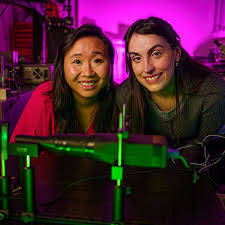
A student led biomedical startup from Florida International University has reached the global final stage of the 2026 Hult Prize with a handheld imaging technology designed to help clinicians identify signs associated with preterm labor earlier. PolarDoc, led by biomedical engineering doctoral students Jenny Pei and Amanda Sanchez, is now one of eight global finalists selected from a field of about 18,000 startups worldwide, placing a university research project at the center of a much larger conversation about maternal health, clinical access and affordable medical technology.
A Small Device Addressing a Major Pregnancy Challenge
Preterm birth remains one of the most difficult challenges in maternal and newborn health. A baby is considered preterm when birth occurs before 37 weeks of pregnancy, and early delivery can expose newborns to serious complications involving breathing, feeding, development and other aspects of health.
PolarDoc is working to address one of the most difficult questions physicians face: identifying which pregnancies may be moving toward early labor before the warning signs become obvious. The startup is developing PPRIM, short for Portable Preterm Imaging, a patented handheld device originally invented by FIU biomedical engineering professor Jessica Ramella Roman in her Medical Photonics Laboratory.
The student team has taken that research further through doctoral work focused on improving the device, developing its potential clinical application and preparing the technology for eventual commercialization. The goal is not simply to produce another medical image. The larger objective is to give healthcare professionals information that could help them recognize risk earlier and make better informed decisions about maternal and newborn care.
How PPRIM Looks for Signs of Early Labor Risk
PPRIM uses polarized light to capture rapid images of the cervix. Specialized software then analyzes changes in the collagen structure within the tissue. During pregnancy, collagen fibers in the cervix gradually change and become less organized as the body prepares for childbirth.
Those structural changes can potentially provide information about whether the cervix is undergoing premature remodeling. If the technology can reliably identify patterns associated with an increased risk of preterm labor, clinicians could have another source of information when assessing a pregnant patient.
The concept is compelling because it focuses on tissue changes that may occur before a woman actually enters early labor. Earlier recognition can give medical teams more time to consider appropriate interventions or prepare for an early delivery when necessary.
We should be careful, however, about describing PPRIM as an established diagnostic solution. PolarDoc is still working toward clinical validation and the regulatory steps required before the technology could become widely available. The promise of the device is substantial, but medical technologies must demonstrate safety, reliability and clinical value through rigorous testing before they can become part of routine care.
Why Earlier Information Could Matter
When a pregnancy is identified as being at elevated risk for early delivery, clinicians may have an opportunity to take measures intended to prolong pregnancy or prepare the fetus for premature birth. Depending on the circumstances, medical teams may consider interventions and treatments that can reduce risks associated with early delivery.
That makes the timing of information particularly important. A technology capable of providing meaningful information earlier could potentially support decisions during a period when every additional day of pregnancy may matter.
From University Research to a Global Student Startup
The PolarDoc story began inside an academic laboratory rather than a traditional medical device company. Pei and Sanchez have been developing the technology as part of their doctoral research, building on the work of Ramella Roman and other researchers at FIU.
The project gained momentum through the Hult Prize, an international student entrepreneurship competition that challenges teams to develop businesses addressing major global problems. PolarDoc advanced through the competition’s Digital Incubator and later joined the Global Accelerator near London alongside other selected teams.
Those stages were not simply opportunities to present scientific findings. The team used the program to examine questions that every medical startup eventually has to confront. Who will use the device? Where should it be introduced first? What clinical evidence is required? What regulatory pathway must be followed? How can the technology reach communities that cannot afford sophisticated hospital equipment?
According to Florida International University, the Hult Prize experience helped Pei and Sanchez refine their business model, market strategy, clinical milestones and network of mentors and potential investors.
Affordable Maternal Health Technology Is Central to the Mission
The potential value of PPRIM extends beyond large hospitals. PolarDoc has described a future in which the technology could eventually serve hospitals first and then reach clinics in underserved rural communities and other locations where access to advanced maternal health equipment can be limited.
That ambition reflects a wider challenge in global healthcare. A medical breakthrough has limited impact if it can only be used in highly specialized facilities with expensive infrastructure. Portable equipment can offer a different path by moving certain capabilities closer to patients.
For maternal health, portability can be particularly meaningful. Pregnancy care is not always delivered in major urban medical centers. Rural clinics, community health facilities and smaller hospitals may serve large populations while operating with fewer specialists and fewer diagnostic resources.
A compact imaging system could potentially reduce some of the logistical barriers associated with larger equipment, although its real world usefulness will depend on future clinical studies, regulatory approval, cost, training requirements and reliability outside controlled laboratory settings.
The People Behind PolarDoc
At the center of the startup are Pei and Sanchez, whose doctoral research has become closely connected with the effort to move PPRIM toward clinical use. Their work represents a form of university entrepreneurship in which scientific research and company building develop side by side.
Pei has focused on identifying optical markers associated with premature cervical remodeling, while Sanchez has worked on optical design, simulation and computational aspects of the technology. Their complementary skills allow the project to approach the problem from both biological and engineering perspectives.
The team has also benefited from the involvement of FIU faculty and its entrepreneurship community. The university’s Eugenio Pino and Family Global Entrepreneurship Center supported the team through the Hult Prize process, including mentorship and travel assistance.
That support illustrates how universities can become more than places where scientific discoveries are published. With the right combination of research expertise, student talent, mentorship and investment, a laboratory invention can begin moving toward a product intended for real patients.
Why the Hult Prize Final Matters
Being selected as one of eight global finalists gives PolarDoc an opportunity that extends beyond recognition. The competition can provide exposure to investors, healthcare professionals, entrepreneurs and organizations interested in solutions for major global challenges.
The team previously entered the competition with a strong scientific foundation, but the business and clinical questions became increasingly important as PolarDoc advanced. That distinction matters. Developing a medical device requires much more than proving that a technology can work under laboratory conditions.
The startup must demonstrate that the device can perform consistently, that clinicians can use it appropriately, that patients benefit from the information it provides and that the economics make sense for healthcare providers. Regulatory review will also be essential before the technology can be marketed for clinical use.
The Next Financial and Regulatory Challenge
PolarDoc estimates that about one million dollars will be needed for its next development stage. That funding would support continued development, clinical validation and preparation for the United States Food and Drug Administration process.
For an early stage medical startup, that is a significant hurdle. Clinical research requires time, qualified personnel, carefully designed studies and access to appropriate patient populations. Regulatory preparation can also be complex, particularly when a device combines optical imaging hardware with software based analysis.
Yet reaching this point gives PolarDoc something valuable that many early research projects never obtain: a clearly defined pathway from invention toward clinical testing.
A Broader Conversation About Women and Medical Innovation
The PolarDoc project also arrives during continued discussion about the need for greater investment in women’s health research. Conditions affecting pregnancy can have consequences for mothers, babies and entire families, yet developing practical tools for early detection requires sustained scientific and financial support.
The emotional stakes are especially high for families facing the possibility of premature birth. A sudden trip to a hospital, an unexpected delivery and the possibility of neonatal intensive care can change a family’s life within hours. Technology that helps clinicians identify risk earlier could provide something that families desperately need during those moments: more information and more time to prepare.
We should not promise outcomes that the current evidence cannot yet support. PPRIM still needs clinical validation and regulatory review. But the research direction addresses a genuine medical need, and the PolarDoc team has demonstrated the ability to move from scientific research into a structured development process.
What Comes Next for PolarDoc
The global Hult Prize final represents another step rather than the finish line. PolarDoc’s immediate priorities include continued development of PPRIM, clinical validation and preparation for the regulatory pathway required for medical use in the United States.
The long term ambition is considerably larger. The team wants PPRIM to become part of routine obstetric and prenatal care, beginning in clinical settings and eventually reaching communities where access to specialized medical resources is more limited.
That vision will require evidence, funding, partnerships and patience. Medical innovation rarely moves from laboratory discovery to standard care overnight. Each stage must answer difficult questions about accuracy, safety, affordability and practical use.
From an FIU Laboratory to the Global Stage
PolarDoc’s selection as a global Hult Prize finalist places a student startup from Miami on an international stage while highlighting the potential of biomedical engineering to address one of pregnancy’s most serious challenges. The project combines optical science, software analysis, portable medical hardware and entrepreneurship around a simple goal: finding useful information earlier.
For the researchers behind the technology, the journey is deeply personal as well as scientific. Every improvement to a device designed to assess pregnancy risk ultimately points toward a patient who may one day receive earlier attention because that information was available.
The next phase will determine whether PPRIM can make that transition from promising university technology to validated clinical tool. If PolarDoc succeeds, the significance will extend far beyond the Hult Prize. It could demonstrate how student researchers, working alongside university scientists and healthcare partners, can turn an idea developed in a laboratory into a practical technology aimed at protecting mothers and newborns where early information can matter most.