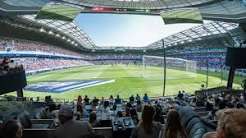
Football viewing is taking a dramatic turn as Cosm expands its immersive sports experience across Los Angeles, Dallas and Atlanta, giving NFL fans a chance to watch selected games beneath enormous 12K LED domes rather than through a conventional television screen. The company’s Shared Reality format blends live sports broadcasting, stadium scale visuals, reserved ticketing and communal viewing into a single venue experience, creating a new way for fans to follow prime time football and major weekend matchups.
From the Living Room Screen to an Immersive Stadium Experience
For generations, watching football has meant gathering around a television, checking the score on a phone and relying on camera angles chosen by a broadcast director. Cosm is taking a different approach. Its Dome places fans beneath an 87 foot diameter LED display with 12K horizontal and 10K vertical resolution, surrounding the audience with live sports imagery.
The result is designed to feel closer to being inside a stadium than sitting in front of a screen. During an NFL broadcast, viewers can see perspectives that resemble a position behind the goalpost or directly on the field. The effect is especially striking during moments when the action moves rapidly across the screen. Instead of watching a small portion of the field from a fixed seat, the audience is surrounded by the broadcast environment.
Cosm calls this format Shared Reality because the experience does not depend on individual headsets. Fans sit together in a physical venue while a massive digital environment places the live event around them. That distinction matters because sports have always been social. The roar of a crowd, a sudden reaction to a touchdown and the shared tension before a crucial play are part of what makes live football memorable.
NFL Programming Is Becoming Part of the Venue Schedule
The expansion is not simply about installing large screens. Cosm has developed partnerships that connect its venues with major NFL broadcast rights holders. The company has said its NFL programming includes games carried by FOX, CBS, NBC, Prime Video and other major broadcast partners, allowing selected games to be presented through its Shared Reality format.
That connection between broadcast schedules and physical ticketing creates an unusual model for sports entertainment. Fans are not merely deciding which television channel to watch. They can choose a specific venue, select a ticket category and plan an evening around a particular game.
Cosm’s current NFL offering illustrates how that system works. The company lists individual games by location, with fans able to choose between Dome seating and other viewing options. For example, scheduled NFL games in Los Angeles, Dallas and Atlanta can be presented as ticketed Shared Reality events, with times tied to the underlying broadcast schedule.
Fans can explore current programming and venue options through Cosm’s NFL event information, where local schedules and ticket availability are presented by venue.
Why Ticketing Changes the Way Fans Plan Game Day
Traditional sports broadcasting gives viewers flexibility because they can switch channels or stream from almost anywhere. Cosm introduces a different advantage: the feeling of attending an event without traveling to the actual stadium.
A fan in Dallas can purchase a ticket, meet friends at the venue, order food and watch a nationally televised game beneath the Dome. Someone in Los Angeles can do the same while following a matchup that might be taking place thousands of miles away.
This creates a hybrid between a sports bar, a cinema and a stadium. The ticket becomes more than admission to a screen. It becomes access to a programmed live experience with seating, food service and a shared crowd atmosphere.
The Hall Adds a Different Kind of Football Viewing
Cosm’s strategy does not depend entirely on the Dome. The company also operates The Hall, a large social viewing environment where multiple games can appear across massive LED displays at the same time.
This is particularly useful during busy NFL windows when several games are taking place simultaneously. Rather than choosing only one matchup, fans can follow multiple contests and focus on the game that becomes most important as the afternoon develops.
During regular season NFL programming, Cosm says The Hall can show scheduled games in a multi view arrangement while the primary game is presented in The Dome. That setup reflects how modern football fans already behave at home, where multiple screens, fantasy football updates, social media and live scores compete for attention.
The difference is scale. Instead of several televisions scattered around a room, the games are presented across a large shared environment where dozens or hundreds of fans can react together.
Prime Time Football Gains a New Social Setting
Prime time football has always had a special atmosphere. The lights are brighter, the audience is often larger and the anticipation begins hours before kickoff. Cosm’s approach is built around that sense of occasion.
Inside the Dome, fans can sit beneath the action while food and drinks are delivered to their seats. The physical environment encourages groups to treat a broadcast like a night out rather than something watched casually at home.
That distinction could become increasingly relevant as younger audiences look for entertainment that combines technology with real world social experiences. Streaming has made sports easier to access, but convenience does not always create community. Cosm is betting that large scale immersive venues can provide both.
The Experience Goes Beyond the Screen
The venue model also changes what happens before and after the game. Guests can spend time in The Hall or on The Deck, meet friends, purchase food and drinks and settle into their seats before kickoff. The objective is to create a complete outing around the broadcast.
For sports fans who cannot regularly afford or arrange travel to an NFL stadium, this can offer another way to experience the atmosphere of a major game. The physical distance from the actual field remains enormous, but the scale of the display attempts to reduce the visual distance between the viewer and the action.
Cosm Has Already Tested the Model With Major Sports
The NFL expansion follows earlier deployments of the technology across other major sporting events. Cosm has used its immersive venues for college football, basketball and international soccer, giving the company experience in adapting different sports to a giant shared display.
The 2026 FIFA World Cup provided an especially important test. Cosm partnered with FOX Sports and FIFA to present 40 World Cup matches across its venues in Los Angeles, Dallas and Atlanta. The company promoted the ability to place fans in perspectives resembling the pitch, stands and goal area through its large LED domes.
That World Cup programming demonstrated that the venue concept can extend beyond American football. International soccer, college sports, baseball and other events can all benefit from the same basic principle: take a live broadcast and make its visual environment large enough to surround the audience.
What This Means for the Future of Live Sports Broadcasting
The significance of Cosm’s expansion is not that television is disappearing. Traditional broadcasts remain the foundation of professional sports distribution and provide the enormous reach that leagues and networks need. Instead, immersive venues represent another layer between the broadcast and the audience.
For leagues, the model offers a way to create additional experiences around existing media rights. For networks, it provides another physical destination for their programming. For fans, it offers an alternative to watching at home or traveling to the stadium.
That combination could become increasingly valuable as sports organizations search for ways to make premium live content feel distinctive in a crowded entertainment market. A conventional screen can show the same touchdown to millions of people. An immersive venue can make a smaller group feel as though the play is happening around them.
The Bigger Question Is Whether Fans Will Keep Coming Back
The technology may attract attention, but repeat attendance will depend on something more fundamental. Fans need compelling games, reasonable ticket options, comfortable seating, good food and a social environment worth leaving home for.
Cosm already provides different ways to participate, ranging from Dome seating to Hall viewing and general admission options. That flexibility gives the company room to appeal to different types of sports audiences, from dedicated fans planning an entire game day to casual groups looking for a lively place to watch a major matchup.
We are also seeing an important shift in the meaning of a sports broadcast. The game itself remains the centerpiece, but the way people experience it is becoming part of the product. A living room television, a mobile stream, a sports bar and an immersive Dome can all show the same game while creating completely different emotional experiences.
A New Chapter for Football Viewership
Cosm’s multi city expansion places immersive sports broadcasting closer to the mainstream by connecting its large scale LED technology with established NFL programming and a familiar ticketed venue model. The company’s 87 foot Dome is not simply a larger television. It is an attempt to recreate some of the sensory impact of being close to the field while keeping the convenience of a professionally produced broadcast.
For fans, the appeal is easy to understand. There is something powerful about watching a quarterback step into a pocket while the field fills your entire field of vision, hearing a room react at the same instant and sharing the moment with friends instead of experiencing it alone.
As the NFL season continues, Cosm’s venues in Los Angeles, Dallas and Atlanta will provide a real world test of how far fans are willing to go for a more immersive version of a familiar game. If audiences continue to choose these venues for prime time football, the future of sports broadcasting may increasingly include not only where a game is played, but where and how fans choose to experience it.