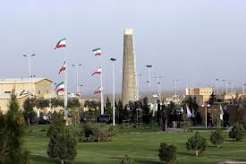
The International Atomic Energy Agency has taken a consequential step in the international dispute over Iran’s nuclear program, with its 35 member Board of Governors voting to report Iran to the United Nations Security Council over what the agency considers a failure to cooperate with its safeguards obligations. The decision, reported on September 9, 2026, moves the dispute into a more politically sensitive phase and places renewed attention on diplomacy, nuclear inspections and the authority of the international nonproliferation system.
Why the IAEA Vote Matters
The IAEA plays a central role in monitoring civilian nuclear programs and verifying whether countries are meeting their obligations under international safeguards agreements. When inspectors cannot obtain sufficient information or access, the consequences can extend far beyond technical disagreements between inspectors and national authorities.
The decision involving Iran is significant because a referral to the Security Council brings the dispute into the United Nations system responsible for addressing threats to international peace and security. It does not, by itself, mean that new sanctions or military action automatically follow. Instead, it creates a new diplomatic and legal setting in which governments must decide how the concerns identified by the IAEA should be addressed.
The International Atomic Energy Agency has spent years monitoring Iran’s nuclear activities through safeguards arrangements. The agency’s ability to establish what nuclear material exists, where it is located and how it is being used is central to international confidence in the peaceful nature of a nuclear program.
A Long Running Dispute Over Nuclear Verification
The latest decision comes after years of disagreement between Iran and Western governments over the scope and verification of Tehran’s nuclear activities. The dispute has involved uranium enrichment, inspections, access to nuclear facilities and the interpretation of Iran’s obligations under international agreements.
The situation became substantially more difficult after military attacks on Iranian nuclear facilities in 2025. United Nations documents record that the IAEA stopped some verification activities and that Iran subsequently suspended cooperation with the agency under its domestic law. Those developments created serious problems for inspectors attempting to maintain a continuous record of nuclear material and activities.
A United Nations document prepared for the 2026 review of the Nuclear Non Proliferation Treaty describes how the agency lost continuity of knowledge concerning previously declared inventories at affected Iranian facilities. That loss of verification has been one of the central concerns surrounding the dispute.
What the Security Council Referral Actually Means
For people watching the story from outside diplomatic circles, the phrase referral to the Security Council can sound like an immediate punishment. The process is more complicated.
The IAEA Board of Governors can report matters involving compliance and safeguards to the United Nations Security Council. Once the issue reaches the Council, its members can debate the situation and consider possible responses. Any future measure would depend on the Council and on the political positions of its members.
Possible outcomes can range from renewed diplomatic negotiations and demands for greater cooperation to additional international measures. The exact response depends on what governments decide and whether the Council can reach the necessary agreement.
This distinction matters because the vote is a major escalation in diplomatic pressure, but it is not the same thing as an automatic decision to impose new penalties.
Iran Is Likely to Challenge the Decision
Iran has consistently rejected claims that its nuclear program is intended to produce nuclear weapons and has argued that its activities are peaceful. Tehran has also criticized international actions concerning its nuclear facilities and disputed the legal basis of measures taken against it.
That position means the latest vote is unlikely to settle the underlying disagreement. Instead, it may deepen the diplomatic contest over which obligations remain in force, what inspections are required and how international agreements should be interpreted.
Iranian officials have previously argued that military attacks on nuclear facilities and pressure from foreign governments have complicated the inspection process. Any future negotiations will therefore have to address not only nuclear verification but also Iran’s concerns about security, sovereignty and the treatment of its nuclear infrastructure.
The Nuclear Nonproliferation System Faces a Serious Test
The dispute matters beyond Iran. The international nuclear safeguards system depends heavily on the ability of inspectors to establish facts that governments can accept, even when political relations are poor.
When access is restricted or records become incomplete, uncertainty grows. That uncertainty can become particularly dangerous when a country possesses significant quantities of enriched uranium or operates sensitive nuclear facilities.
The wider purpose of safeguards is to provide confidence that nuclear material declared for peaceful purposes is not being diverted toward weapons development. Maintaining that confidence requires technical access, accurate records and cooperation between national authorities and international inspectors.
The United Nations has previously dealt with Iran’s nuclear program through multiple Security Council resolutions. The Council imposed extensive measures on Iran between 2006 and 2010 following earlier findings concerning its nuclear activities and cooperation with the IAEA.
Why Diplomacy Still Matters
Despite the seriousness of the vote, diplomacy remains one of the most important tools available. The history of the Iranian nuclear dispute shows that technical disagreements can become intertwined with broader regional security concerns, economic sanctions and mistrust between governments.
A negotiated framework could potentially provide a path toward restoring inspections while addressing Iran’s security concerns. For the international community, improved access would provide greater clarity about nuclear material and facilities. For Iran, a credible diplomatic process could offer a way to reduce pressure while preserving its right to peaceful nuclear activity under international law.
Neither side can easily achieve lasting stability through uncertainty alone. Inspectors need access to perform their work, while Iranian authorities need confidence that cooperation will not simply lead to additional demands without a diplomatic pathway.
What Could Happen Next
The coming weeks will be closely watched by diplomats, nuclear experts and governments across the Middle East. Several developments could shape the direction of the dispute.
- The United Nations Security Council could begin formal consideration of the IAEA report.
- Iran could announce new conditions for cooperation with international inspectors.
- European and other governments could push for renewed negotiations.
- Additional diplomatic or economic measures could be discussed.
- IAEA inspectors could seek clearer arrangements for access and verification.
The precise sequence will depend on diplomatic negotiations and the positions adopted by major Security Council members. Russia, China, the United States, Britain and France have previously taken different positions on Iran’s nuclear program, making consensus difficult.
Regional Security Is Also at Stake
The consequences of the dispute extend across the Middle East. Iran’s nuclear program has been a major source of concern for Israel, Gulf states, European governments and the United States. Any sharp deterioration in diplomatic relations could increase regional uncertainty at a time when several security issues are already competing for international attention.
For ordinary people across the region, nuclear diplomacy can feel distant from daily life. Yet diplomatic breakdowns can eventually affect energy markets, travel, trade, investment and regional security. That is why preventing further escalation matters even to people who have no direct connection to nuclear policy.
The human cost of another prolonged regional confrontation would also be considerable. Families living near sensitive facilities or military installations are often the first to feel the consequences when political tensions become security crises. A diplomatic solution would not erase the underlying disagreements, but it could reduce the risk that those disagreements turn into another cycle of confrontation.
A New Legal and Diplomatic Precedent
The September 9 vote represents an important moment for the international nuclear verification system because it reinforces the principle that safeguards disputes can move from technical oversight into the broader United Nations security framework when cooperation breaks down.
At the same time, the legal implications will require careful interpretation. Questions surrounding previous Security Council resolutions, the status of international agreements and the obligations of each party are complex. Iran has disputed several international interpretations of the nuclear dispute, while other governments argue that the IAEA findings justify stronger action.
For that reason, the significance of the vote should not be reduced to a single political confrontation. It is also a test of how international institutions respond when treaty obligations, national sovereignty and global security concerns collide.
The Road Ahead Will Depend on Verification and Dialogue
The most important question now is whether the referral produces greater transparency or deeper confrontation. A successful diplomatic process would ideally restore meaningful access for inspectors, establish reliable information about Iran’s nuclear material and create a framework that all sides can defend publicly.
The alternative is a prolonged period of uncertainty in which governments make decisions based on incomplete information. That would increase the possibility of miscalculation at precisely the moment when clear communication is most valuable.
The IAEA Board’s decision has therefore opened a consequential new chapter in the Iran nuclear dispute. The Security Council now faces a difficult balance between enforcing international obligations and keeping diplomatic channels open. Iran faces renewed pressure to address international concerns while protecting its stated right to peaceful nuclear activity. For the wider world, the priority is clear: reliable verification and sustained diplomacy offer a safer path than allowing uncertainty to grow.