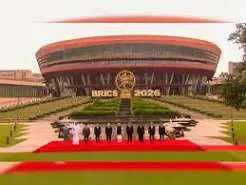
New Delhi became the center of high level diplomacy on September 12, 2026, as leaders of the expanded BRICS grouping gathered for talks on war, trade, development, global governance and the future of international cooperation. The summit produced the New Delhi Declaration, while a closely watched meeting between Indian Prime Minister Narendra Modi and Chinese President Xi Jinping added a significant bilateral dimension to the gathering. For countries across the Global South, the discussions offered a moment to argue for greater representation, stronger economic cooperation and a more balanced international system.
BRICS Leaders Reach Agreement in a Difficult Geopolitical Moment
The New Delhi Declaration was adopted after several days of negotiations, with members seeking common language on some of the most divisive international issues. The statement calls for dialogue, consultation and diplomacy while stressing respect for national sovereignty and territorial integrity. It also expresses serious concern about escalating violence in West Asia and calls for maximum restraint and the protection of civilians and civilian infrastructure. :contentReference[oaicite:0]{index=0}
The agreement carries particular weight because BRICS now brings together major economies and politically diverse countries. The current membership includes Brazil, China, Egypt, Ethiopia, India, Indonesia, Iran, Russia, Saudi Arabia, South Africa and the United Arab Emirates. Together, these countries represent a substantial share of the world’s population and economic activity, giving the group an increasingly important platform for discussion among emerging and developing economies. :contentReference[oaicite:1]{index=1}
For readers following the summit through the lens of international economics, the declaration is not simply a diplomatic document. It reflects a wider debate over who should have greater influence in institutions that shape global finance, trade, security and development. The official BRICS material describes the 2026 agenda around resilience, innovation, cooperation and sustainability, with particular attention to a more representative multilateral system. :contentReference[oaicite:2]{index=2}
India Places Global South Cooperation at the Center of Its BRICS Presidency
India’s leadership of BRICS in 2026 has given New Delhi an opportunity to present itself as a bridge between different parts of the international system. Rather than defining BRICS solely through opposition to Western powers, Indian officials have presented the organization as a constructive forum for cooperation among emerging economies and developing countries.
The declaration reinforces that approach by supporting broader participation of emerging markets and developing countries in BRICS cooperation. It also calls for changes to global governance structures so that developing nations have a stronger voice in international decision making. The document specifically addresses reform of the United Nations system and recognizes the aspirations of African countries for greater representation. :contentReference[oaicite:3]{index=3}
This question of representation may prove more consequential than any single summit headline. Many developing countries have long argued that institutions created decades ago do not adequately reflect today’s distribution of population, economic power and political influence. BRICS gives those governments a setting in which they can coordinate positions while retaining their own national priorities.
Modi and Xi Hold Closely Watched Bilateral Talks
Alongside the broader BRICS discussions, the meeting between Modi and Xi drew considerable attention. The two leaders reviewed India China relations at a time when both governments are attempting to stabilize ties following years of tension along their disputed frontier. Their discussion focused on maintaining peace and stability in border areas while expanding opportunities for economic and people to people cooperation. :contentReference[oaicite:4]{index=4}
For India and China, the significance of the meeting extends well beyond the BRICS conference room. The two countries are major economic powers and among the world’s most populous nations, yet their relationship has been burdened by territorial disputes and strategic mistrust. A reduction in border tensions could create greater space for trade, investment, travel and diplomatic engagement, although it would be premature to describe the latest meeting as a complete reset.
Modi has continued to stress that peace along the border is essential for broader progress in bilateral relations. Xi, meanwhile, has spoken about the importance of long term cooperation, mutual development and a strategic partnership between the two countries. The meeting therefore offered a carefully measured signal that both sides see value in keeping diplomatic channels open despite unresolved differences. :contentReference[oaicite:5]{index=5}
Economic Cooperation Remains a Major BRICS Priority
Economic issues were another major focus of the summit. BRICS members have different economic models, different trade relationships and different political interests, but they share concerns about trade disruptions, unilateral economic restrictions and the vulnerability of developing economies to external shocks.
The New Delhi Declaration addresses international trade and calls for cooperation against measures that can disrupt global commerce. The members also reaffirmed their interest in strengthening economic and financial cooperation, sustainable development and innovation. :contentReference[oaicite:6]{index=6}
For ordinary businesses and households, these discussions can appear distant, yet their consequences can be practical. Changes in trade policy can influence energy costs, food prices, manufacturing supply chains, investment flows and access to international markets. Greater cooperation among large emerging economies could eventually create additional commercial opportunities, although translating political commitments into concrete economic results will require sustained negotiations.
West Asia Tests the Limits of BRICS Unity
The summit also exposed the difficult balancing act within BRICS. The group contains countries with sharply different foreign policy positions, including Iran and the United Arab Emirates. Reaching agreement on language concerning the conflict in West Asia therefore required careful diplomacy. Reuters reported that the members ultimately reached consensus around a call for restraint and a diplomatic approach. :contentReference[oaicite:7]{index=7}
The final declaration does not erase those differences. Instead, it demonstrates how BRICS can sometimes find common ground without requiring every member to share the same interpretation of a crisis. That approach may become increasingly important as the group expands its membership and develops relationships with additional partner countries.
The declaration’s focus on civilian protection and peaceful dispute resolution also gives the organization an opportunity to present itself as a forum for diplomacy during periods of heightened international tension. Whether that ambition translates into meaningful mediation will depend on the willingness of individual members to use their relationships beyond the summit itself.
What the New Delhi Declaration Could Mean for the Future of BRICS
The 2026 summit arrives during a period when the international system is becoming more fragmented. Trade disputes, armed conflicts, competing strategic partnerships and disagreements over global institutions have made cooperation more difficult. BRICS is attempting to respond by presenting itself as a broader coalition of emerging powers rather than a narrowly defined political alliance.
The official declaration places strong attention on multilateralism, sustainable development, innovation and a greater voice for developing countries. It also recognizes the role of partner countries and calls for stronger practical cooperation with emerging markets and developing economies. :contentReference[oaicite:8]{index=8}
That direction matters because the credibility of BRICS will ultimately depend on what happens after the photographs, speeches and diplomatic ceremonies end. Countries will be watching for progress on trade, finance, technology, development, health, energy and institutional reform. A declaration can establish a common political direction, but implementation is what determines whether that direction changes lives.
Three Areas to Watch After the Summit
- India China relations: Continued border stability and regular diplomatic communication will be critical to determining whether the latest bilateral engagement develops into a broader improvement in relations.
- Economic cooperation: Businesses will be watching for practical measures that make trade, investment and financial cooperation easier among BRICS economies.
- Global governance reform: The group’s calls for stronger representation of developing countries will face a major test when members pursue concrete reforms within international institutions.
A Diplomatic Opening Rather Than a Final Settlement
The New Delhi Summit should therefore be viewed as a diplomatic opening rather than a final settlement of the many disputes confronting BRICS members. The declaration demonstrates that countries with very different interests can still negotiate a shared position on major international questions. At the same time, the difficult negotiations behind the document reveal how challenging consensus can become as the organization grows.
The Modi Xi meeting carries a similar message. A handshake between two leaders cannot resolve years of strategic competition or territorial disagreement, but sustained communication can reduce the danger of misunderstanding and create room for practical cooperation. For communities living near contested borders, that distinction is deeply meaningful. Stability is not an abstract diplomatic objective when military tensions can affect livelihoods, travel and families.
For BRICS itself, the New Delhi Declaration represents another step in an ongoing effort to give emerging economies a stronger collective voice. The official Press Information Bureau provides further government information on India’s BRICS presidency and summit agenda, while the group’s official materials outline its broader cooperation framework.
As India prepares to hand the BRICS chairmanship to China for 2027, attention will now shift from New Delhi’s declarations to the practical work of implementation. The next chapter will show whether the summit’s message of cooperation can survive the competing interests of its members and produce tangible results in trade, development, diplomacy and global governance.
Why the New Delhi Summit Matters Beyond BRICS
The significance of the 2026 summit ultimately extends beyond the member states themselves. The meeting reflects a larger international debate about how power should be distributed in a changing world. Developing countries are asking for greater representation, major emerging economies are seeking more influence, and established institutions are facing growing pressure to adapt.
New Delhi offered BRICS a stage on which those concerns could be expressed collectively. The resulting declaration does not provide simple answers to the world’s conflicts or economic challenges, but it establishes a shared diplomatic language centered on consultation, development and a more representative international order. Whether that language becomes meaningful policy will depend on what the members do next.