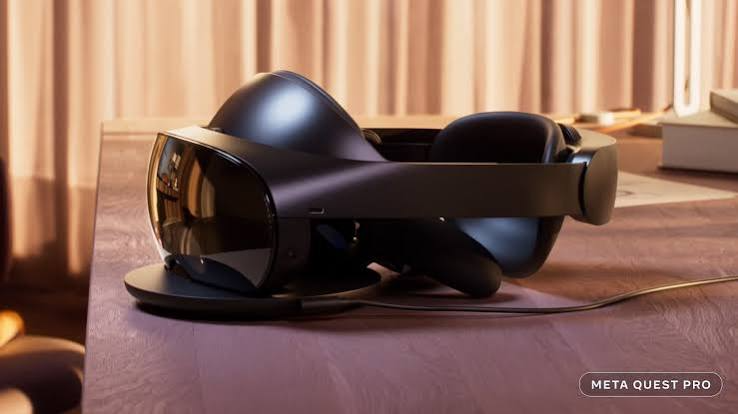
Major game developers and console makers are moving toward a more connected future for gaming after announcing new interoperability standards designed for next generation cloud rendering and multi headset virtual reality experiences. The agreement could reshape how players access games, move between devices, and experience immersive worlds as cloud gaming and virtual reality continue to mature.
A More Connected Future for Players
For many gamers, the promise of modern technology has often come with an uncomfortable limitation. A game may look spectacular on one platform while remaining unavailable on another. A player can own a powerful console, a gaming computer, or a virtual reality headset and still find that certain experiences are separated by software requirements and platform restrictions.
The newly announced standards aim to reduce some of those barriers. By establishing common technical rules for cloud rendering and multi headset virtual reality, participating companies are working toward systems that can communicate more consistently across different hardware and software environments.
We see this as more than a technical development. Interoperability can affect the everyday experience of families, friends, developers, and players who want greater freedom in choosing how they play.
Why Cloud Rendering Matters for Gaming
Cloud rendering allows demanding graphical workloads to be handled on powerful remote computing systems rather than entirely on a player’s local device. The resulting visual information can then be delivered through a network connection to the player’s screen or headset.
This approach could make advanced gaming experiences accessible on hardware that would otherwise struggle to process them. A lighter device may not need to contain the same level of graphical processing power if much of the demanding computation takes place remotely.
However, cloud gaming has always faced practical challenges. Network quality, latency, bandwidth, server capacity, and compatibility can all influence the experience. A beautiful game becomes much less impressive if an action appears on screen a moment after the player makes it.
The new interoperability standards are intended to create a more consistent foundation for developers and service providers working with cloud rendered experiences.
What Better Cloud Standards Could Mean
- More consistent communication between gaming platforms
- Greater flexibility for developers building cloud based experiences
- Improved compatibility across supported devices
- More efficient delivery of demanding graphical content
- Potentially easier access to high quality games on less powerful hardware
These changes will not eliminate network limitations, but common technical standards can make it easier for companies to build systems that work together instead of solving the same compatibility problems separately.
Virtual Reality Enters a More Collaborative Era
Virtual reality introduces another layer of complexity because the experience is no longer limited to a single screen. A headset tracks movement, displays stereoscopic imagery, processes spatial information, and often communicates with controllers and other sensors.
Multi headset experiences require those systems to coordinate with one another. If several people are sharing the same virtual environment, each participant needs to see a representation of the same world while their individual movements are reflected accurately.
The new standards could help establish common methods for handling those interactions. That could make shared virtual reality experiences easier to develop across different headset ecosystems.
Imagine several friends entering the same virtual environment while wearing different supported headsets. One person may be sitting in a living room, another may be in a dedicated gaming space, and another could be joining from a different city. If the underlying standards allow their devices to communicate reliably, the experience can feel less like separate sessions and more like a shared place.
Developers Could Benefit From Greater Compatibility
Game development is already a complex process involving graphics, physics, networking, artificial intelligence, sound, user interfaces, and platform specific requirements. When developers must create separate technical solutions for numerous ecosystems, development time and cost can increase.
Common standards could reduce some of that burden. Developers may be able to build certain systems around shared specifications instead of creating completely different implementations for every supported platform.
This does not mean every game will suddenly become available everywhere. Companies can still maintain their own business models, content policies, storefronts, and hardware strategies. Interoperability is primarily a technical concept, not a promise that every commercial barrier will disappear.
Even so, shared standards can give smaller studios a more realistic path toward supporting advanced experiences. A developer with limited resources may benefit greatly if the basic infrastructure for cloud rendering and multi headset communication becomes easier to implement.
Competition Could Shift From Hardware Walls to Experiences
The gaming industry has traditionally relied heavily on platform identity. Consoles compete through exclusive games, specialized hardware, online services, accessories, and digital marketplaces.
Greater interoperability could gradually change where some of that competition takes place. If players can access more experiences across different devices, companies may need to compete increasingly through game quality, service reliability, pricing, community features, and unique technology.
That could be positive for consumers, although the transition will not happen overnight. Hardware manufacturers still have strong reasons to protect their ecosystems, while developers need sustainable business models to fund expensive projects.
The significance of the new standards is therefore not that platform competition is disappearing. Instead, the industry appears to be testing whether certain technical foundations can become shared even while companies continue competing commercially.
The Player Experience Remains the Most Important Test
Technical standards matter only when they produce a noticeable improvement for ordinary people. A player does not care about a complex interoperability specification if a game still suffers from input delays, unstable connections, visual compression, or difficult setup procedures.
For consumers, the real measure of success will be simple. Can they connect with friends more easily? Can they use the headset they already own? Can they move between devices without losing progress? Does a cloud rendered game actually feel responsive?
Those questions will determine whether the industry succeeds in turning technical cooperation into something meaningful.
Accessibility Could Become a Major Benefit
Interoperability also has potential implications for accessibility. Not every player can use the same hardware configuration, and physical, financial, or environmental limitations can affect which devices are practical.
If games become less dependent on a single type of hardware, players could gain more flexibility in how they interact with digital experiences. Someone who cannot afford a high end gaming computer might use a compatible cloud service. Another player may prefer a lighter headset because of comfort or mobility considerations.
Developers will still need to design accessible interfaces and provide appropriate settings. Technology alone cannot solve every accessibility challenge. However, a more flexible technical foundation can give developers additional options for reaching different groups of players.
Security and Privacy Cannot Be Ignored
Greater connectivity also creates new responsibilities. Cloud gaming requires information to travel between devices and remote computing infrastructure. Multi headset virtual reality can involve movement data, account information, voice communication, and other forms of personal information.
As these systems become more interconnected, security standards will need to develop alongside interoperability standards. Players should be able to understand what information is being collected, where it is processed, and how it is protected.
Industry groups will also need to consider authentication, access control, communication security, and safeguards against unauthorized interaction within shared virtual spaces.
Organizations such as the National Institute of Standards and Technology provide widely used cybersecurity guidance that can help frame broader conversations about secure digital systems.
What the Next Generation of Gaming Could Look Like
The combination of cloud rendering and virtual reality points toward gaming environments that are less tied to a particular physical machine. A player may begin an experience on one screen, continue through another device, and later enter the same world through a virtual reality headset.
Games could also become more persistent. Instead of thinking of a game as software installed on one machine, players may increasingly experience it as a continuously available digital environment that follows them across supported hardware.
That possibility could influence game design itself. Developers might build worlds intended to support traditional displays, immersive headsets, and different control methods from the beginning.
A Significant Moment for the Gaming Industry
The agreement announced on September 11, 2026 represents an important step toward reducing technical fragmentation in gaming. Its eventual impact will depend on how widely the standards are adopted and how effectively companies implement them in real products and services.
For players, the potential reward is greater freedom. For developers, it could mean fewer technical barriers when creating ambitious experiences. For hardware makers, it may create new opportunities to compete through innovation while participating in a broader ecosystem.
The most exciting possibility is not simply sharper graphics or more advanced headsets. It is the prospect of gaming becoming more connected without requiring every player to own exactly the same equipment.
We are still at an early stage of that transition. Cloud infrastructure must become more reliable, virtual reality hardware must become more comfortable, and developers must prove that shared standards can deliver smooth experiences at scale. Yet the direction is increasingly clear.
The next generation of gaming may be defined less by which device a player owns and more by how easily that player can enter a shared world. If the new standards deliver on their promise, the walls separating consoles, cloud services, computers, and virtual reality headsets could gradually become less visible, giving players more choice while giving developers a broader canvas for interactive experiences.