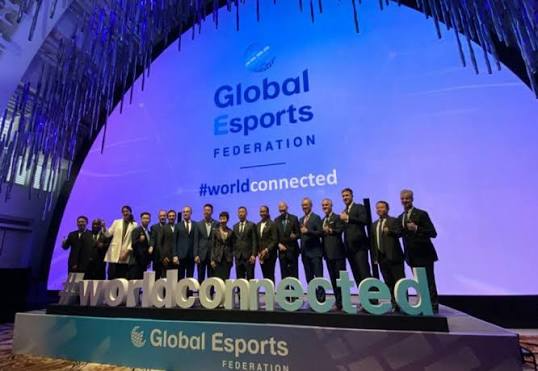
The Global Esports Federation is continuing its effort to build a more consistent framework for international esports, with fair play, governance, athlete protection and technical standards becoming increasingly important as tournaments bring players together from different regions. While a specific September 16, 2026 announcement approving a new universal anti cheat regulation could not be independently verified in the Federation’s currently published materials, the organization has an established standards program focused on creating a safer, healthier and more inclusive global esports ecosystem.
Why Consistent Esports Standards Matter
A major international esports tournament can bring together players who compete under different national systems, regional tournament rules and technical environments. Behind the excitement of a packed arena, flashing screens and rapid decisions made in fractions of a second, tournament organizers must maintain a system that gives every participant confidence that the competition is being administered consistently.
Cheating is one of the most difficult challenges in that environment. Competitive games increasingly depend on sophisticated software, network infrastructure and connected devices. Unfair assistance can take many forms, including unauthorized software, modified game clients, prohibited hardware, account sharing and attempts to exploit technical weaknesses. Detecting those practices consistently can be complicated when players, teams and tournament operators are spread across multiple jurisdictions.
The Global Esports Federation has made fair play one of its stated core values. Its official organizational framework also identifies the development of standards, guidelines and regulations as one of its objectives. The Federation says its broader mission includes building an inclusive, safe, healthy and sustainable esports ecosystem. The Global Esports Federation describes fair play, diversity, equality, inclusion and innovation as central principles of its international work.
GEF Has Been Developing a Global Standards Framework
The current standards discussion did not begin in 2026. In 2022, the Global Esports Federation announced the development of a Universal Framework on Esports Standards and Certification in coordination with the International Telecommunication Union. The initiative was designed to create high level principles and recommendations covering safeguarding, education and coaching, tournaments and events, and governance and ethics.
The Federation said the framework would draw on expertise from international organizations, academics, athletes, gamers, publishers and developers. That structure is significant because esports rules cannot be developed effectively by tournament administrators alone. Game publishers control much of the underlying technology, players understand competitive conditions firsthand, and organizers must translate broad principles into procedures that can work during live events.
The Federation’s standards initiative therefore represents a broader governance effort rather than simply a technical anti cheat project. Its public resources section includes governance material such as its constitution and code of ethics.
Anti Cheat Systems Are Only One Part of Fair Competition
When fans hear the phrase anti cheat, they may imagine software scanning a player’s computer and immediately identifying unauthorized activity. In professional esports, the reality can be considerably more complicated.
Effective competitive integrity can involve technical detection, server side monitoring, tournament administration, evidence review, player authentication, equipment inspection and clearly defined disciplinary procedures. A system also needs a process for handling disputes when a player or team challenges a ruling.
That last element matters because technological detection is not automatically equivalent to proof of wrongdoing. Competitive players invest years in developing their skills, and a disputed ruling can affect careers, sponsorships, rankings and reputations. Clear evidence standards and transparent review procedures can therefore be as important as detection technology itself.
Fair Play Requires Consistent Enforcement
A tournament rule has limited value if participants do not know how it will be applied. International events face an additional challenge because teams may have different expectations based on the competitions they normally play.
A common framework can help organizers establish shared expectations before an event begins. Players can know what equipment is permitted, teams can understand technical inspection procedures, and officials can have a defined process for investigating potential violations.
The goal is not simply to punish misconduct. It is also to create an environment where athletes understand the boundaries of acceptable competition before they enter the arena.
International Competition Makes Governance More Complicated
The Global Esports Federation currently represents more than 180 Member Federations and works with partners across the international esports ecosystem. Its governance structure includes commissions covering areas such as athletes and players, governance and ethics, health and wellness, international relations and development, and finance and legal administration.
That international structure creates both an opportunity and a challenge. A common standard can make competitions easier to understand across regions, but implementation still depends on national federations, tournament organizers, publishers and other stakeholders.
The Federation’s approach has increasingly focused on connection between these groups. In its 2026 Year of Connection initiative, GEF described stronger institutional and cultural relationships as part of its strategy for developing global esports. The organization has also linked its future direction with accountability, inclusion and governance.
Publishers Still Play a Central Role
One of the distinctive features of esports is that competitive events are built around games owned and operated by private companies. Tournament organizers can establish competition rules, but publishers control the underlying software, updates, servers and many technical systems used by players.
This makes collaboration essential. An international federation can establish principles for fair competition, while publishers can provide technical tools and game specific knowledge needed to enforce those principles.
The relationship also becomes important when a game receives an update shortly before a major tournament. A change to game mechanics, networking behavior or security systems can affect competitive conditions. Tournament officials need reliable communication with publishers so that rules and technical procedures remain aligned with the version of the game being played.
Los Angeles 2026 Will Put Global Esports Governance in the Spotlight
The timing of the wider standards discussion is notable because the Global Esports Federation is preparing for its Los Angeles 2026 Global Esports Games. The event is scheduled for December 1 through December 7, 2026, with competitions planned across several major esports titles.
The event is expected to bring athletes and communities from different parts of the world together in Los Angeles. That creates a practical setting for the Federation’s broader work on international cooperation, fair play and governance.
For players, standards become most meaningful when they appear in ordinary tournament procedures. They can influence how equipment is checked, how player identities are verified, how technical problems are investigated and how officials communicate decisions. For spectators, the benefit is less visible but equally significant: confidence that the result on the screen reflects the competition rather than an avoidable integrity problem.
Technology Will Keep Changing the Fair Play Challenge
Anti cheat systems cannot remain static while gaming technology changes. Artificial intelligence, cloud computing, streaming tools and increasingly sophisticated hardware are changing how competitive games are played and monitored.
The Global Esports Federation itself has identified artificial intelligence and other emerging technologies as areas requiring responsible development within esports. That means future standards may need to address not only traditional cheating software but also new forms of automated assistance and technology assisted competition.
At the same time, stronger monitoring must be balanced with privacy and due process. Players should understand what information is collected during competition, why it is collected and how it may be used when a dispute occurs. A technically sophisticated system still needs clear governance around the people affected by it.
What Players and Tournament Organizers Should Watch
For competitive players, the most useful development would be greater clarity before tournaments begin. Athletes and teams can reasonably expect future international standards discussions to focus on areas such as prohibited software, equipment requirements, player authentication, technical inspections, reporting procedures and disciplinary processes.
Tournament organizers face a larger implementation task. They must convert broad principles into rules that officials can apply quickly during a live competition. They also need trained staff, secure technical infrastructure and procedures for appeals or disputed decisions.
For fans, the broader issue is trust. A championship result has meaning because spectators believe competitors were given a genuine opportunity to win under known rules. When that confidence weakens, the damage extends beyond one match or one player.
The Road Toward a More Consistent Global Esports System
The available evidence shows that the Global Esports Federation has been working for several years toward international standards covering governance, ethics, tournaments, safeguarding and fair play. The Federation’s published material does not currently establish that a new universal anti cheat regulation was formally approved on September 16, 2026, so claims of a newly adopted global anti cheat rule should be treated cautiously until an official regulation or announcement is published.
What is clear is that esports is moving toward a stage where competitive integrity requires more than rules written for individual tournaments. International events need cooperation among federations, publishers, players, technical experts and organizers. They also need procedures that can keep pace with increasingly sophisticated technology.
For the player sitting beneath the bright lights of an international arena, fairness ultimately comes down to a simple expectation: the outcome should be decided by the competition itself. Building reliable standards around that expectation is becoming an increasingly important part of the future of global esports.