FC Bayern Munich has reached a remarkable milestone, becoming the first sports club in the world to pass 500,000 registered members, while the FIFA U 17 World Cup in Qatar delivered late drama as Colombia defeated Japan 2 to 1. The two developments, announced on November 21, 2026, highlight different sides of football: the extraordinary global community built around an established club and the ambition of young players competing for international recognition. Bayern’s record was confirmed at its annual general meeting in Munich, while Colombia secured victory in Doha through a stoppage time penalty after Japan had fought back and then lost a player to a second yellow card.
FC Bayern Munich Reaches the Half Million Membership Mark
FC Bayern announced that its membership had officially reached 500,000 during its annual general meeting at BMW Park on November 21. Club president Herbert Hainer presented the figure as a historic achievement and said no other sports club in the world had more members. The announcement confirmed Bayern’s position as the world’s largest sports club by registered membership, not simply one of football’s most commercially successful teams.
The milestone represents a substantial expansion of the club’s community. Bayern reported that its average member is 36 years old, around one quarter of its members are younger than 18, and approximately 70,000 have belonged to the club for at least 20 years. Its membership now extends across 152 countries, demonstrating that the connection to Munich reaches well beyond Germany and Europe.
For a club whose identity is closely associated with the phrase “Mia san Mia,” a Bavarian expression often understood as “We are who we are,” the achievement carries meaning beyond a headline number. Membership gives supporters a formal relationship with the organisation and a place within its wider community. It also reflects a model of German sports culture in which clubs are built around members rather than belonging entirely to a private owner.
A Membership Record Built on Generations of Support
Bayern marked the occasion with a series of tributes to its members. During the Bundesliga match against 1. FC Köln on November 20, the team bus displayed members’ names, and players wore special warm up shirts carrying their names and membership numbers. The club also planned to illuminate the Allianz Arena with the figure 500,000 and distribute commemorative items around Munich.
One particularly personal moment came when Hainer presented member number one, Heiner Jüngling, with a specially created half litre Bavarian beer mug. The gesture connected the club’s newest record with the people who have supported it across generations. Bayern also featured players from its men’s and women’s football teams and basketball department in its membership celebrations, underlining that the organisation extends beyond its senior men’s football side.
The club’s international membership figures offer another indication of its reach. After Germany, the largest concentrations of members are in Austria, Switzerland, the United States, Luxembourg and the United Kingdom. Vienna leads the international city ranking, ahead of Zurich and London. These figures show how a club rooted in one German city has developed a community that spans continents.
Why the German Membership Model Matters
Football clubs are often discussed through their trophies, transfer budgets, television audiences and commercial revenues. Membership offers a different measure of success. It reflects how many people have chosen to establish a formal connection with a club, rather than simply follow its results or purchase its merchandise.
In Germany, registered sports associations have a long tradition of collective participation. Members can have voting rights and a role in important club decisions, depending on the organisation’s statutes. FC Bayern’s membership milestone therefore carries institutional significance as well as commercial value. A larger membership can strengthen the club’s identity, expand its international network and give supporters a greater sense of belonging.
However, membership numbers should not be confused with match attendance or the total number of fans worldwide. A person may follow Bayern without becoming a registered member, while members may live thousands of miles from Munich and rarely attend a match. The half million figure represents the club’s formal membership, not the total size of its global fan base.
Colombia Beats Japan 2 to 1 in a Dramatic Doha Finish
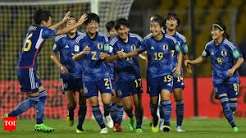
While Bayern celebrated its record in Munich, Colombia and Japan produced a tense contest at the FIFA U 17 World Cup Qatar 2026. Colombia claimed a 2 to 1 victory in their Group L meeting on November 21, with Samuel Martinez converting a penalty in the third minute of stoppage time to settle a match that appeared likely to finish level.
Colombia made an immediate impact. In the fifth minute, Adrian Mosquera drove forward down the right and delivered a cross into the penalty area. Miguel Agamez met it with a volley, giving Colombia an early advantage and putting Japan under pressure from the opening stages.
Japan responded with patience and attacking movement. In the 38th minute, Riku Nakashima sent the ball forward, and Maki Kitahara directed it across the goal area with a header. Kakeru Saito arrived to finish and bring Japan level at 1 to 1 before the interval. The equaliser gave the Japanese side renewed confidence and set up a competitive second half.
Both teams continued to look for a decisive opening after the break. The match changed in the 77th minute when Japan’s Anthony Motosuna received a second yellow card and was sent off. Japan had to finish the contest with ten players, forcing the team to concentrate on defending its point while Colombia increased the pressure.
For much of the closing period, Japan appeared capable of holding on. But in stoppage time, Samuel Martinez was brought down inside the penalty area by Sosuke Hoshi. Martinez stepped forward to take the resulting penalty and converted in the 90th minute plus three, securing all three points for Colombia. He was subsequently named Player of the Match.
What the Result Means for Group L
The victory gives Colombia an important start to its Group L campaign. Winning a close opening match can provide young players with confidence, particularly when the result comes after a difficult final period against an opponent that defended with a numerical disadvantage. Colombia showed an ability to create chances early and remain persistent when the match became more complicated.
Japan, meanwhile, will need to recover quickly. The team demonstrated its ability to respond after conceding early, with Saito’s equaliser showing the value of coordinated attacking play. However, the dismissal and late penalty turned a potentially valuable draw into a defeat. Discipline will be a major consideration as Japan prepares for its remaining group fixtures.
Colombia’s next Group L challenge is against Honduras, while Japan is scheduled to face Serbia. Serbia also enjoyed a positive result on November 21, defeating Honduras 2 to 0. Substitute Tadija Samardzic scored twice, with goals in the 50th and 71st minutes. That result gives Serbia an early advantage in the group and makes the upcoming fixtures particularly important for all four teams.
Qatar Provides a Global Stage for Young Footballers
The FIFA U 17 World Cup gives emerging players an opportunity to compete internationally before reaching the senior level. For many participants, the tournament is one of the first occasions when their performances are watched by a worldwide audience. A strong display can build confidence, attract attention from professional clubs and provide valuable experience against players from different footballing cultures.
Qatar’s hosting of the 2026 competition also continues the country’s role in international football. The tournament brings national teams, coaching staff, families and supporters together in Doha and surrounding venues. For young athletes, playing in a major international competition requires more than technical ability. They must manage pressure, adapt to unfamiliar opponents and make decisions in high intensity situations.
Colombia’s late winner illustrated how quickly a youth international match can turn. Japan had recovered from an early setback and defended for much of the final period with ten players. One incident in the penalty area ultimately decided the outcome. Such moments can be painful for the losing team, but they also provide lessons in concentration, discipline and handling pressure.
Two Football Stories, One Global Community
FC Bayern’s membership record and Colombia’s victory in Qatar represent different measures of football’s worldwide appeal. Bayern’s achievement reflects the loyalty of supporters who have made the club part of their lives, while the U 17 tournament highlights the ambition of young players hoping to build their futures in the sport.
The contrast is striking. In Munich, a major club celebrated the people who have supported it across generations and national borders. In Doha, teenagers competed for points that could shape their progress in a global tournament. Both stories depend on the same basic connection: football brings people together through shared identity, competition and the hope of memorable moments.
Readers can follow the latest club announcements through FC Bayern’s official website and check match reports, fixtures and tournament updates through FIFA’s official website.
What Comes Next
For Bayern, reaching 500,000 members is both a celebration and a responsibility. Maintaining that connection will require the club to continue giving supporters reasons to feel involved, whether they live in Munich or elsewhere in the world. Its membership record also strengthens its position as an example of the scale that a member based sports organisation can achieve.
For Colombia, the immediate focus will be carrying the momentum of its opening victory into the next Group L match. Japan must respond to its narrow defeat, while Serbia will look to build on its win against Honduras. With more group matches ahead, the standings remain open and every point matters.
November 21 offered a reminder that football’s influence cannot be measured by trophies alone. It can be seen in half a million people formally connected to one club, and in the determination of young players chasing a result on an international stage. From Munich to Doha, the sport continues to build communities, create opportunities and deliver moments that supporters remember long after the final whistle.