Fuel and fertilizer disruptions linked to the war involving Iran are colliding with extreme weather across Asia, creating a difficult new test for global food security. A September 17 report from Verisk Maplecroft warns that shortages of key agricultural inputs and weather related crop damage could push food prices higher across vulnerable economies. The concern is not limited to farmers. When fertilizer becomes expensive, fuel supplies tighten, shipping routes are disrupted, and harvests weaken at the same time, the resulting pressure can travel quickly from fields to markets and household budgets.
The warning comes as countries are already dealing with disruptions to energy and agricultural supply chains. Verisk Maplecroft says the combination of conflict and severe weather is particularly concerning for economies where households already spend a large share of their income on food. India, Indonesia, the Philippines, Thailand, Bangladesh, Afghanistan, and Myanmar are among the countries facing different degrees of exposure. :contentReference[oaicite:0]{index=0}
Why Fuel Prices Matter So Much to Food Production
Modern agriculture depends heavily on energy. Farmers need fuel for tractors, irrigation pumps, harvesting equipment, transport vehicles, and processing facilities. Food also requires energy after it leaves the farm, including refrigeration, storage, milling, packaging, and transportation.
That means a disruption in oil and gas markets can become an agricultural problem even when farms themselves are operating normally. When diesel costs rise, farmers may face higher expenses for preparing fields and moving crops. When electricity and natural gas become more expensive, processing and storage costs can increase as well.
The connection becomes even stronger when fertilizer is considered. Nitrogen fertilizer production relies heavily on natural gas, making fertilizer prices sensitive to energy markets. A prolonged disruption can therefore create a chain reaction in which higher energy costs raise fertilizer costs, higher fertilizer costs affect planting decisions, and reduced application can eventually affect crop yields.
The Food and Agriculture Organization of the United Nations has warned that the 2026 Middle East conflict is increasing risks for energy, fertilizer, and agricultural systems. Its analysis points to disruptions around the Strait of Hormuz as a significant concern because the route is important for energy and fertilizer trade. :contentReference[oaicite:1]{index=1}
The Strait of Hormuz Has Become a Food Security Concern
The Strait of Hormuz is often discussed in terms of oil and gas, but its importance reaches into agriculture. When shipping through a major maritime chokepoint is disrupted, vessels carrying energy products and agricultural inputs can face delays, higher insurance costs, rerouting, or difficulty securing cargoes.
That matters because fertilizer does not always move directly from a producing country to a nearby farm. International supply chains connect fertilizer producers, shipping companies, ports, distributors, wholesalers, and agricultural markets across several countries.
UN Trade and Development reported earlier this year that shipping through the Strait of Hormuz had fallen by more than 95 percent during the disruption, while higher energy, fertilizer, and transport costs were increasing risks for food production and trade. :contentReference[oaicite:2]{index=2}
For farmers preparing a planting season, timing can be as important as price. Fertilizer that arrives several weeks late may be of limited practical value if crops have already passed the stage when nutrients are most needed.
Extreme Weather Adds a Second Shock
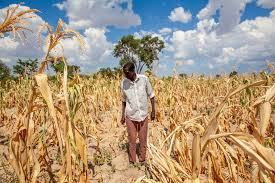
The fertilizer problem is unfolding alongside severe weather linked to a powerful El Niño. Verisk Maplecroft says the weather disruption is adding another layer of risk to agricultural regions that are already dealing with higher input costs and uncertain supplies.
Indonesia, the world’s largest palm oil producer, is experiencing damaging wildfires that have disrupted agricultural activity. India is dealing with monsoon rainfall running about 15 percent below normal, while Thailand is facing a projected decline in sugar production. These developments affect commodities that are important not only to domestic consumers but also to international food markets. :contentReference[oaicite:3]{index=3}
The timing creates a particularly difficult situation. A farmer can sometimes adapt to expensive fertilizer by reducing application, changing crops, or delaying purchases. But when weather conditions are also damaging harvests, there may be fewer ways to compensate.
India Faces Pressure From Weather and Input Costs
India is one of the world’s major agricultural producers and a significant exporter of rice and other commodities. The country’s monsoon system is closely connected to agricultural output, making rainfall patterns especially important for farmers.
Verisk Maplecroft says rainfall during the current monsoon season is running about 15 percent below normal. Lower rainfall does not automatically translate into a national crop failure because irrigation, regional weather differences, stored water, and crop choices can change the final outcome. However, persistent rainfall shortages can increase pressure on water resources and raise the cost of maintaining yields. :contentReference[oaicite:4]{index=4}
For Indian consumers, the effects could appear through individual food categories rather than through one broad shortage. Rice, vegetables, cooking oils, sugar, and other staples can respond differently depending on harvest conditions, inventories, imports, exports, and government policy.
Indonesia and Thailand Face Different Risks
Indonesia’s agricultural exposure is closely linked to palm oil, one of its most important commodities. Wildfires can damage plantations, disrupt harvesting, reduce worker access, and interfere with transportation. Lower production can then affect global vegetable oil markets because palm oil is widely used in cooking, processed foods, and industrial products.
Thailand faces a different combination of risks. The country is highly dependent on imported energy and fertilizer, according to Verisk Maplecroft, leaving farmers exposed when international input prices rise. Sugar production is also expected to decline, increasing pressure on both agricultural incomes and commodity supplies. :contentReference[oaicite:5]{index=5}
These examples show why food security cannot be measured only by the amount of food currently sitting in warehouses. A country may have adequate inventories today while facing a more difficult planting season several months from now.
Food Inflation Could Become the Most Visible Effect
For households, food inflation is likely to be the most immediate way these disruptions become visible. A higher fertilizer bill may begin as a farm level expense, but eventually producers, processors, wholesalers, retailers, and consumers can all be affected.
The World Food Programme has warned that conflicts affecting major trade routes are disrupting the movement of food, fuel, and fertilizer. It says delays and higher costs can reverberate across continents, with the most vulnerable communities facing the greatest consequences. :contentReference[oaicite:6]{index=6}
Lower income households are especially exposed because food typically represents a larger portion of their household spending. When staple prices rise, families may have to reduce purchases of more expensive foods, switch to cheaper alternatives, or cut spending on other essentials.
That creates a nutritional concern as well as an economic one. A household may technically maintain enough calories while consuming less protein, fewer fruits and vegetables, or fewer other nutrient rich foods.
Conflict and Weather Can Reinforce Each Other
The current concern comes from the interaction between several pressures rather than from one isolated shortage. War can raise fuel and fertilizer costs. Extreme weather can reduce production. Higher transport costs can make replacement supplies more expensive. Governments may then restrict exports to protect domestic consumers, further reducing the amount of food available on international markets.
Each development can make the next one more difficult to absorb.
This is why food security analysts pay close attention to both agricultural production and trade policy. A country can experience a moderate decline in domestic harvests without a major crisis if international supplies are affordable and readily available. The situation becomes more difficult when several exporting regions experience problems at the same time.
Countries With High Food Insecurity Face Greater Exposure
Verisk Maplecroft’s analysis highlights an additional concern for countries already facing food insecurity. More than half of the countries classified in the high or very high risk categories on its Food Security Index also fall within the two highest categories of its predictive Civil Unrest Index. The consultancy says that worsening food availability and prices, combined with ineffective government responses, could increase social and political instability in vulnerable markets. :contentReference[oaicite:7]{index=7}
This is a risk assessment rather than a prediction that unrest will occur in every affected country. Conditions differ significantly from one economy to another. Government food assistance, strategic reserves, import capacity, household income, and the availability of alternative suppliers can all influence how a country responds to a food price shock.
Afghanistan and Myanmar face particularly serious humanitarian concerns because conflict and economic weakness already limit their ability to absorb additional food and agricultural shocks. :contentReference[oaicite:8]{index=8}
Farmers Are Already Making Decisions That Could Shape Future Harvests
One of the most significant concerns is that agricultural decisions cannot always be reversed once a season has begun. Farmers must decide when to plant, which crops to grow, how much fertilizer to purchase, and how much water to allocate.
Verisk Maplecroft says that in several important agricultural regions, planting and fertilizer decisions were made during the peak of the disruption. As a result, some negative effects could remain even if geopolitical conditions improve in the coming months. :contentReference[oaicite:9]{index=9}
This creates a delayed effect. A supply disruption that begins today may not appear fully in food production figures until months later. Likewise, a decline in fertilizer use can affect crop output later in the growing cycle rather than immediately.
What Could Help Reduce the Pressure
The immediate challenge is maintaining the flow of fuel, fertilizer, and food while protecting households and farmers from sudden price shocks. The longer term challenge is making agricultural systems less dependent on a small number of energy sources, trade routes, and suppliers.
The FAO has identified several measures that could help reduce vulnerability, including alternative trade routes, stronger market monitoring, financial support for farmers, targeted assistance for vulnerable countries, domestic agricultural capacity, sustainable fertilizer production, and greater use of renewable energy. :contentReference[oaicite:10]{index=10}
For governments and food agencies, practical priorities include:
- Monitoring fertilizer and fuel inventories before shortages become severe
- Keeping major agricultural trade routes open where possible
- Supporting farmers facing unusually high input costs
- Protecting vulnerable households from sudden staple food price increases
- Expanding reliable storage and irrigation infrastructure
- Maintaining transparent information about food and fertilizer markets
The Global Food System Is Entering a Critical Test
The warning from Verisk Maplecroft arrives at a moment when energy security, agricultural production, climate conditions, and international trade are becoming increasingly connected. A disruption that begins in a maritime corridor can influence fertilizer prices thousands of miles away. A shortage of fertilizer can affect planting decisions. A weak harvest can then raise food prices for consumers who have never heard of the shipping route where the original disruption occurred.
We should therefore view the current situation not simply as a fertilizer shortage or a weather problem, but as a test of how resilient the global food system remains when several pressures arrive at once.
The situation does not guarantee a worldwide food shortage. Global agriculture remains capable of producing substantial supplies, and governments can respond through trade, reserves, financial support, and changes in production. But the latest evidence shows that the margin for error is becoming narrower in several vulnerable regions.
For farmers, families, and policymakers, the coming months will depend heavily on whether energy and fertilizer markets stabilize, whether extreme weather continues to damage key crops, and whether international supply chains can keep moving. The World Food Programme’s food security resources and ongoing monitoring from international agricultural institutions will remain important for tracking how these risks develop as the next planting and harvest cycles approach.