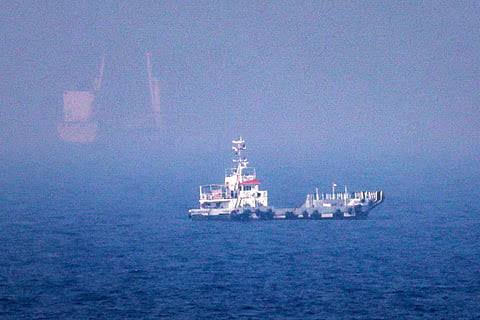
Travel between Europe, Asia, and the Middle East is facing a major route disruption as continuing military activity around the Strait of Hormuz and other regional maritime chokepoints forces airlines, cruise operators, and shipping companies to reconsider established corridors. For travelers, the consequences can appear as longer flight paths, cancelled connections, altered cruise itineraries, higher operating costs, and greater uncertainty over schedules. For the transport industry, the disruption is becoming a wider test of how quickly global travel networks can adapt when a strategically important region becomes difficult to cross.
The Strait of Hormuz remains a particularly sensitive point. Reuters reported on September 17 that only three commercial vessels crossed the waterway on the previous day, compared with a ten day average of 17. Traffic through the nearby Bab el Mandeb Strait also declined as fighting involving Houthi forces increased regional maritime risks.
Why the Strait of Hormuz Matters to International Travel
The Strait of Hormuz connects the Persian Gulf with the Gulf of Oman and the Arabian Sea. Although it is primarily known as an energy shipping route, disruption there affects a much wider network of international transportation.
Airlines operating between Europe and Asia frequently use Middle Eastern aviation hubs as connecting points. Dubai, Doha, Abu Dhabi, and other regional airports have traditionally allowed passengers to connect between continents without traveling around the region. When conflict affects surrounding airspace, those hubs can become harder to serve even when the airport itself remains operational.
Maritime travel faces a separate problem. Cruise ships moving between Europe, the Middle East, and Asia may need to avoid areas where military activity, missile threats, mines, or other hazards create unacceptable operational risks. The result can be a journey that looks completely different from the itinerary passengers originally purchased.
The International Maritime Organization has said the safety of seafarers remains a major concern, with around 20,000 seafarers, port workers, and offshore crews affected by the situation around the Strait of Hormuz.
Airlines Are Redrawing Routes Around Risk Areas
Air travel does not require an aircraft to fly directly over a conflict zone for disruption to occur. Airlines also have to consider nearby airspace restrictions, military activity, fuel planning, diversion airports, crew working limits, insurance requirements, and the availability of safe alternative routes.
European aviation authorities have already adjusted their guidance for the Gulf region. The European Union Aviation Safety Agency has maintained restrictions involving Iranian, Iraqi, and Lebanese airspace while updating its advice for parts of the Persian Gulf and Gulf of Oman.
For passengers, a route that once crossed the Middle East may now travel farther north or south. That can add considerable flying time, particularly on long distance services connecting European and Asian cities.
Longer routes also require more fuel. Airlines must calculate whether an aircraft can complete the journey with adequate reserves, whether an additional technical stop is necessary, and whether the new route creates congestion in other parts of the aviation network.
Why Longer Flights Can Become More Expensive
Fuel is one of the largest operating expenses for airlines, so additional flying time can place pressure on ticket prices and profit margins. The effect is not always passed directly to passengers because airlines may use fuel hedging, adjust schedules, reduce capacity, or absorb some costs.
Emirates said in September that roughly half of its fuel requirements were hedged and that it was working to limit the effect of higher fuel costs on ticket prices. The carrier has also said its fuel hedging arrangements extend into future operating periods.
Other airlines may have different levels of protection. A carrier with limited fuel hedging can be more exposed when longer routes and elevated oil prices occur at the same time.
Middle Eastern Aviation Hubs Face a Difficult Balance
Major Gulf airlines built their international networks around the region’s geographic position. Their hubs allow passengers to travel between Europe, Asia, Africa, and Australia through a relatively small number of highly connected airports.
Conflict related restrictions challenge that model because a disruption in one part of the region can affect dozens of connecting routes. Airlines must consider not only whether an aircraft can reach a destination but whether the entire network can operate reliably once aircraft and crews are displaced by delays.
Some carriers have continued operating through carefully managed routes, while others have suspended particular services. The exact situation can change rapidly as airspace warnings, airport conditions, and military activity develop.
Passengers therefore face a different kind of travel uncertainty from a normal weather delay. A storm may close an airport for several hours, but a conflict related restriction can change route planning for weeks or months.
Cruise Operators Face a Different Set of Problems
Cruise companies cannot simply alter a flight path by a few hundred miles. A cruise ship has to consider ports, fuel, passenger safety, medical facilities, maritime security, local permissions, and the practical distance between destinations.
Earlier in 2026, cruise operators cancelled or altered Gulf itineraries as the conflict intensified. Reports documented disruptions involving several ships operating around Dubai, Abu Dhabi, Doha, and other Gulf destinations.
When a cruise itinerary is changed, the consequences can extend beyond the ship. Hotels, tour companies, restaurants, transport providers, port workers, and airport operators can all lose business when passengers no longer arrive as planned.
Passengers may also face emotionally difficult choices. A cruise is often booked months in advance around birthdays, family gatherings, weddings, or long planned vacations. A sudden change in itinerary can therefore affect more than the financial value of a ticket.
Rerouting Can Add Days to Some Maritime Journeys
Commercial shipping provides a useful illustration of the wider problem facing maritime travel. When vessels avoid the Strait of Hormuz or nearby conflict areas, operators may have to use alternative routes or wait for safer transit conditions.
Maersk’s Middle East operational updates show how shipping companies continue to monitor the situation and adjust planning as conditions change. The company updated its regional guidance on September 16 and continues to provide shipment specific information to customers. Maersk’s official operational updates provide a direct example of how major carriers are managing the uncertainty.
For passenger vessels, the same principle applies. A route designed around a particular sequence of ports can become impractical when one maritime corridor is no longer considered suitable. Operators may substitute ports in other countries, shorten a voyage, extend a voyage, or cancel a sailing entirely.
The Red Sea Creates Another Layer of Risk
The Strait of Hormuz is not the only maritime chokepoint affecting international transportation. The Bab el Mandeb Strait connects the Red Sea with the Gulf of Aden and is another important route between Europe and Asia.
Reuters reported on September 17 that traffic through Bab el Mandeb had fallen to 21 vessel crossings from 24 the previous day, while attacks involving Houthi forces continued to increase concerns around the region.
This creates a difficult situation for operators planning Europe to Asia journeys. Avoiding one dangerous area can push traffic toward another route that may also carry elevated security risks.
For commercial vessels, that can mean longer journeys around Africa. For cruise companies, it can require major itinerary changes. For airlines, it can contribute to broader concerns about Middle Eastern airspace and fuel availability.
Travel Times Could Remain Unpredictable
Passengers planning international journeys should expect schedules to remain subject to change while airlines and authorities reassess regional conditions. A route that is available on one day can become restricted later if the security situation changes.
Travelers connecting through Gulf hubs should pay particular attention to airline notifications rather than relying only on the original itinerary shown when the ticket was purchased. Connecting passengers may also need additional time if aircraft arrive later because of longer routing.
Cruise passengers face similar considerations. An itinerary can change after booking, and replacement ports may not provide the same attractions, excursions, or transportation arrangements as the original destination.
Higher Fuel Costs Add Pressure to the Travel Industry
Route changes and fuel prices are closely connected. Reuters reported on September 17 that Brent crude was trading around 103 dollars per barrel after falling roughly 2 percent, although the market remained under pressure from continuing regional instability and threats to energy infrastructure.
For airlines, higher fuel prices combined with longer flight paths create two simultaneous costs. The aircraft may need more fuel because it is traveling farther, while every unit of fuel may also cost more.
Cruise operators face similar pressure because large vessels consume substantial quantities of fuel. Longer voyages can therefore affect both the cost of operating a ship and the amount of time available for passengers at individual ports.
What Travelers Should Watch Before Booking
The current environment makes flexibility more valuable for international travelers. People planning journeys through the Middle East can reduce uncertainty by checking current airline notices, airport conditions, official aviation guidance, and cruise operator updates shortly before departure.
- Check the operating status of every airport on a connecting itinerary.
- Review airline notifications before traveling to a Gulf connection point.
- Allow additional time for connections if flights are being rerouted.
- Check cruise operators for itinerary changes before traveling to the port.
- Review travel insurance terms for conflict related disruption.
- Keep important medicines, documents, and essential items accessible during unexpected delays.
Travelers should also understand that ordinary airline compensation rules may differ when cancellations result from security restrictions or circumstances outside the carrier’s control. The applicable rules depend on the airline, itinerary, country, ticket terms, and reason for the disruption.
The Human Cost Behind the Route Changes
It is easy to describe rerouting in terms of aircraft, ships, fuel consumption, and schedules. Behind those numbers are people waiting in airport lounges, families trying to reach relatives, crews spending longer periods away from home, and travelers watching departure boards change after months of planning.
The International Maritime Organization has placed particular attention on seafarer welfare because crews can remain at sea or in affected ports while companies assess whether vessels can safely move.
That human dimension matters because transportation networks are not simply lines on a map. They are workplaces and lifelines connecting families, businesses, tourism economies, and essential goods.
What the Disruption Could Mean for Europe and Asia
If regional security improves, airlines and maritime operators could gradually restore more direct routes. If restrictions continue, companies may maintain alternative corridors for longer periods and build additional costs into their schedules and pricing.
European and Asian businesses are likely to monitor the situation closely because transportation delays can affect tourism, cargo deliveries, fuel supplies, and international meetings. Hotels and airports in alternative transit locations could see additional demand if passengers are redirected away from traditional Gulf hubs.
At the same time, prolonged disruption could place pressure on airlines and cruise companies whose networks depend heavily on predictable regional connectivity.
A Global Travel Network Under Pressure
The disruption around the Strait of Hormuz is demonstrating how quickly conflict in a strategically important region can alter transportation patterns far beyond the immediate battlefield. Flights between Europe and Asia can require different air corridors, cruise itineraries can be rewritten, and maritime operators can face difficult decisions about whether to transit or wait.
We should expect travel planning to remain fluid while military activity and maritime security conditions continue to change. The number of vessels using the Strait remains far below normal levels, while authorities and commercial operators continue to evaluate alternative routes.
For passengers, the most practical response is preparation rather than panic. Flexible bookings, reliable communication with carriers, extra connection time, and close attention to official travel information can reduce the disruption when routes change.
The wider lesson is equally clear. International travel depends on a network of air corridors, maritime chokepoints, fuel markets, ports, airports, and human crews. When one critical link becomes unsafe, the effects can spread quickly across continents. The current Strait of Hormuz crisis is therefore not only a regional transportation problem. It is a reminder of how closely connected global travel remains to the security of the routes that carry people and goods between continents.