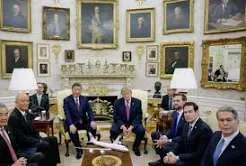
Washington and Beijing have agreed to extend their fragile trade truce, giving the world’s two largest economies more time to negotiate while easing the immediate threat of another round of retaliatory tariffs. The extension followed Chinese President Xi Jinping’s September visit to Washington for talks with US President Donald Trump and offers temporary breathing room for businesses, investors and supply chains that have spent years adjusting to uncertainty in US China trade relations.
For companies that order components months before products reach store shelves, a pause in tariff escalation can matter almost as much as a permanent agreement. Manufacturers can plan shipments with fewer immediate risks, importers have more time to assess costs and financial markets can respond to a clearer short term outlook. Yet the agreement is not the end of the trade dispute. It is better understood as additional negotiating time while both governments continue working through disagreements over tariffs, market access, agricultural purchases, technology and strategic supply chains.
Washington and Beijing Extend the Trade Truce
The United States and China had been operating under a trade arrangement reached after their 2025 meeting in Busan, South Korea. That agreement paused additional tariff increases and retaliatory measures while the two governments worked toward broader economic understandings.
US Treasury Secretary Scott Bessent said on September 23 that Washington and Beijing had agreed to extend the arrangement from its previously scheduled November 10 expiration until January 10, 2027. The additional period is intended to give negotiators more time to address outstanding economic issues and explore a wider agreement. :contentReference[oaicite:0]{index=0}
The extension came as officials from both countries were already holding intensive discussions. Chinese Vice Premier He Lifeng met with Bessent and US Trade Representative Jamieson Greer in New York on September 20, with both sides discussing trade implementation and other economic matters. Chinese officials described the consultations as candid and constructive. :contentReference[oaicite:1]{index=1}
For businesses, the significance is straightforward. The agreement does not remove the broader tariff system or settle every dispute, but it reduces the immediate possibility that the two governments will add another layer of tariffs while negotiations continue.
Why the Extension Matters for Global Supply Chains
US China trade policy has effects far beyond the two countries. American retailers rely on Chinese factories for a wide range of consumer goods, while manufacturers in both countries depend on international networks for components, raw materials and specialized equipment.
A sudden tariff increase can force businesses to make difficult decisions. Importers may absorb higher costs, raise prices, search for alternative suppliers or move portions of production to other countries. Those adjustments cannot always happen quickly. A factory contract, shipping schedule or component order may have been arranged months earlier.
The temporary truce therefore gives companies something that has become increasingly valuable: predictability.
Businesses can use the additional negotiating period to reassess sourcing plans, review inventories and determine whether previously announced tariff changes will remain suspended. Investors can also evaluate corporate earnings and inflation risks without having to immediately price in another escalation in bilateral trade restrictions.
That relief is particularly relevant for industries that operate on thin margins. Even a relatively small change in import costs can affect wholesale prices, retail pricing and purchasing decisions when goods move through multiple stages of a global supply chain.
New Tariff Discussions Point to a More Targeted Approach
The latest summit also produced movement toward reciprocal tariff reductions covering selected goods. The White House said the US China Board of Trade reached consensus on more favorable tariff treatment for $30 billion of non sensitive goods in each direction. The categories discussed include agricultural products, fish and seafood, wood products, cosmetics and medical devices among US exports, while Chinese exports to the United States include categories such as small appliances, toys and decorations. :contentReference[oaicite:2]{index=2}
This development is separate from the broader extension of the trade truce, but the two measures point in the same direction: maintaining negotiations rather than allowing tariff disputes to escalate immediately.
Chinese officials had already confirmed that their economic teams were consulting with US officials about a reciprocal tariff reduction arrangement involving roughly $30 billion of goods from each side. As of September 17, China’s Ministry of Commerce said the two sides remained in close communication and that further details would be released as discussions progressed. :contentReference[oaicite:3]{index=3}
For exporters, the eventual product list will matter more than the headline figure. A tariff reduction has a direct commercial effect only when a company’s goods fall within the covered categories and the final rates and implementation rules are clear.
Trade Stability Comes With Important Unresolved Issues
The temporary agreement should not be confused with a comprehensive settlement. The United States and China continue to disagree over several structural questions that have contributed to years of economic tension.
Technology remains one of the most sensitive areas. Washington has imposed restrictions affecting advanced technologies and has sought greater protection against what it views as national security risks associated with strategic Chinese industries. Beijing has objected to various US restrictions and has developed its own export controls affecting important materials and products.
Rare earth materials illustrate the problem. These materials are essential to several advanced manufacturing industries, including technologies that depend on high performance magnets. Recent reporting showed continued concern over Chinese rare earth magnet shipments to the United States, demonstrating how supply chain security remains intertwined with the wider trade relationship. :contentReference[oaicite:4]{index=4}
Agriculture is another major part of the negotiations. American farmers depend heavily on export markets, while Chinese buyers rely on imported agricultural commodities to support domestic demand. Progress on purchasing commitments has been mixed, with US officials saying some commitments were moving forward while other targets remained behind schedule. :contentReference[oaicite:5]{index=5}
Markets Gain Relief, but the Truce Is Still Temporary
Financial markets generally respond positively when the possibility of a major tariff escalation recedes. Tariffs can raise business costs, disrupt supply forecasts and contribute to inflation concerns. A temporary pause gives investors more information about the direction of policy before making longer term assumptions.
Still, the market relief should be viewed within the limits of the agreement. The January 10 deadline is another negotiating milestone rather than a permanent solution. If Washington and Beijing fail to make sufficient progress, businesses could again face uncertainty as the deadline approaches.
That means companies with significant exposure to US China trade cannot simply return to old assumptions. Many have spent years diversifying production across Southeast Asia, Mexico, India and other manufacturing centers. The latest truce may slow the pressure to make further changes, but it does not necessarily reverse those strategic decisions.
Diplomacy Is Expanding Beyond Tariffs
The September summit also produced agreements outside conventional tariff negotiations. The two governments agreed to continue working through bilateral mechanisms on trade and investment and to establish a channel for discussing artificial intelligence related incidents. They also agreed to continue efforts on military crisis communications. :contentReference[oaicite:6]{index=6}
The broader pattern matters because trade disputes rarely exist in isolation. Technology, investment, national security, energy and diplomatic relations can influence economic policy. A functioning communication channel can give officials more opportunities to address disputes before they become larger commercial confrontations.
Both governments also have upcoming opportunities for further leader level engagement. China is scheduled to host the Asia Pacific Economic Cooperation leaders’ meeting in November, while the United States is set to host the Group of 20 summit in December. Chinese and US officials have indicated that both leaders intend to participate in the other country’s major gathering. :contentReference[oaicite:7]{index=7}
What Businesses Should Watch Through January
Companies involved in cross border commerce will likely focus on several developments during the extension period. The most important question is whether the temporary pause develops into a more durable framework.
- Whether the proposed tariff reductions on selected goods become operational and which specific products qualify.
- Whether agricultural purchasing commitments continue to progress.
- Whether rare earth and other strategic material shipments become more predictable.
- Whether technology related restrictions expand, remain unchanged or become part of broader negotiations.
- Whether the US China trade and investment boards produce additional agreements before the January deadline.
Businesses can follow official announcements from the US Trade Representative and China’s Ministry of Commerce as implementation details emerge.
A Pause, Not a Permanent Settlement
From the perspective of companies and consumers, the most immediate benefit of the new arrangement is time. Washington and Beijing have created another window in which negotiations can continue without the immediate pressure of additional retaliatory tariffs.
That window has real economic value. A manufacturer can keep a supplier contract in place. A retailer can plan inventory. An exporter can negotiate orders with greater confidence. Investors can assess corporate exposure with fewer immediate policy shocks hanging over the market.
But the underlying relationship remains complicated. The United States and China are simultaneously major trading partners, economic competitors and strategic rivals. Their economies remain deeply connected even as both governments seek greater resilience in critical industries.
The January 10, 2027 deadline will therefore be closely watched. Between now and then, the practical details of tariff reductions, agricultural trade, supply chain commitments and technology policy will determine whether the latest pause becomes a foundation for a broader economic arrangement or simply another temporary interval before negotiations enter a more difficult phase.
For the global economy, the message from Washington and Beijing is cautiously clear: neither side is choosing immediate escalation. For businesses around the world, that decision provides something they have been seeking for years, a little more room to plan.