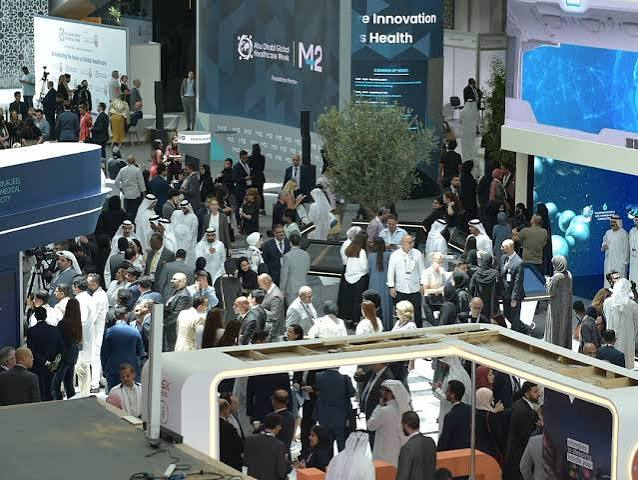
The Abu Dhabi Future Health Summit 2026 is preparing to bring healthcare leaders, policymakers, researchers, technology companies and life sciences investors together for a global conversation about how medicine can move earlier in the disease cycle. Scheduled for October 20 through October 22 at ADNEC Centre Abu Dhabi, the summit will place artificial intelligence, advanced diagnostics, genomics, health data and preventive medicine at the center of discussions about longer and healthier lives.
Abu Dhabi Places Prediction at the Center of Future Healthcare
The central theme of the 2026 summit is “To Sense is to Predict,” a phrase that captures a significant change in how healthcare systems are being designed. Rather than waiting for symptoms to become serious before treatment begins, health leaders are increasingly exploring ways to identify risk earlier through biological signals, medical data, environmental information and continuous monitoring.
The official Future Health Summit programme describes the event as a global gathering focused on collaboration across government, science, technology, policy and investment. The programme is built around four major areas: longevity and precision medicine, digital health and AI, health system resilience and sustainability, and investment in life sciences.
For patients, the concept has a practical meaning. A healthcare system capable of identifying elevated risk before a disease becomes advanced could potentially give doctors more time to intervene. It could also give individuals more opportunities to change habits, complete screening or begin treatment before a condition creates lasting complications.
AI Diagnostics Move From Experiment to Clinical Discussion
Artificial intelligence is expected to be one of the most closely watched subjects at the summit. Healthcare organizations are already using machine learning and data analysis in areas such as medical imaging, clinical decision support, patient monitoring and research. The next challenge is determining how these technologies can be used responsibly in real clinical environments.
AI can process large volumes of information far more quickly than a human can manually review every data point. That capability can be useful when physicians are looking for patterns across medical images, laboratory results, genetic information and patient histories. Yet speed alone does not guarantee better care. Healthcare professionals still need reliable evidence, appropriate clinical validation and clear accountability when an algorithm contributes to a medical decision.
The summit’s focus on digital health and AI reflects this wider debate. Rather than treating artificial intelligence as a standalone technology, organizers are presenting it as part of an integrated health system in which clinicians, patients, data platforms and predictive tools work together.
Early Detection Could Change the Economics of Healthcare
Preventive medicine is not only a medical issue. It is also an economic one. Chronic diseases place substantial pressure on hospitals, insurers, families and public health budgets because many conditions require years of treatment and repeated medical intervention.
Earlier detection could potentially change that pattern. If a health system can identify elevated cardiovascular risk, cancer risk, metabolic problems or other conditions at an earlier stage, physicians may have more options available to manage the problem before it becomes more difficult and expensive to treat.
Future Health says chronic diseases are expected to contribute trillions of dollars in global economic costs by 2030. The organization is therefore positioning prevention as a health system priority rather than simply an individual lifestyle choice.
Genomics and Precision Medicine Take a Larger Role
Another major area of discussion will be precision medicine. Advances in genomics and related technologies are allowing researchers to examine health at increasingly detailed biological levels. Combined with clinical information and advanced analytics, genomic data can help researchers investigate why people respond differently to the same disease or treatment.
The summit is expected to explore how advanced diagnostics, genomic screening and other emerging technologies can support more individualized approaches to healthcare. This could eventually influence how doctors assess disease risk, select treatments and monitor patients over time.
There is also a practical challenge. Precision medicine requires infrastructure, skilled professionals, reliable laboratories and responsible data management. A sophisticated diagnostic tool has limited value if healthcare systems cannot make it accessible to the populations that need it.
From Individual Monitoring to Population Health
One of the more interesting aspects of the Abu Dhabi programme is its focus on sensing at several levels. Individual health monitoring can involve wearable devices, behavioral information and personal medical records. At the system level, healthcare providers can combine information to identify groups that may need earlier screening or additional support. At the population level, data can help public health authorities monitor disease patterns and broader health risks.
The Future Health programme identifies population risk forecasting, environmental monitoring and disease pattern surveillance as areas connected to this wider approach. The idea is to move from isolated medical encounters toward a continuous understanding of health conditions across communities.
Global Leaders Bring Different Healthcare Priorities
The summit is expected to attract participation from more than 100 countries, with organizers listing about 130 forum speakers and more than 175 exhibitors. Featured participants include healthcare executives, government officials, technology leaders, researchers and investors.
Among the announced speakers are Pascal Soriot, chief executive of AstraZeneca, Tim Schmid of Johnson and Johnson MedTech, Helga Fogstad of UNICEF, Will Ahmed of WHOOP, Tom Hale of OURA and Max Jaderberg of Isomorphic Labs. The mix of participants reflects how broadly healthcare innovation now reaches across medicine, biotechnology, consumer technology and investment.
That diversity matters because the future of healthcare cannot be shaped by hospitals or pharmaceutical companies alone. Technology companies control important data and computing capabilities. Governments determine regulatory frameworks. Researchers develop new diagnostics and therapies. Investors influence which ideas receive funding. Patients ultimately live with the consequences of all those decisions.
Health System Resilience Remains a Major Concern
Predictive healthcare also depends on strong health systems. Advanced AI cannot compensate for shortages of medical professionals, fragmented records, weak infrastructure or limited access to basic care.
The summit therefore includes health system resilience and sustainability among its four central focus areas. Discussions are expected to consider how healthcare systems can remain reliable while facing chronic disease, demographic change, environmental pressures and rapidly changing technology.
This is especially relevant for countries seeking to expand access while adopting sophisticated medical tools. A responsible healthcare strategy has to consider both advanced innovation and fundamental access to doctors, diagnostics, medicines and preventive services.
Investment Could Determine Which Innovations Reach Patients
Scientific discovery does not automatically become a treatment available to ordinary patients. Research needs funding, clinical trials require infrastructure, and successful technologies must pass regulatory and safety requirements before they can reach widespread use.
Investment in life sciences is therefore another major pillar of the summit. Abu Dhabi is using Future Health as a platform that connects investors with healthcare, biotechnology and technology communities. The goal is to encourage collaboration around ideas that can move beyond research and toward testing, implementation and broader adoption.
The investment discussion is likely to be particularly relevant for biotechnology companies working on diagnostics, genomic medicine, digital health platforms and new therapies. Capital can accelerate promising research, but responsible investment also requires careful attention to evidence, patient safety and long term sustainability.
Why the Summit Matters Beyond Abu Dhabi
The significance of the Abu Dhabi Future Health Summit extends beyond the three day event. The initiative is designed as a year round platform involving research, policy discussions, innovation programmes and collaboration. The summit serves as its flagship gathering where many of those themes come together.
The Department of Health Abu Dhabi has described the programme as an effort to connect predictive health, advanced diagnostics, data driven care and responsible innovation. That approach places Abu Dhabi within a broader international effort to rethink how healthcare systems identify and respond to risk.
The Human Question Behind Predictive Medicine
Behind every discussion about AI, genomics and predictive analytics is a person waiting for an answer from a doctor. Technology can process information, but patients still need clear explanations, compassion and trust. A prediction is useful only when healthcare professionals can interpret it correctly and patients can understand what it means for their lives.
That human dimension will remain critical as healthcare becomes more data intensive. People need confidence that sensitive health information is handled responsibly. Clinicians need systems that support rather than undermine professional judgment. Regulators need evidence that new tools are safe and effective. Communities need access to innovation rather than seeing advanced healthcare become available only to those who can afford it.
Abu Dhabi Summit Signals a Broader Shift Toward Prevention
The Abu Dhabi Future Health Summit 2026 arrives at a moment when healthcare systems are increasingly asking whether medicine should intervene earlier rather than simply respond after disease appears. Artificial intelligence, genomics, wearable technology, advanced diagnostics and integrated health data are making that question more practical than it was a decade ago.
We should also be realistic about what predictive medicine can achieve. Not every disease can be prevented, algorithms can make mistakes, and access to advanced technology remains uneven. The value of the summit will ultimately depend on whether the ideas discussed can move from conference rooms into clinics, laboratories and communities.
Still, the direction is clear. Abu Dhabi is bringing global healthcare leaders together around a model that places early awareness, prediction and prevention alongside treatment. If the partnerships and research emerging from the summit lead to responsible implementation, the most meaningful result may not be a new piece of technology. It may be a healthcare system that gives people more time to act before illness takes control of their lives.