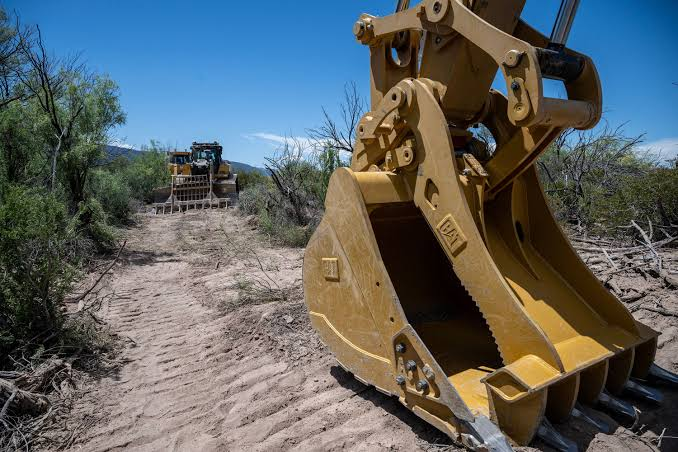
A federal court has temporarily frozen major border security construction across the Big Bend region of Texas, placing a significant part of the US government’s southern border infrastructure expansion under judicial review. The ruling affects planned barriers, roads and related security systems in and around Big Bend National Park, while a broader legal challenge brought by conservation groups, a historic preservation organization and a local landowner moves forward. For communities living beside the Rio Grande, the decision reaches beyond a construction project. It touches questions of private property, environmental protection, cultural heritage and how large federal infrastructure programs should proceed on sensitive land.
A Court Order Brings Construction to a Standstill
On October 2, 2026, US District Judge Kathleen Cardone issued a preliminary injunction blocking ground disturbing activities connected with border infrastructure in the Big Bend region. The order came after plaintiffs argued that the federal government had improperly used legal waivers to accelerate construction while bypassing environmental and cultural protections.
Reuters reported that the project includes roads, surveillance technology and vehicle barriers inside Big Bend National Park rather than only the tall steel walls being constructed in other sections of the southern border. The court order keeps the work suspended while the underlying lawsuit is considered. The decision does not permanently determine whether the infrastructure can ever be built. Instead, it creates a legal pause while the court examines the claims raised by the plaintiffs.
The ruling is particularly significant because construction in the region has already generated intense disagreement. US Customs and Border Protection had previously paused work inside the park following criticism from residents, conservation organizations and elected officials. The latest injunction gives that pause a formal judicial basis.
Why Big Bend Has Become a Major Legal Battleground
Big Bend is unlike many other sections of the US Mexico border. The region contains vast desert landscapes, mountains, river canyons and remote stretches of land along the Rio Grande. Big Bend National Park is also recognized for its unusual night skies and biological diversity.
For people who live and work in the surrounding communities, however, the issue is not simply about scenery. Planned infrastructure can affect access routes, privately owned property, tourism operations, historic locations and land that has been used by families for generations.
The lawsuit was brought by the Center for Biological Diversity, Friends of the Ruidosa Church and Danny William Miller, a Rio Grande river guide and landowner. Their legal challenge argues that the government exceeded its authority and that the construction could cause lasting damage to property and protected resources.
The Texas Tribune reported that the five border projects in the wider Big Bend region involve government contracts worth more than $7.5 billion. That scale helps explain why the legal dispute has attracted attention well beyond the small communities immediately surrounding the construction sites.
Private Property Is Central to the Dispute
One of the most personal aspects of the case involves privately owned land along the Rio Grande. Federal border infrastructure in the wider region could require construction across property belonging to residents and landowners. Government filings have indicated that officials have been seeking permission to survey and build on some properties, while other cases could be referred to the Justice Department when permission is not obtained.
For a landowner, such a dispute can feel very different from a national argument about border policy. A proposed road, barrier or surveillance installation can change access to a river, divide a property or alter the way a business operates. Property valuation can also become more complicated when the future use of land is uncertain.
That is why local opposition has included not only conservation advocates but also people whose livelihoods and property interests are directly connected to the river and surrounding landscape. The legal arguments now place those concerns alongside broader constitutional and environmental questions.
Environmental Rules Are at the Heart of the Lawsuit
The plaintiffs have challenged federal decisions that waived major environmental requirements to speed construction. The legal dispute includes questions involving the Endangered Species Act and the National Environmental Policy Act, two important federal frameworks used to evaluate potential environmental effects.
The government has argued that border security requires the ability to move quickly and construct infrastructure in areas where officials believe future security risks could develop. Customs and Border Protection has defended its authority while also reassessing aspects of the Big Bend plans.
The court’s preliminary ruling does not resolve that larger disagreement. It means that construction must remain stopped while the legal arguments receive further consideration. The judge found that the plaintiffs were likely to succeed on at least one claim and that continuing construction could result in serious and irreparable harm.
A Landscape Where Security and Conservation Collide
Standing along parts of the Rio Grande in Big Bend, the physical scale of the landscape can make conventional border infrastructure appear unusually intrusive. Mountain walls rise above the river, dirt roads disappear into remote desert terrain and large areas remain far from major population centers.
Supporters of construction argue that border security planning must account for changing migration routes and possible future threats. Opponents argue that the rugged terrain already creates a substantial natural obstacle and that permanent infrastructure could damage resources without providing a proportionate security benefit.
Those competing perspectives are now part of a court supervised process. Rather than settling the policy question through public debate alone, the legal proceedings will examine whether federal agencies followed the law when approving and accelerating the projects.
Construction Had Already Created Tension
The court action follows months of controversy surrounding construction activity in the region. According to reporting from Reuters, Customs and Border Protection Commissioner Rodney Scott paused construction in the park in August after criticism grew over the potential impact on the landscape and wildlife.
The administration has also faced opposition from people across the political spectrum. The Texas Tribune reported that resistance to the Big Bend project has included local officials, landowners and environmental organizations, with Republican Senator John Cornyn among those who have expressed concerns about aspects of the planned infrastructure.
That broad opposition illustrates how complicated infrastructure decisions can become when federal security priorities meet highly localized concerns. A project designed in Washington can eventually affect a family property, a historic site or a remote trail that may seem far removed from national policy debates.
What the Court Ruling Means for the Project
The immediate effect is straightforward. Ground disturbing construction covered by the injunction cannot continue while the case proceeds. The government must now address the legal challenges rather than simply moving ahead with the affected work.
The ruling does not mean that all US border construction has stopped. Other projects in different parts of the southern border are governed by separate decisions, contracts and legal proceedings. The Big Bend injunction is specific to the disputed construction covered by the case.
For residents and businesses in the affected region, the pause creates additional time to assess what the infrastructure could mean for land access, tourism, conservation and property rights. For federal officials, it creates another legal hurdle in an infrastructure program that has already faced multiple lawsuits.
The Broader Question Facing Federal Infrastructure Projects
The Big Bend case could become significant beyond the immediate construction sites because it raises a recurring question about how rapidly the federal government can build major infrastructure on environmentally or culturally sensitive land.
Large public projects often involve competing interests. Security agencies may prioritize speed and operational access. Conservation groups may focus on wildlife and habitat. Local residents may focus on property rights and economic consequences. Historic preservation organizations may be concerned about sites that cannot easily be restored once disturbed.
The legal system provides a mechanism for testing those competing claims. In this case, the preliminary injunction gives the court time to consider whether federal authorities properly exercised their powers and whether the waivers used to accelerate construction were lawful.
What Happens Next
The underlying lawsuit will continue, and the federal government can pursue further legal action in response to the injunction. The final outcome could determine whether some or all of the disputed infrastructure can proceed, whether additional environmental review is required or whether parts of the project must be redesigned.
Meanwhile, the National Park Service information on Big Bend National Park illustrates why the region carries unusual environmental and recreational importance. Its protected landscapes attract visitors for hiking, river activities, wildlife observation and exceptionally dark night skies.
For the people who live closest to the proposed construction, the stakes remain immediate. A border barrier is not simply a line on a federal planning document when it crosses private property or changes access to a river. A road is not merely a transportation feature when it cuts through a remote habitat. And a construction project is not easily reversible once the ground has been cleared.
The October 2 ruling therefore represents a pause rather than a final conclusion. The court has placed the disputed Big Bend construction on hold while the legal process continues, leaving the future of one of the most controversial border infrastructure projects in West Texas to further judicial review.