A new gambling industry report has placed Europe’s online betting market at the center of an escalating regulatory debate, estimating that unregulated operators generated €91.6 billion in gross gambling revenue from consumers across the European Union in 2025. The study places that activity at 72 percent of a €128 billion online gambling market, raising fresh questions about cross border enforcement, consumer protection, taxation and the ability of national regulators to control gambling platforms that operate beyond their licensing systems.
A €128 Billion Market Faces a Major Regulatory Challenge
The figures come from Gaming Compliance International, which prepared its latest study for the Campaign for Fairer Gambling. The report examined online gambling activity across all 27 European Union member states and estimated that unregulated operators generated €91.6 billion in gross gambling revenue during 2025. Regulated operators accounted for an estimated €36.5 billion.
The report says the unregulated share increased from 67 percent in 2023 to 71 percent in 2024 and 72 percent in 2025. Unregulated revenue was estimated at €52.6 billion in 2023, meaning the study calculates growth of roughly 74 percent over two years.
Those numbers are significant, but they also require context. The 72 percent figure is an estimate produced by a study commissioned by an organization that campaigns for changes to gambling regulation. Other recent research has produced substantially lower estimates of the unregulated market. A separate study commissioned by the European Gaming and Amusement Federation estimated the illegal online gambling market at about €12 billion in 2025, or approximately 25 percent of online gambling activity.
The difference is partly connected to methodology and definitions. Gambling researchers do not always measure the same markets, revenue categories or forms of unauthorized activity. For that reason, the 72 percent figure should be treated as a significant finding from one research methodology rather than as an uncontested measurement of the entire European gambling market.
Why Regulators Are Looking Beyond Individual Gambling Websites
The central problem identified by the GCI report is that online gambling does not stop at national borders. A gambling company can be based in one jurisdiction, hold a license elsewhere, operate websites in several languages and target consumers in countries where it does not hold the required local authorization.
This structure creates a difficult enforcement environment. A national regulator may have authority over licensed businesses operating within its jurisdiction, but an offshore website can continue to reach consumers through advertising, search results, social media, affiliate marketing, applications and alternative web addresses.
GCI identified 6,238 unregulated operators targeting consumers across the European Union during 2025. The study also identified more than 17,500 affiliates connected with the market. The report argues that these operators form part of a broader commercial ecosystem rather than functioning as thousands of completely separate businesses.
That distinction is important because closing one website may not remove the underlying operation. A domain can disappear while another address, application or promotional channel takes its place.
Advertising Has Become a Central Part of the Debate
One of the report’s more striking findings concerns the gambling content encountered by people who actively interact with online gambling material. GCI estimates that 91 percent of the gambling content encountered by this group in 2025 promoted unregulated operators.
The study estimates that online gambling content reached 121 million people across the European Union. About 88 million were exposed to material from unregulated operators, according to the report.
For regulators, advertising creates a particularly difficult challenge because the gambling platform may not be the only entity involved. Search engines, social networks, streaming services, affiliates and advertising intermediaries can all become part of the path through which consumers encounter gambling content.
The report also examined illegal sports streaming and found widespread gambling advertising around unauthorized streams. During major sporting events, audiences can be enormous, creating an attractive environment for operators attempting to reach potential customers.
Tax Revenue Is Another Major Concern
The regulatory debate is not only about gambling rules. Governments also have a financial interest in ensuring that revenue generated from their residents is subject to applicable taxation.
GCI estimates that governments across the European Union missed approximately €22 billion in gambling related tax revenue during 2025 as a result of activity outside local regulatory systems. That calculation uses an estimated average gross gambling revenue tax rate of 24 percent across the European Union.
The figure is an estimate rather than a direct government accounting total, but it illustrates why unauthorized online gambling has become a fiscal issue as well as a consumer protection issue.
When a customer uses a locally licensed operator, the company generally operates within a defined regulatory framework and is subject to the taxes and reporting requirements established by the relevant jurisdiction. An operator based outside that framework may not face the same obligations.
Consumer Protection Sits at the Heart of the Investigation
For people placing bets online, the most immediate question is not how much money governments collect. It is what happens when something goes wrong.
Licensed gambling systems generally impose rules covering areas such as age verification, advertising, identity checks, responsible gambling controls and dispute procedures. The exact requirements vary between countries, but the purpose is to establish a framework in which operators can be monitored and consumers have defined protections.
When a platform operates outside a national licensing system, those protections may be weaker or difficult for local authorities to enforce. Consumers can face uncertainty over where a company is legally based, which regulator has jurisdiction and how disputes can be resolved.
For someone sitting alone at home and using a phone to place a bet, those legal distinctions may be almost invisible. The website can look polished, payments can appear straightforward and customer support may be available in the user’s language. The regulatory status behind the screen can be much harder to determine.
Eastern Europe Shows the Highest Share in the GCI Analysis
The GCI study divided the European Union into four broad regions to examine differences in unregulated activity. Eastern Europe recorded the highest estimated unregulated share at 81 percent of online gross gambling revenue.
Western Europe followed at 74 percent, while Southern Europe was estimated at 60 percent. Northern Europe recorded the lowest estimated share among the four groups at 58 percent.
Western Europe nevertheless generated the largest amount of unregulated revenue in the study, estimated at €36.9 billion. Eastern Europe was estimated at €30.7 billion, Southern Europe at €17.1 billion and Northern Europe at €6.9 billion.
These regional figures should be interpreted carefully because differences in market size, gambling habits, regulation and measurement methods can affect the results. A high percentage does not necessarily mean that a region has the largest absolute amount of unauthorized gambling revenue.
Why National Enforcement May Not Be Enough
The Campaign for Fairer Gambling is calling for stronger coordination among European authorities. Its position is that national enforcement alone cannot adequately address an industry that can move across borders and digital platforms.
The proposed approach extends beyond gambling regulators. The report calls for greater attention to search engines, application stores, payment services, advertising networks and other companies that can help unauthorized operators reach consumers.
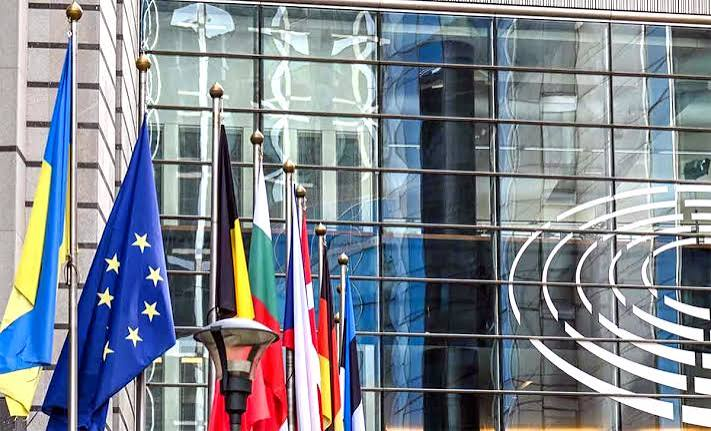
The European Parliament has repeatedly examined questions involving online gambling, consumer protection and the digital economy. Its broader work on consumer rights and digital services provides an important institutional setting for the continuing European debate over how online markets should be supervised.
The European Parliament provides public information on parliamentary work involving consumer protection, digital policy and related regulatory questions.
The Licensing Model Is Also Under Pressure
Another issue raised by the report concerns the difference between local European gambling licenses and licenses offered by jurisdictions that serve international operators.
GCI compared estimated licensing costs and taxation between European Union markets and several jurisdictions that provide transnational licensing services. The report found that licensing and tax costs can be considerably lower in some of those jurisdictions.
Supporters of international licensing systems can argue that they provide a legal framework for companies serving customers across multiple countries. European regulators, however, may still regard an operator as unauthorized if that company accepts bets from residents without the license required in their particular jurisdiction.
This creates a complicated legal environment in which a company can be licensed somewhere while remaining unlicensed where a consumer actually lives.
Payments Could Become a Major Enforcement Tool
Money movement is another area attracting attention. Online gambling depends on payment infrastructure, and regulators seeking to restrict unauthorized operators may examine how customers deposit and withdraw funds.
GCI’s recommendations include involving payment providers in enforcement efforts. The underlying logic is straightforward: if an unauthorized operator can easily advertise, accept payments and maintain access to customers, blocking its website alone may have limited effect.
However, stronger payment restrictions also require careful design. Legitimate transactions can be disrupted when financial systems attempt to identify unauthorized gambling activity. Any future rules would therefore need to balance enforcement with accuracy, consumer rights and the prevention of mistaken account restrictions.
What the Conflicting Estimates Tell Us
The most important lesson from the competing research may be that Europe still lacks a single universally accepted measurement of its unauthorized online gambling market.
One study estimates that unregulated operators account for 72 percent of online gross gambling revenue. Another recent analysis places the illegal market at about 25 percent. These figures cannot simply be combined because the studies use different definitions and methodologies.
For policymakers, that uncertainty makes transparent research particularly valuable. Regulators need to know which websites are targeting their residents, how much revenue is being generated, how consumers encounter those operators and which enforcement measures actually work.
For consumers, the practical lesson is more direct. A gambling website appearing online does not automatically mean that it is licensed in the country where the customer lives. Checking the relevant national regulator before depositing money can provide important information about whether the operator is authorized and which consumer protections apply.
Europe Faces a Cross Border Regulatory Test
The latest report has intensified an argument that has been developing for years: digital gambling can cross borders much faster than regulatory systems can coordinate.
The €91.6 billion estimate from GCI is large enough to attract attention from governments, regulators and financial institutions, but the conflicting market estimates show why the numbers should be examined carefully. Regardless of which estimate ultimately proves closest to reality, there is broad evidence that unauthorized operators remain present across European online markets.
We are now seeing a regulatory question that extends beyond individual gambling companies. It involves advertising platforms, search engines, application stores, payment providers, affiliates, streaming services and national regulators operating across different legal systems.
The next stage of the debate is therefore likely to focus less on individual websites and more on the infrastructure that allows them to find customers and process transactions. European policymakers will have to weigh enforcement, consumer protection, taxation and digital market rules while considering how much cooperation is required between national authorities.
For consumers, the safest practical approach remains checking whether an online gambling operator is licensed in the relevant jurisdiction before using it. For regulators, the challenge is larger: creating enforcement systems capable of keeping pace with a market that can move across borders, platforms and digital identities with remarkable speed.