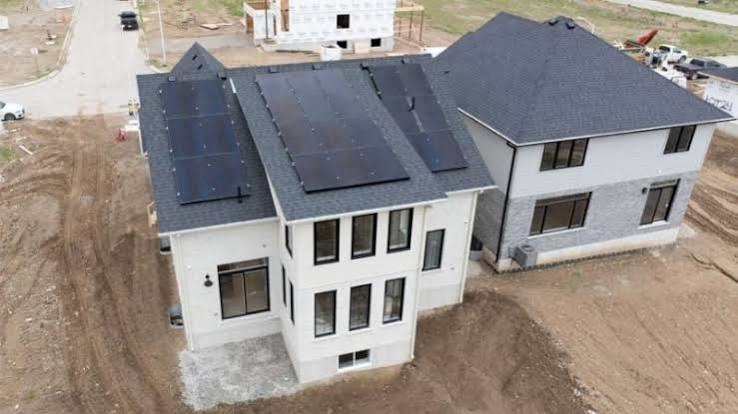
Homeowners across Europe and North America are increasingly reconsidering how their properties generate, store, and consume energy as electricity prices, energy security concerns, and climate commitments reshape residential priorities. On November 3, 2026, the growing movement toward net zero residential retrofits is drawing attention to two technologies in particular: integrated home battery storage and intelligent heat pump systems. Together with rooftop solar panels, smart energy controls, and improved insulation, these technologies are helping households reduce dependence on conventional energy supplies while gaining greater control over their electricity consumption.
What was once considered a specialized investment for environmentally conscious homeowners is becoming a broader conversation about household resilience and long term energy expenses. Imagine a home that captures sunlight during the afternoon, stores unused electricity in a battery, and uses intelligent controls to operate heating equipment when energy is most affordable. This approach is changing how residential properties interact with the wider electricity network. However, the transition also raises practical questions about installation costs, government incentives, building conditions, and whether every household can benefit equally.
Why Net Zero Residential Retrofits Are Gaining Momentum
The growing interest in residential energy upgrades reflects several pressures occurring simultaneously. Households want more predictable energy bills, governments are pursuing emissions reduction targets, and electricity providers are adapting to increasing demand from electric vehicles, heating systems, and digital infrastructure.
Traditional homes often depend heavily on externally supplied electricity, natural gas, or heating oil. Their energy efficiency can also be limited by outdated insulation, inefficient boilers, older electrical equipment, and poorly controlled heating systems. These weaknesses can increase household expenses and leave residents more exposed to changes in energy prices.
Net zero retrofitting addresses these problems through coordinated improvements rather than relying on one individual technology. A comprehensive renovation might combine insulation, airtight windows, rooftop solar generation, residential batteries, heat pumps, and smart energy management software.
The objective is to reduce unnecessary energy consumption while supplying remaining household requirements through increasingly low carbon electricity. Complete energy independence is not realistic for most properties, particularly during winter or periods of limited renewable generation. Nevertheless, reducing reliance on external energy supplies can improve resilience and help households manage long term operating costs.
Home Battery Storage Becomes an Important Part of Residential Energy Planning
Residential battery systems are gaining attention because they allow homeowners to store electricity rather than immediately consuming or exporting all the energy their solar panels generate.
During sunny afternoons, rooftop solar installations can produce more electricity than a household needs. Without storage, surplus generation may be exported to the electricity network, depending on local arrangements. A home battery provides another option by retaining some of that electricity for later use.
When evening arrives and solar generation declines, stored electricity can supply lighting, appliances, electronic devices, and other household requirements. This reduces the amount of electricity that must be purchased from the grid during certain periods.
How Integrated Battery Systems Work
A typical residential energy storage installation includes a rechargeable battery, an inverter, monitoring equipment, and a control system. The inverter manages the conversion between the direct current produced by solar panels or stored in batteries and the alternating current commonly used by household appliances.
Smart controllers monitor electricity production, battery capacity, and household demand. Depending on the installation, they can determine when to store electricity, when to use battery power, and when drawing electricity from the grid makes more financial sense.
Some systems can also provide backup electricity during power interruptions. However, backup capability depends on the equipment configuration, battery capacity, electrical installation, and whether the system includes suitable islanding protection. Homeowners should confirm these features before purchasing a system rather than assuming every battery installation provides whole house backup.
Why Households Are Combining Solar Panels With Batteries
The combination of rooftop solar and battery storage can improve the usefulness of residential renewable generation. Instead of relying entirely on the timing of sunlight, households gain greater flexibility over when their electricity is consumed.
This arrangement is particularly attractive in regions where electricity prices vary throughout the day or where compensation for exporting surplus solar energy is relatively low. Batteries can help households retain more of their own generation and use it when electricity prices are higher.
However, financial benefits vary considerably. Battery purchase prices, installation expenses, electricity tariffs, solar production, household consumption, and available incentives all influence the final economics. A battery is not automatically a profitable investment for every property.
Smart Heat Pumps Are Changing How Homes Stay Warm
Heat pumps are becoming another major component of residential energy modernization. Unlike conventional heating systems that generate heat by burning fuel, heat pumps transfer thermal energy from outdoor air, the ground, or water into a building. This process can provide heating with substantially less electricity than many traditional electric resistance heating systems.
Modern heat pumps can also provide cooling during warmer months, making them useful throughout the year. Their ability to operate efficiently across different seasons makes them particularly attractive for households seeking to replace older heating and cooling equipment.
Intelligent Controls Improve Heating Efficiency
Smart heat pump installations combine efficient heating equipment with digital thermostats, temperature sensors, and automated energy management systems. These controls allow homeowners to establish schedules, adjust temperatures remotely, and monitor energy consumption through mobile applications.
More advanced systems can coordinate heating requirements with electricity prices and renewable energy production. For example, a smart controller may increase heating slightly during periods of abundant solar generation and reduce operation during expensive electricity periods while maintaining comfortable indoor temperatures.
This coordination becomes particularly valuable when heat pumps operate alongside residential batteries. The battery can supply electricity when appropriate, while thermal storage within the building helps maintain comfortable temperatures without requiring continuous equipment operation.
According to the International Energy Agency, heat pump deployment can contribute to energy security by reducing dependence on natural gas. Its 2026 Heat Pump Monitor estimates that heat pumps helped avoid approximately 53 billion cubic metres of natural gas consumption for building heating across Europe, Japan, and China in 2025.
European Households Accelerate the Transition to Cleaner Heating
Europe has become an important market for residential heat pump adoption as governments and homeowners seek alternatives to conventional fossil fuel heating. Energy security concerns, climate policies, and improvements in heating technology are influencing decisions about home renovation.
According to the European Heat Pump Association, approximately 2.9 million domestic heat pumps were sold across 21 European countries during 2025. Residential sales increased in 14 of the 18 countries included in its analysis, with Germany and Italy recording particularly strong growth.
Adoption is especially established in northern Europe. Norway, Finland, and Sweden have some of the region’s highest household heat pump ownership rates, reflecting their long experience with electric heating technologies and supportive market conditions.
Germany is also becoming an important market as households replace older heating equipment and consider alternatives to gas boilers. However, adoption remains uneven across the continent. Countries with lower household incomes, older building stock, and less favorable electricity prices face additional obstacles.
Residential battery storage is developing alongside this heating transition. Households with solar panels increasingly consider batteries as a way to use more locally generated electricity, manage changing electricity tariffs, and obtain additional backup capabilities.
North American Homeowners Explore Greater Energy Independence
North America presents a different but equally important opportunity for residential energy upgrades. The United States and Canada have diverse climates, large suburban housing markets, and substantial differences in electricity pricing and utility infrastructure.
In the United States, heat pumps are increasingly being considered when homeowners replace aging air conditioning equipment or conventional heating systems. Because many modern heat pumps provide both heating and cooling, replacing an existing cooling system can sometimes offer a practical route toward household electrification.
The International Energy Agency reported in its 2026 Heat Pump Monitor that more than 20 percent of American households now rely on heat pumps for space heating. Heat pumps also outsold gas boilers in the United States for the fourth consecutive year in 2025.
Battery storage is attracting attention in areas where households experience electricity interruptions, high peak electricity prices, or favorable solar generation conditions. States with substantial residential solar markets have become important locations for integrated solar and battery installations.
California, Texas, and other regions with growing distributed energy markets demonstrate how residential energy systems can become more flexible. Homeowners may use stored electricity during expensive periods, participate in utility programs where available, or maintain selected household equipment during outages.
In Canada, cold weather creates additional considerations. Modern cold climate heat pumps can operate at lower outdoor temperatures, although performance varies by model, installation quality, and building insulation. Battery capacity and winter solar production must also be evaluated carefully before households invest in complete energy systems.
Government Incentives and Financing Influence Retrofit Decisions
Despite growing interest, the initial cost of residential energy modernization remains a major obstacle. Installing a heat pump, battery system, solar panels, and insulation can require a substantial financial commitment. Many households cannot afford to complete every improvement simultaneously.
Government incentives, tax credits, low interest financing, and energy efficiency programs can make these projects more accessible. However, available support differs by country, state, province, and household circumstances.
European governments have introduced various measures to support building renovations and renewable energy adoption. In North America, federal, state, provincial, and local programs have also influenced household investment decisions.
Homeowners should examine the actual eligibility requirements of available programs before making purchasing decisions. Incentives can change, funding may be limited, and some schemes require approved equipment or certified installers.
Financing arrangements should also be evaluated against expected energy savings. A lower monthly energy bill does not automatically mean that a renovation will pay for itself quickly, particularly when installation costs, maintenance, financing charges, and battery replacement are included.
Older Homes Present Technical Challenges for Net Zero Renovations
One of the biggest challenges is adapting existing residential buildings to modern energy systems. Many older properties were constructed around gas boilers, conventional radiators, limited insulation, and electrical systems that were not designed for extensive electrification.
Installing a heat pump without evaluating the building’s thermal performance can produce disappointing results. Poor insulation and air leakage increase heating requirements, potentially forcing equipment to operate harder and consume more electricity.
A successful retrofit should therefore begin with an assessment of the property’s existing condition. Energy professionals can examine insulation, windows, ventilation, heating distribution, electrical capacity, and overall energy consumption before recommending equipment.
For some properties, improving insulation and sealing air leaks should happen before installing a larger heating system. Other homes may need radiator replacements, electrical panel upgrades, or modifications to accommodate battery equipment.
Careful planning can prevent expensive mistakes and help ensure that different technologies operate together efficiently.
Smart Energy Management Creates a More Connected Home
The growing integration of batteries, solar panels, heat pumps, and smart appliances is creating opportunities for more sophisticated household energy management.
Instead of operating independently, these systems can communicate through a central energy management platform. The software monitors household demand, renewable generation, battery availability, and electricity pricing to coordinate equipment operation.
For example, a household could prioritize using solar electricity for daytime appliances, store surplus generation in a battery, and use stored energy during evening peak periods. A smart heat pump could also adjust its operating schedule according to indoor temperatures and electricity availability.
Some systems can connect with electric vehicle chargers, allowing homeowners to coordinate transportation and household energy requirements. In certain markets, participating households may also provide electricity or flexibility services to the wider grid through approved utility programs.
These developments could make residential properties more active participants in electricity networks. However, reliable internet connectivity, compatible equipment, cybersecurity protections, and clear data privacy policies remain essential.
Environmental Benefits Depend on the Entire Energy System
Net zero residential retrofits can reduce household emissions, but the actual environmental benefits depend on how electricity is generated and how efficiently buildings use it.
A heat pump operating on electricity supplied largely by renewable sources can significantly reduce dependence on fossil fuel heating. Solar panels can provide additional low carbon electricity, while batteries allow households to shift some consumption toward periods when renewable generation is available.
Insulation and efficient windows also play an important role because the cleanest energy is often the energy a household does not need to consume.
Battery manufacturing, equipment transportation, refrigerant management, and eventual disposal must also be considered when assessing the environmental impact of residential upgrades. Responsible recycling and appropriate equipment selection can help reduce these additional impacts.
What Homeowners Should Consider Before Installing Energy Systems
For households considering a net zero renovation, a staged approach can make the process more manageable. Rather than purchasing every available technology immediately, homeowners should identify their largest sources of energy waste and prioritize improvements that offer meaningful long term benefits.
Several practical steps can help guide the decision:
- Review household energy consumption: Examine electricity and heating bills to identify periods of high demand and unnecessary usage.
- Assess building insulation: Check roofs, walls, windows, and doors for heat loss before selecting heating equipment.
- Compare heat pump options: Choose equipment suited to local temperatures, building size, and existing heating infrastructure.
- Evaluate battery requirements: Consider daily electricity consumption, solar generation, backup needs, and available storage capacity.
- Check local incentives: Confirm eligibility for government support, utility programs, and financing opportunities.
- Use qualified installers: Request detailed quotations, equipment specifications, warranties, and expected performance estimates.
Independent energy assessments can also help homeowners avoid unnecessary purchases and understand which improvements are likely to deliver the greatest benefits.
The Future of Residential Energy Will Depend on Affordability and Reliable Infrastructure
The movement toward net zero residential retrofits represents a significant opportunity to improve household energy efficiency while supporting wider climate and energy security objectives. Integrated batteries, smart heat pumps, rooftop solar, and intelligent controls are gradually changing how homes interact with electricity networks.
Nevertheless, the transition will not happen at the same speed everywhere. High installation expenses, skilled labor shortages, electricity network limitations, and inconsistent government policies continue to influence adoption. The International Energy Agency has also identified upfront equipment and installation costs as important barriers to wider heat pump deployment.
For governments, the priority should be creating stable incentives, strengthening electricity infrastructure, supporting technical training, and ensuring that energy improvements remain accessible to ordinary households. Manufacturers must continue improving equipment efficiency, reliability, and affordability.
For homeowners, the most effective strategy is to view energy modernization as a long term investment rather than a collection of fashionable technologies. A properly insulated property with appropriately sized heating equipment and carefully planned storage can offer practical advantages without requiring complete independence from the electricity network.
As Europe and North America continue investing in cleaner residential infrastructure, the definition of a modern home is gradually changing. Energy efficiency, renewable electricity, intelligent heating, and reliable storage are becoming increasingly important considerations in property renovation. The success of this transition will ultimately depend not simply on how many batteries or heat pumps are installed, but on whether these systems make homes more comfortable, affordable, resilient, and environmentally responsible for the people who live in them.