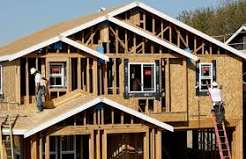
For Americans hoping to buy a newly built home, the biggest obstacle is increasingly not the number of bedrooms or the size of the kitchen. It is the monthly mortgage payment. As construction slows and affordability pressures keep prospective buyers cautious, homebuilders are relying more heavily on mortgage rate buydowns to make purchases financially manageable without substantially reducing advertised home prices. Newly built properties accounted for just 16.7% of active home listings in the third quarter of 2026, down from 17.2% a year earlier, according to Realtor.com research released on November 17.
The shift reflects a housing market caught between two difficult realities. Buyers are struggling with elevated borrowing costs, construction expenses remain high, and builders have fewer new homes entering the market. Rather than compete exclusively through lower asking prices, developers are increasingly using financing incentives to reduce buyers’ initial monthly payments. For households trying to balance a mortgage with groceries, childcare, transportation and other expenses, that difference can influence whether a purchase feels possible.
New Construction Is Losing Ground in the Housing Market
The decline in newly built homes as a share of listings highlights the changing supply picture. Realtor.com data shows that new construction represented 16.7% of active listings during the third quarter, compared with 17.2% in the same period of 2025. New home inventory increased just 0.1% year over year, while existing home inventory grew 3.1%.
That difference suggests builders are not adding available properties at the pace needed to expand their share of the market. The completion rate for new single family homes fell 11% year over year in September. Higher labor and material costs, weaker buyer demand and uncertainty about the economic outlook have all contributed to a more cautious construction environment.
For buyers, slower construction can mean fewer choices in some communities, particularly when they are looking for a particular price range, floor plan or location. A household searching for a three bedroom home near schools, for example, may find that the newest developments have limited available inventory or prices beyond its budget. Builders, meanwhile, must decide how to attract buyers without allowing their remaining inventory to sit unsold for too long.
The slowdown does not mean new homes have disappeared from the market. It does indicate that their contribution to available housing has weakened at a time when affordability remains a major concern. That makes the terms attached to a purchase increasingly important.
Mortgage Rate Buydowns Become a Key Sales Strategy
A mortgage rate buydown allows a buyer to obtain a lower interest rate because the builder, lender or another party pays an upfront cost to reduce the financing rate. The incentive can lower monthly principal and interest payments, sometimes significantly, while allowing the builder to keep the advertised home price relatively stable.
Builders may arrange these offers through preferred mortgage lenders or pay for the reduction themselves as part of a sales incentive. In return, they gain another way to compete for buyers who might otherwise delay a purchase because of high borrowing costs.
Realtor.com data illustrates how much difference these arrangements can make. During the third quarter of 2026, the average starting mortgage rate for new home buyers was 5.01%, compared with 6.15% for buyers purchasing existing homes. That is a difference of 1.14 percentage points.
For a hypothetical $400,000 home purchase with a 10% down payment, the lower starting rate translated into approximately $258 less in monthly interest costs during the first year. The comparison helps explain why a new home with a builder backed financing incentive may look more affordable on a monthly basis, even when its asking price is higher than that of a nearby resale property.
However, the lower starting rate does not necessarily last for the full mortgage term. Some builders offer temporary arrangements, while others help buyers secure a reduced rate that remains in place for the life of the loan. Those are fundamentally different financial offers, and buyers should understand which one they are receiving before signing a purchase agreement.
Temporary and Permanent Buydowns Have Different Costs
Temporary rate reductions provide early payment relief
One common structure is the 3 2 1 buydown. Under this arrangement, the mortgage rate begins three percentage points below the agreed note rate in the first year, rises by two percentage points in the second year and increases by one percentage point in the third year. After that, the borrower pays the full mortgage rate for the remaining loan term.
This structure can help households manage the early costs of homeownership, especially when they expect their income to increase or anticipate having more financial flexibility in the coming years. But buyers should not make a decision based only on the attractive first year payment. The payment schedule changes, and the household must be able to afford the full amount once the temporary assistance ends.
Permanent buydowns offer longer term savings
A permanent buydown reduces the mortgage interest rate for the entire loan term. Realtor.com reported that the average 30 year fixed rate for new home buyers was 6.19% in the third quarter, compared with 6.68% for existing home buyers.
Using the same hypothetical $400,000 purchase with 10% down, that difference represented approximately $117 in monthly interest savings. Unlike a temporary incentive, a permanent rate reduction can continue to benefit the borrower throughout the mortgage, assuming the loan remains in place under its original terms.
Neither arrangement is automatically better for every household. The value depends on the cost of the incentive, the borrower’s plans, the loan structure and the possibility of refinancing or selling before the mortgage reaches its full term.
New Homes Cost More Overall, but Size Changes the Comparison
Financing incentives are particularly relevant because newly built homes continue to carry a higher median asking price. Realtor.com reported a median new home listing price of $451,071 in the third quarter of 2026. That was nearly $50,000 above the median listing price for existing homes.
At first glance, that gap may make new construction appear considerably more expensive. Yet the homes being compared are not necessarily similar in size. Newly built properties had a median size of 2,056 square feet, compared with 1,790 square feet for existing homes.
When the figures are measured by price per square foot, the difference nearly disappears. New homes averaged $218 per square foot, while existing homes averaged $219. The comparison suggests that the higher overall price of new construction is partly connected to the larger size of the properties being listed.
Location also matters. New construction is concentrated in suburban communities and parts of the South, where land costs can differ substantially from those in established urban neighborhoods. National averages therefore cannot tell buyers whether a particular newly built home is a better value than a comparable resale property nearby.
For anyone comparing the two options, the more useful approach is to examine similar homes in the same area. Buyers should consider the purchase price, usable space, property taxes, insurance, maintenance costs and financing terms together rather than relying on a single national median.
Builder Confidence Shows How Difficult Conditions Have Become
The growing use of mortgage incentives comes as homebuilders face mounting pressure. The National Association of Home Builders reported on November 17 that its Housing Market Index fell four points to 25 in November, its lowest reading since April 2012. A reading below 50 indicates that more builders view current market conditions as poor than good.
The association said 46% of builders reduced home prices during November, while 68% offered sales incentives. The average price reduction remained at 6% for the eighth consecutive month. Incentives have now been used by at least 60% of builders for 20 consecutive months.
These figures show that rate buydowns are part of a broader effort to keep sales moving. Builders are also using other incentives, which may include help with closing costs or upgrades. At the same time, rising material expenses, labor shortages and weaker buyer traffic are limiting how much flexibility developers have.
Mortgage rates have added to the pressure. A rate above 7% can substantially increase the monthly cost of financing a home, particularly for buyers who have limited savings for a down payment. Even households with stable incomes may decide to postpone purchasing when the expected payment leaves too little room for emergencies or other financial goals.
That hesitation affects builders as well as buyers. When fewer people visit sales offices or submit offers, developers may delay projects, reduce construction activity or concentrate on selling homes that are already completed. The result can be a cycle in which affordability challenges weaken demand while slower construction limits the arrival of new supply.
What Buyers Should Check Before Accepting a Builder Incentive
A reduced mortgage rate can be valuable, but the headline offer does not reveal the full cost of a purchase. Buyers should request a written explanation of the financing arrangement and compare it with an independent mortgage quote.
- Confirm how long the reduced rate lasts. Establish whether the offer is temporary or fixed for the entire loan term.
- Request the complete payment schedule. For a temporary buydown, calculate the monthly payment after every scheduled increase.
- Compare the total loan costs. Review lender fees, discount points, closing costs and any conditions attached to the incentive.
- Compare the home price with similar properties. A lower mortgage rate does not automatically make an overpriced property a good purchase.
- Check eligibility requirements. Builder incentives may depend on using a preferred lender, meeting credit requirements or completing the purchase within a specified period.
It is also worth asking whether the builder would offer a lower purchase price or closing cost assistance instead of the advertised rate reduction. A buyer who expects to refinance or sell within a few years may value an upfront discount differently from someone planning to remain in the property for decades.
Consumers can review broader housing and mortgage market information through Realtor.com and explore builder confidence reports and housing industry research from the National Association of Home Builders. These resources can provide useful context, although individual loan offers still require careful review.
What the Shift Means for the Housing Market
The growing reliance on mortgage rate buydowns points to a change in how homebuilders compete. Instead of relying entirely on lower asking prices, developers are increasingly adjusting the financing attached to a purchase. That strategy can help preserve the apparent value of a home while giving buyers a more manageable monthly payment.
But incentives cannot solve every problem. They do not remove the underlying cost of land, construction materials or labor, and they cannot make a property affordable for someone whose income is insufficient to support the eventual mortgage payment. Temporary reductions may also create financial strain if buyers underestimate how much their payments will rise.
For the construction industry, the decline in new homes as a share of listings is a reminder that supply depends on more than the number of projects announced. Builders need buyers who can qualify for financing and feel confident enough to commit. Until borrowing costs and household affordability improve, developers are likely to keep searching for ways to make their properties more attractive.
For homebuyers, the central lesson is to look beyond the advertised price and the initial mortgage rate. A carefully structured buydown may create meaningful savings, but the strongest purchase decision is one that remains affordable after every incentive expires. With new construction accounting for a smaller share of available listings and builders facing persistent cost pressures, understanding the full financing agreement has become an essential part of buying a newly built home.