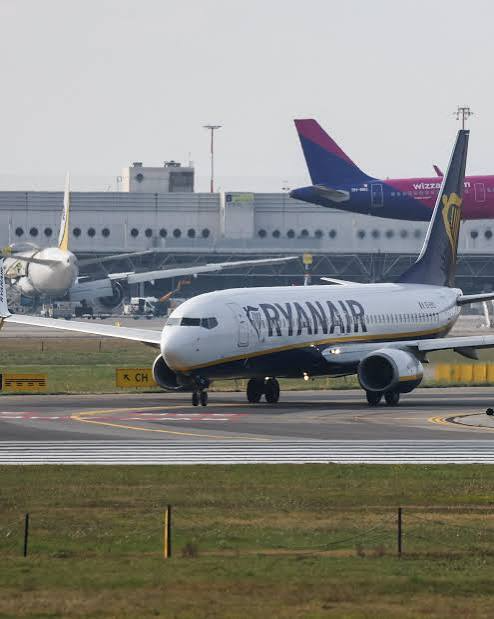
European aviation authorities and airlines are facing renewed security pressure after a wave of malicious bomb threats triggered flight diversions, emergency inspections and delays across several countries. The incidents have affected major carriers and airports, forcing passengers to leave aircraft, disrupting departure schedules and prompting fighter jet escorts for some flights. On November 17, diplomatic security alerts also warned international travelers that further transport disruption remains possible as Europe enters the busy holiday travel season.
Although searches of affected aircraft have not uncovered explosives, authorities cannot simply dismiss a threat when it arrives. Every report must be assessed, and even an apparently implausible message can require an aircraft inspection or an unscheduled landing. For passengers, that means a journey that began as an ordinary flight can quickly become a lengthy wait in an unfamiliar airport while security teams establish that it is safe to continue.
Bomb Threats Disrupt Flights Across Multiple European Countries
The aviation incidents intensified during the first week of November, with threats reported against flights departing from or traveling through countries including the United Kingdom, France, Denmark, Spain, Italy, the Netherlands, Cyprus, the Czech Republic and Romania. Airlines affected included Ryanair, Wizz Air, LOT Polish Airlines, Aer Lingus, Finnair, Aegean Airlines and Scandinavian Airlines.
Several incidents required significant operational responses. Flights were diverted to alternative airports, aircraft were searched after landing and some services received military escorts. In one widely reported incident, an Aer Lingus flight traveling from Dublin to Rome was diverted to a French military airbase after a bomb threat. Other aircraft traveling toward Bulgaria were escorted by fighter jets, while some flights bound for Prague and Warsaw underwent additional security checks.
Authorities and airlines reported that inspections found no explosives or suspicious materials on the affected aircraft. Passengers reached safety, and there were no reported injuries connected to the aviation incidents described in the early November wave.
The absence of explosives does not mean the disruption was insignificant. Diversions can require additional fuel, airport coordination, police deployment, passenger transfers and revised crew schedules. A single security alert can affect connecting flights and create delays that continue long after the aircraft involved has been cleared.
Threats Appeared to Follow a Wider Campaign Across Europe
The aviation incidents have taken place alongside a much broader series of malicious messages targeting schools, businesses, broadcasters and public institutions. A Reuters investigation published on November 17 found that more than 8,000 hoax bomb threats had targeted European institutions and organizations over roughly a month, based on a review of official disclosures, media reports and cybersecurity information.
Most reported targets were in the United Kingdom, Ireland and Italy. The messages prompted school evacuations, disrupted broadcasts and forced organizations to activate emergency procedures. Some threats were sent from compromised email accounts, while others appeared to use similar wording and distribution methods.
One wave in October included messages with the subject line “Death is near.” Another series of threats in November targeted thousands of schools in Italy and hundreds of schools in Scotland, Northern Ireland and Ireland. The campaign has therefore extended well beyond airports and airlines, raising concerns about the ability of malicious actors to create disruption across several parts of public life.
Investigators have not established that every incident is connected. Similar language, distribution methods and target lists have raised the possibility of coordination, but a shared pattern does not by itself prove that a single organization directed all the threats. Authorities continue to investigate who sent the messages and whether any foreign actors were involved.
Security Officials Have Not Confirmed Who Is Responsible
The possibility of foreign interference has become part of the wider security discussion. Some European officials and analysts have raised concerns about potential Russian involvement, particularly because the incidents resemble tactics associated with hybrid operations. Such operations can combine cyber activity, disinformation, intimidation and other disruptive methods without taking the form of a conventional military attack.
However, suspicion is not proof. No definitive public attribution has established that Russia or another state ordered the aviation threats. A group claiming responsibility in a message, or the use of political language, does not independently demonstrate who organized an operation. Investigators must examine technical evidence, account access, communication patterns and other intelligence before reaching conclusions.
Reuters also reported that some messages invoked the Russian anti feminist group Male State. The group’s founder denied involvement. That denial does not resolve the investigation, but it underlines why authorities must distinguish between the content of a threat and verified evidence about its sender.
For aviation authorities, identifying the person or organization responsible is only one part of the response. The immediate priority is to protect passengers, crew members and airport staff while ensuring that the threat assessment process does not create unnecessary risks.
Why Airlines Must Treat Even Hoax Threats Seriously
Airlines operate under strict security procedures because the consequences of overlooking a genuine bomb threat could be catastrophic. When a warning is received, relevant security teams assess its credibility using available information. Depending on the circumstances, the airline and authorities may decide to inspect an aircraft, move it away from terminal buildings, evacuate passengers or divert a flight.
If a threat reaches authorities while an aircraft is still on the ground, passengers may be instructed to leave the plane so security teams can conduct a search. If the aircraft is already airborne, the crew may be directed to land at a suitable airport as soon as safely possible. The decision depends on the threat assessment, aircraft position, available airports and instructions from the relevant authorities.
These procedures can be unsettling for passengers, especially when an aircraft is escorted by military jets or directed to an unfamiliar airport. Yet a diversion or evacuation is a precaution, not evidence that an explosive device has been found. The purpose is to give trained teams a controlled environment in which to investigate the warning.
Security experts have also warned that repeated hoaxes can place pressure on aviation operations. Inspections consume staff time, disrupt airport capacity and create additional costs for airlines. Even when every aircraft is eventually cleared, repeated false alarms can weaken public confidence and place unnecessary strain on emergency services.
US Embassies Issue Updated Security Alerts for Europe
On November 16 and 17, US diplomatic missions across Europe issued security alerts advising American citizens to remain aware of their surroundings as the holiday season approaches. The guidance identified crowded public locations, including markets, transportation hubs, shopping centers, places of worship and major events, as areas where travelers should exercise additional vigilance.
The alerts also referred directly to the November hoax bomb threats against civil aviation in several European countries. They warned that travel and daily life could face disruption and encouraged Americans to monitor local news and follow instructions from police and emergency personnel.
The diplomatic guidance is broader than an aviation warning. It also addresses the general security environment during a period when holiday festivals and large public gatherings attract residents and international visitors. The alerts do not mean that every European airport faces an immediate threat or that travelers should cancel their plans. They are intended to encourage awareness and preparedness.
American travelers can check official updates through the US Department of State travel advisories and enroll in the Smart Traveler Enrollment Program to receive information relevant to their destination.
What Passengers Should Do Before Traveling
For people with upcoming flights, the most practical response is to stay informed without assuming that every journey will be affected. European airports and airlines continue to operate, but security inspections and other operational changes can affect individual services with little notice.
Travelers should take several straightforward precautions before leaving for the airport:
- Check the airline’s latest flight information. Review the airline application or website before departure and again while traveling to the airport.
- Allow additional time. Security procedures, diversions and changes to boarding arrangements may create delays.
- Keep travel documents accessible. Passports, boarding passes, medication and essential contact details should remain easy to reach if passengers are moved or rebooked.
- Follow official instructions. Airport staff, police and emergency responders are responsible for directing passengers during security incidents.
- Monitor local security information. Travelers should check embassy notices and reliable local reporting, particularly when visiting several countries during one trip.
Passengers whose flights are canceled or significantly delayed should contact their airline for information about rebooking, refunds and assistance. Rights vary depending on the route, carrier and circumstances of the disruption. European passenger protection rules may apply to certain journeys, but compensation is not automatic when an incident results from an exceptional security threat outside an airline’s control.
Could the Threats Continue?
Airline representatives and security specialists have warned that further hoax messages remain possible. The spread of threats across several countries and types of institutions makes it difficult for authorities to predict where another message might appear. The fact that a previous warning proved false does not allow security teams to assume that a new one is harmless.
At the same time, the aviation picture should be described carefully. The most widely reported flight disruptions occurred during the first week of November. By November 17, reporting had focused increasingly on the wider threat campaign and diplomatic warnings about possible travel disruption. There was no basis for suggesting that every European airport was experiencing an active emergency or that all flights were being suspended.
The challenge for governments is to maintain a consistent response across borders. Airlines, airport operators, police forces, intelligence agencies and aviation regulators need to share relevant information quickly while protecting sensitive operational details. Clear public communication is also essential. Travelers need enough information to make sensible decisions, but unverified claims can spread fear and give malicious actors the attention they may be seeking.
A Test of European Aviation Security and Public Confidence
The recent bomb threat campaign has demonstrated how quickly false warnings can affect international travel. A message sent from an anonymous account can lead to an aircraft diversion, a police operation and hours of uncertainty for hundreds of passengers. When similar messages target institutions in several countries, the disruption can extend well beyond aviation.
For travelers, the central message is to remain attentive, check flight information and follow official guidance. There is no evidence that the affected aircraft in the reported incidents carried explosives, and the security responses allowed passengers to reach safety. That record reflects the importance of treating warnings seriously, even when they ultimately prove to be hoaxes.
For European authorities, the investigation now has two connected priorities: identifying those responsible and ensuring that aviation security systems can respond effectively without allowing repeated false alerts to paralyze travel. Until investigators establish the origins and relationships between the threats, claims about a single organizer or state sponsor should be treated cautiously.
As holiday travel increases, cooperation between airlines, airports and national security agencies will remain essential. The success of that response will be measured not only by how quickly flights return to schedule, but also by whether passengers can continue traveling with confidence that genuine threats will be handled carefully and false alarms will not be allowed to dictate the movement of an entire continent.
Further reporting on the wider campaign and its impact on European institutions is available through Reuters’ investigation into the wave of hoax bomb threats.