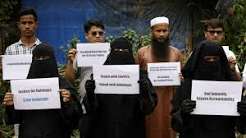
The International Court of Justice has delivered a historic judgment finding Myanmar responsible for genocide against the Rohingya, marking a major moment in the community’s long struggle for recognition, accountability and the possibility of returning home safely. Announced in The Hague on November 19, 2026, the ruling concerns atrocities committed during the Myanmar military’s 2017 operations in northern Rakhine State. The Court found that Myanmar violated the Genocide Convention and ordered steps toward investigation, prevention, restitution and compensation. For Rohingya survivors and families who have spent years displaced from their homes, the decision is a powerful legal acknowledgment of their suffering, even as the difficult work of enforcing it lies ahead.
A Historic Finding Under the Genocide Convention
The case, formally titled The Gambia v. Myanmar, was brought by The Gambia in November 2019. It argued that Myanmar had breached the 1948 Convention on the Prevention and Punishment of the Crime of Genocide through its treatment of the Rohingya, a Muslim minority community concentrated in Rakhine State. The Court issued provisional measures in January 2020, requiring Myanmar to take steps to prevent genocidal acts and preserve evidence while the case proceeded.
On November 19, 2026, the judges reached their final decision on the merits. By nine votes to six, the Court found that Myanmar had committed genocide against the Rohingya group in northern Rakhine State. It also found, by the same margin, that Myanmar had violated its duty to prevent genocide by individuals acting alongside its security forces. The judgment further found that Myanmar failed to fulfil its obligations to punish genocide and related acts, enact the necessary domestic legislation, and preserve evidence as required by the Court’s earlier order.
The decision is especially significant because it is the first time the ICJ has found a state responsible for committing genocide. The Court is the United Nations’ principal judicial organ, and its judgments in contentious cases between states are final and binding on the parties. The six dissenting votes do not make the decision optional or remove its legal force. They do, however, show that the judges disagreed over important questions of evidence and legal interpretation.
What the Court Found About the 2017 Atrocities
The judgment concerns the military operations carried out in 2017, when Rohingya communities across northern Rakhine State faced widespread violence. Villages were attacked and burned, civilians were killed, and survivors described sexual violence, severe physical and psychological harm, and the destruction of the conditions needed to sustain family and community life. More than 700,000 Rohingya fled to Bangladesh during the mass exodus that followed.
The Court concluded that the acts committed against the Rohingya were carried out with the specific intent to destroy a substantial part of the group. That intent is central to the legal definition of genocide. Under the Genocide Convention, it is not enough to establish that civilians were killed or forcibly displaced. Prosecutors and courts must establish that prohibited acts were committed with the intention of destroying, in whole or in part, a protected national, ethnic, racial or religious group.
The Court considered killings, serious bodily and mental harm, and measures intended to prevent births among the Rohingya. It found that the evidence, considered as a whole, supported the conclusion that genocidal intent was the only reasonable inference. The ruling therefore goes beyond describing the events as mass violence or persecution. It establishes state responsibility for genocide under international law.
Sexual Violence and the Recognition of Gendered Atrocities
Sexual and gender based violence formed an important part of the evidence examined in the proceedings. Survivors reported rape and other forms of sexual abuse during the military operations. Such crimes inflict immediate physical injury, but their consequences can extend far beyond the individual survivor, affecting mental health, family relationships, social standing and the ability of communities to recover.
International genocide law recognizes that serious bodily or mental harm can constitute an act of genocide when committed with the required intent to destroy a protected group. Sexual violence can fall within that category. The Court’s assessment of the Rohingya evidence placed grave sexual violence within the wider pattern of acts and circumstances from which genocidal intent could be established. The significance is not that every act of sexual violence automatically constitutes genocide. Rather, the legal question is whether the act forms part of conduct committed with the specific intent required by the Convention.
This distinction matters for survivors. It recognizes that violence against women and girls is not separate from the wider destruction of a community. It can be part of a campaign intended to cause serious harm, undermine family structures and threaten the group’s continued existence. The ruling also reinforces the importance of collecting survivor testimony with care, protecting witnesses from retaliation and ensuring that women and other vulnerable people can participate in accountability processes without being exposed to further harm.
The Court Orders Investigation, Return and Reparation
The ICJ ordered Myanmar to take concrete steps to meet its obligations under the Genocide Convention. These include ending continuing violations, adopting legislation that gives full effect to the Convention, and taking immediate and effective steps to investigate people reasonably suspected of committing prohibited acts. Where the evidence warrants it, Myanmar must prosecute and punish those responsible.
The Court also ordered assurances and guarantees of non repetition. These obligations are intended to reduce the risk of similar crimes occurring again. The judgment calls for measures of restitution in the interests of the Rohingya, including enabling safe, voluntary and dignified return to their places of residence and reuniting families displaced inside or outside Myanmar.
Compensation is another central part of the decision. The Court found that Myanmar must compensate the Rohingya group and its members for damage caused by the violations. However, it did not set a final monetary figure in this judgment. The question of the amount and arrangements for compensation will be addressed in a later phase of the proceedings. Myanmar must submit a report within two years setting out the restitution measures it has adopted and the amount and modalities of compensation.
That process will require more than a financial calculation. A meaningful remedy must consider destroyed homes, lost livelihoods, family separation, physical and psychological injuries, and the long period of displacement. Compensation cannot restore lives or erase trauma. But restitution, legal recognition and practical support can help survivors rebuild some measure of security and dignity.
Myanmar Rejects the Judgment as Unfair
Myanmar’s authorities rejected the ruling, describing it as unfair and pointing to the nine to six division among the judges. In a statement issued on November 20, the Foreign Ministry challenged the Court’s assessment of the evidence and referred to the dissenting opinions. It also disputed the criticism of the military operations, maintaining that they were a counterterrorism response to attacks by the Arakan Rohingya Salvation Army.
The Court’s decision nevertheless remains binding. A state cannot set aside an ICJ judgment simply because its government disagrees with the outcome or because some judges issued dissenting opinions. The legal obligation to comply remains. The central challenge now is whether Myanmar’s authorities will take the steps required by the judgment and whether other states will use diplomatic and legal channels to encourage implementation.
The ruling does not itself amount to criminal convictions of individual military commanders or officials. The ICJ case determines the responsibility of a state under the Genocide Convention. Individual criminal responsibility is a separate legal question that must be addressed through appropriate national or international proceedings. This distinction is essential to understanding what the judgment has achieved and what further accountability may require.
Millions of Lives Still Affected by Displacement
For Rohingya families, the legal decision arrives after years of uncertainty. Large numbers remain in refugee camps in Bangladesh, particularly around Cox’s Bazar, where overcrowding, limited livelihood opportunities and dependence on humanitarian assistance shape daily life. Many families continue to face difficult choices about education, healthcare, safety and the future of their children.
A judgment recognizing genocide cannot by itself make a return safe. Any return must be voluntary and dignified, supported by credible guarantees of security, freedom of movement, access to livelihoods and protection against renewed persecution. Refugees should not be pressured to return simply because a court has issued a decision. Their safety, choices and rights must remain central to any plan.
The United Nations Secretary General welcomed the judgment, describing it as a powerful recognition of the victims and a reaffirmation that impunity must not prevail. Human rights organizations also called for Myanmar to comply and for governments to support justice and safe, voluntary return. Their response reflects a wider expectation that the ruling should lead to practical improvements rather than remain a symbolic legal milestone.
Why the Judgment Matters Beyond Myanmar
The case has implications for the enforcement of international law well beyond Southeast Asia. The Genocide Convention places obligations on states to prevent and punish genocide. The ICJ’s findings clarify that those duties include taking meaningful action when there is a serious risk of genocide, preserving evidence and ensuring that domestic laws allow perpetrators to be held accountable.
The involvement of eleven intervening states also demonstrates the international significance of the proceedings. Their participation reflected the wider interest in interpreting and applying the Genocide Convention. The case was not simply a bilateral dispute between two governments. It concerned a treaty obligation that the international community has a shared interest in upholding.
The judgment and its legal documents are available through the International Court of Justice case record. The United Nations’ Independent Investigative Mechanism for Myanmar has also outlined the role of collected evidence in the proceedings.
A Landmark Decision, With Accountability Still to Come
The ICJ ruling marks a defining moment in the Rohingya community’s pursuit of justice. It establishes that Myanmar committed genocide and identifies serious failures to prevent, punish and preserve evidence relating to the crimes. It also sets out obligations concerning investigation, restitution, compensation and the prevention of future violations.
Yet a legal victory is not the same as justice fully delivered. Survivors still need protection, humanitarian assistance and a credible path toward a safe future. Families separated by violence need the chance to reunite. Those responsible for crimes must face appropriate proceedings, and the authorities must demonstrate that the abuses will not be repeated.
The judgment gives the Rohingya a powerful legal finding after years of denial and displacement. Its lasting importance will depend on what follows: whether Myanmar complies, whether the international community sustains pressure and support, and whether survivors see real changes in their lives. The Court has delivered its decision. The task of turning that decision into accountability and a safer future has only begun.