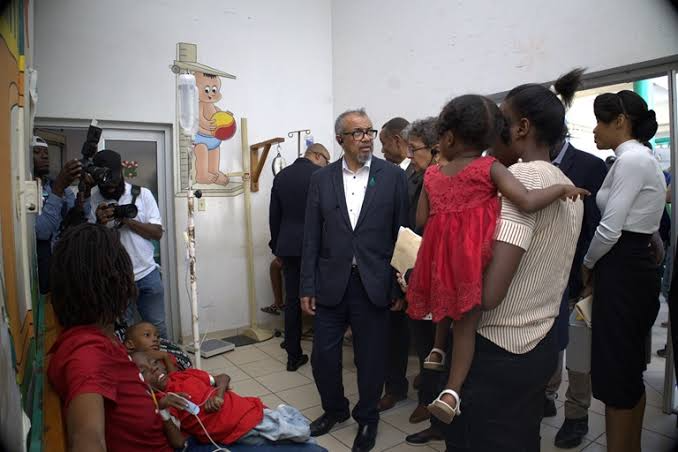
The World Health Organization has announced US$1 million in support for critical medical equipment in Haiti, where violence and displacement have left hospitals struggling to care for patients. Director General Tedros Adhanom Ghebreyesus made the pledge during an official visit to the country on November 26, 2026. The assistance will go to Hôpital Universitaire La Paix in Port au Prince, including a computed tomography scanner and equipment for four operating rooms. For a hospital receiving a relentless flow of emergency cases, the support could strengthen its ability to diagnose injuries and provide urgent treatment.
A Lifeline for Haiti’s Last Major Public Referral Hospital
Hôpital Universitaire La Paix, commonly known as HUP, is the last major public referral hospital still operating in Port au Prince, according to the WHO. Its role has become increasingly critical as armed violence forces health facilities to close, disrupts medical supply routes and pushes more people from their homes.
The hospital has treated more than 19,575 emergency patients since January 2026 with support from the WHO and the Pan American Health Organization. That caseload includes 291 people with gunshot wounds. During the same period, HUP performed 3,086 surgeries and handled 1,442 high risk deliveries. The figures illustrate the range of urgent care the hospital continues to provide, from trauma treatment to childbirth.
For patients, access to a functioning referral hospital can determine whether a serious injury or medical complication receives timely care. For medical teams, the pressure is constant: emergency patients arrive while staff must manage limited equipment, supplies and space. Tedros visited HUP during his trip and described the demands facing its workers as immense, while recognizing their courage and dedication.
What the $1 Million Support Will Provide
The WHO says the funding will support a computed tomography scanner and equipment for four operating rooms. A CT scanner can help clinicians examine internal injuries and identify conditions that may not be visible through a physical examination alone. In emergency care, timely imaging can help teams assess trauma and determine the next steps in treatment.
Equipment for operating rooms can also support surgical services, although the announcement does not provide a detailed inventory of the items to be supplied or a delivery timetable. The contribution is intended to strengthen HUP’s capacity to continue treating patients amid severe pressure on the health system.
The pledge is equipment support rather than a broad announcement of unrestricted cash assistance. Its practical effect will depend not only on the arrival of medical devices, but also on whether the hospital has the staff, supplies, maintenance capacity and reliable services needed to use them safely. In a strained health system, equipment is most valuable when it can be kept operational and integrated into everyday clinical care.
Violence Has Left Health Services Under Severe Strain
The WHO estimates that 49.5 percent of health facilities in Port au Prince are not functioning, while only 12 percent are partially operational. Across Haiti, nearly one quarter of facilities are not functioning and close to half are operating only partially. The country has more than 11 million people, and the agency estimates that 4.9 million will require health assistance in 2026.
Armed violence has made it harder for patients to reach care and for health workers to deliver it. Facilities have closed, communities have been displaced and medical supply chains have been interrupted. The number of people internally displaced in Haiti has reached 1.5 million, adding pressure to services that were already overstretched.
Displacement can make even routine healthcare difficult to obtain. People may lose access to regular treatment, maternal care, vaccination or medicines for chronic conditions when they leave their homes. For those needing emergency help, insecurity and damaged transport routes can turn a nearby hospital into a place that is difficult or unsafe to reach.
The crisis also affects health workers, who must care for growing numbers of patients while operating in challenging circumstances. The WHO’s announcement recognizes their work, but it also underlines the need for support that extends beyond one hospital and one funding commitment.
International Support Has Helped Keep Services Running
The WHO and PAHO have mobilized more than US$30 million for Haiti’s health response over the past two years, with efforts continuing to raise additional funding. The agencies say that support has helped sustain lifesaving care at key facilities, reduce cholera transmission and maintain essential services for vulnerable populations.
The new equipment contribution is part of that wider effort. During his visit, Tedros met with Prime Minister Alix Didier Fils Aimé and Public Health and Population Minister Dr Bertrand Sinal to discuss priorities for strengthening the health system. He also met with United Nations partners working in the country.
Those discussions take place against a backdrop of urgent needs and limited capacity. Medical equipment can help hospitals provide care, but lasting recovery also requires functioning facilities, dependable supply chains, safe access for patients and health workers, and continued funding for essential services.
Why the Pledge Matters Beyond Port au Prince
HUP’s position as the capital’s last major public referral hospital gives its capacity importance beyond the patients already inside its wards. When other facilities cannot operate, more people may depend on the remaining hospitals for emergency treatment and specialist services. Supporting one central facility can therefore help preserve access to care for a wider population.
Still, the announcement does not mean Haiti’s healthcare crisis is resolved. The funding is targeted at critical equipment, while the WHO’s own figures show widespread disruption across the country. Many communities need access to primary care and essential services closer to home, alongside the emergency treatment available at referral hospitals.
For health officials and aid organizations, the immediate challenge is to keep services operating while working toward a more resilient system. That means protecting medical facilities and supply routes, supporting health workers, and ensuring that displaced and vulnerable people can obtain care without facing unnecessary barriers.
What Comes Next for Haiti’s Health Response
The WHO’s pledge offers a concrete form of assistance at a hospital carrying a heavy share of the capital’s emergency burden. The next measure of its impact will be whether the promised equipment reaches HUP, becomes operational and helps clinical teams deliver timely treatment to patients.
The broader outlook remains difficult. Haiti’s health facilities continue to face insecurity, disrupted supplies and growing demand, while millions of people are expected to need assistance during 2026. International support can help sustain care, but the scale of the crisis calls for continued engagement from donors and partners.
During his visit, Tedros reaffirmed the WHO and PAHO commitment to support the government and people of Haiti in maintaining essential services, strengthening the health system and improving disease surveillance and outbreak response. The equipment pledge is one part of that commitment. For patients arriving at HUP in urgent need, its value will ultimately be measured in the care the hospital is able to provide.
Further information on the WHO’s work in emergencies is available through the World Health Organization and the Pan American Health Organization.