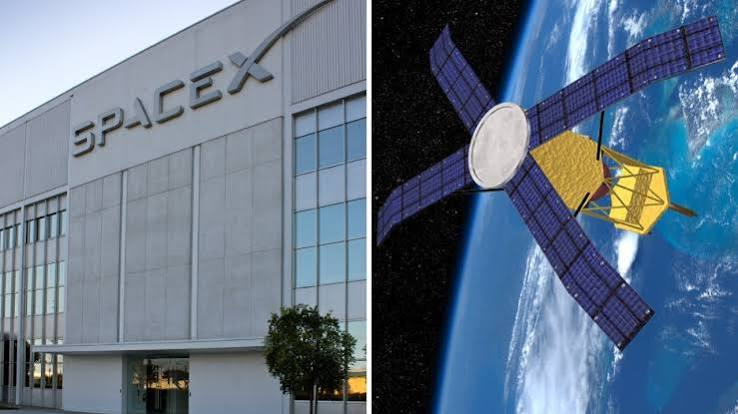
A reported plan for SpaceX to deploy as many as one million solar powered satellites designed to process artificial intelligence workloads in orbit would represent an extraordinary expansion of the commercial space industry. The proposed system, described as the “Starmind” project, is said to involve orbital computing platforms that would process data above Earth and transmit results to users below. However, the central claim that the Federal Communications Commission approved this plan requires careful scrutiny: a project of this scale would raise major questions about regulatory authority, orbital congestion, spectrum use, space safety and the practical economics of operating data centers in space.
What the FCC Actually Approved
The FCC announced its decision on November 25, granting SpaceX conditional authorization for the Starmind constellation. The approval covers up to one million non geostationary satellites operating as orbital data centers in low Earth orbit. It is the first authorization of this kind in the United States, although the decision does not mean that one million satellites are ready to launch or that the complete network has been built.
The distinction between authorization and deployment is essential. SpaceX submitted its application on January 30, 2026, and the FCC opened it for public comment in February. Amazon Leo, satellite operator Viasat and the American Astronomical Society filed petitions opposing the application. Their concerns included orbital congestion, collision risks, radio interference and possible effects on astronomical research.
The FCC Space Bureau ultimately granted the application in part and deferred certain elements, attaching conditions to the authorization. The decision allows specified radio frequency communications for backup and emergency telemetry, tracking and command operations. Starmind is expected to rely primarily on optical links between satellites, including connections with SpaceX’s Starlink network.
The authorized orbital shells cover altitudes from approximately 500 to 1,002 kilometers. The FCC also specified that SpaceX must meet deployment milestones rather than treating the one million satellite authorization as an unlimited period to act.
Deployment Could Continue Through 2040
SpaceX has a long schedule to establish the proposed constellation. Under the FCC order, the company must place and operate its first authorized Starmind satellite by November 25, 2033. It must have 10 percent of the authorized constellation operating by November 25, 2035, and half of the approved total by November 25, 2038. The remaining satellites must be deployed by November 25, 2040, for the authorization to remain valid.
These deadlines underline how ambitious the project is. Even with SpaceX’s experience launching large numbers of Starlink satellites, a network on this scale would require a major expansion in launch capacity, satellite manufacturing, orbital coordination and ground infrastructure. The company has discussed using its developing Starship launch system to support the broader vision, but the ability to deliver the entire constellation remains unproven.
SpaceX has previously described orbital data centers as a developing technology that may not achieve commercial viability. That caution is significant. Regulatory approval gives the company permission to pursue the project under specified conditions, but it does not establish that the system can be built affordably, operated reliably or made commercially competitive with data centers on Earth.
How Solar Powered Data Centers Could Process AI Workloads
The central idea behind Starmind is to move some computing infrastructure from the ground into orbit. Traditional AI data centers depend on large buildings filled with specialized processors, networking equipment and cooling systems. They require substantial electricity and carefully managed temperatures to keep hardware operating safely.
Space offers a different operating environment. Satellites in suitable orbits can receive sunlight for long periods, potentially giving solar arrays access to a consistent source of energy. SpaceX’s concept involves placing computing equipment aboard satellites, linking those systems through high speed optical communications and transmitting processed information back toward Earth.
Optical inter satellite links use laser based communications rather than relying entirely on conventional radio transmissions. They can support high data rates between spacecraft and are already part of the wider satellite networking approach used by SpaceX. In the Starmind system, these links are expected to provide the primary communications route, while authorized radio frequencies would serve as a backup for essential control functions.
There are still substantial engineering challenges. Powerful computing equipment produces heat, and that heat must be removed to prevent damage. On Earth, data centers often use air conditioning, liquid cooling and large cooling installations. In space, heat management requires specialized radiators that release thermal energy into the surrounding environment. Engineers must also account for radiation exposure, hardware reliability, maintenance limitations and the difficulty of replacing failed components.
Environmental and Orbital Safety Concerns Remain Unresolved
The proposed constellation has prompted serious questions about the long term condition of Earth’s orbital environment. Low Earth orbit already contains thousands of active satellites and a much larger population of debris fragments. Adding a network that could eventually reach one million spacecraft would create a significant new demand for safe orbital management.
SpaceX has told regulators that its satellites will use propulsion systems for station keeping, orbit adjustments and collision avoidance. The company has also described plans to test satellites at lower altitudes before moving them into higher operational orbits. At the end of their missions, it says spacecraft will be actively directed toward controlled reentry, with planned trajectories over oceans.
The FCC found that SpaceX’s debris mitigation information was sufficient for satellites operating below 600 kilometers. However, the agency made deployment above that altitude conditional on SpaceX submitting a final orbital debris mitigation plan and seeking a modification to its authorization. This means the approval does not remove every regulatory requirement for the proposed system.
Researchers have also raised concerns about the emissions associated with frequent rocket launches and satellite reentries. A study by researchers at University College London estimated that a constellation of one million satellites could increase emissions from launches and reentries by roughly 70 to 150 times compared with current levels. The researchers warned that such emissions could affect the ozone layer, climate and air quality. The FCC said these indirect environmental questions were outside its authority in this licensing decision and did not require further environmental review under its interpretation of federal rules.
Astronomers Warn of Changes to the Night Sky
Another concern involves the effect of a very large satellite network on astronomy. Satellites can reflect sunlight into optical telescopes, leaving bright streaks across images and interfering with observations. A constellation of the proposed size could make this problem more difficult to manage, particularly for observatories conducting wide field surveys.
The American Astronomical Society opposed the application, arguing that the network could interfere with scientific observations. It also raised concerns about thermal emissions from computing equipment and their possible effects on infrared astronomy. The FCC accepted SpaceX’s commitment to coordinate with the National Science Foundation but declined to impose additional protections for optical astronomy, saying those matters were largely outside the scope of its relevant rules.
For astronomers, the concern is not simply whether one satellite crosses a telescope’s view. Large scale satellite networks could create repeated interference across observations, requiring researchers to identify and remove affected data. That process can consume time and reduce the amount of useful information collected from expensive scientific instruments.
Competition Is Growing Around Space Based Computing
SpaceX is not the only company exploring the possibility of placing computing infrastructure in orbit. Other proposals are being developed as technology companies look for new ways to meet the growing electricity and processing demands of artificial intelligence. Blue Origin and Starcloud are among the companies associated with competing orbital data center plans, while Google has also been developing research connected to space based computing.
The interest reflects a broader challenge facing the technology industry. Training and operating advanced AI systems require substantial computing capacity, and terrestrial data centers increasingly compete for electricity, land, cooling resources and access to specialized hardware. Moving some workloads into orbit could eventually provide another option, but the costs of launching, maintaining and replacing equipment could offset the benefits of solar power.
Competition may also extend beyond technology. Amazon Leo and Viasat challenged SpaceX’s application, raising concerns about the effects of the proposed constellation on shared orbital resources and communications operations. The debate illustrates how the next phase of the satellite industry will involve not only connectivity, but also computing, energy and access to increasingly crowded orbital regions.
What the FCC Decision Means for the Future of AI
The Starmind authorization marks a major regulatory milestone, but it should not be confused with proof that artificial intelligence will soon run from a million satellites. The project remains dependent on engineering advances, launch capacity, reliable communications, thermal control and a business model capable of competing with established data center infrastructure.
For now, the most immediate outcome is that SpaceX has gained permission to move forward with a highly ambitious orbital computing proposal, subject to the conditions set by the FCC. The agency’s decision also establishes a precedent that could influence how regulators consider similar applications from other companies.
The broader debate will continue as the industry moves from ambitious concepts toward actual hardware and operational tests. If orbital data centers become practical, they could add a new layer to global computing infrastructure and change how companies think about energy and processing capacity. If the technical or financial barriers prove too difficult, Starmind may remain far smaller than its authorized scale.
Readers can follow the regulatory process through the Federal Communications Commission’s official website, which publishes satellite licensing decisions and related public records. The coming years will show whether SpaceX can turn its one million satellite authorization into a functioning network while addressing the environmental, scientific and safety concerns that accompany such an extraordinary plan.