Air Canada faced a sweeping travel disruption on August 17 as roughly 10,000 flight attendants remained on strike, leaving the airline unable to operate its normal schedule and creating uncertainty for passengers traveling across Canada and internationally. The labor dispute has affected thousands of planned journeys, with travelers confronting cancellations, missed connections, crowded alternative flights and difficult decisions about whether to remain at airports or change their plans entirely.
The disruption is especially significant for international travelers because Air Canada operates an extensive network connecting Canadian cities with destinations across the United States, Europe, Asia and other regions. When a major carrier suddenly loses the cabin crew needed to operate its flights, the consequences extend far beyond a single airport. A canceled departure can quickly become a missed connection, a lost hotel reservation or an important family and business trip thrown into uncertainty.
Why Air Canada Flights Were Grounded
The strike involves approximately 10,000 flight attendants represented by the Canadian Union of Public Employees, known as CUPE. The dispute centers on compensation and working conditions, including demands that flight attendants receive better compensation for duties that have traditionally gone unpaid or only partially compensated.
Air Canada and the union had been negotiating a new collective agreement after their previous contract expired. Air Canada said it had offered substantial improvements in total compensation, while the union argued that the proposal did not adequately address wages and unpaid work performed before and after flights.
The disagreement eventually escalated into a strike that halted Air Canada and Air Canada Rouge operations. Air Canada Express services operated by third party regional carriers were not affected in the same way, meaning some regional routes continued even while the mainline network faced severe disruption. Air Canada itself confirmed the suspension of its mainline and Rouge operations after the strike began. :contentReference[oaicite:0]{index=0}
A Government Back to Work Order Complicated the Crisis
The labor dispute became more complicated when the Canadian Industrial Relations Board ordered flight attendants to return to work. The order came after the Canadian government sought binding arbitration to resolve the contract dispute.
Instead of immediately returning, the union instructed its members to continue their strike. Reuters reported on August 17 that the refusal to comply with the government backed order forced Air Canada to delay its plans to restart operations. :contentReference[oaicite:1]{index=1}
That development created a particularly confusing situation for passengers. Some travelers had already been told that flights could resume, while others were still facing cancellations. The uncertainty made it difficult for families, business travelers and international visitors to determine whether they should travel to the airport or make alternative arrangements.
International Travelers Face the Greatest Complications
For someone flying from Toronto to London, Vancouver to Tokyo or Montreal to Paris, an Air Canada cancellation can create problems that continue for several days. International itineraries often involve connecting flights, hotel bookings, airport transfers, visas, work commitments and carefully timed family arrangements.
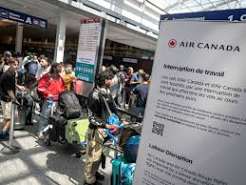
We can understand the frustration most clearly by imagining the experience inside a busy airport terminal. Departure boards change repeatedly. Families gather around customer service desks with suitcases beside them. Travelers check their phones every few minutes while trying to determine whether another airline still has seats available. A journey that was supposed to take a few hours can suddenly become a full day of waiting and uncertainty.
The disruption was expected to affect more than 100,000 passengers, according to Reuters reporting on the government’s intervention in the dispute. :contentReference[oaicite:2]{index=2}
What Passengers Should Do If Their Air Canada Flight Is Affected
Travelers with Air Canada reservations should avoid assuming that a flight will operate simply because it still appears in an older itinerary. During a large scale labor disruption, schedules can change rapidly as the airline adjusts its network and crew availability.
Passengers should first check their reservation directly through Air Canada’s official customer service and flight status channels. The airline’s customer support information provides guidance concerning cancellations, refunds, rebooking and other travel issues.
Travelers should also keep documentation of cancellation notices, replacement bookings and additional expenses. Depending on the circumstances and applicable fare conditions, passengers may have rights concerning refunds or alternative arrangements.
- Check the latest flight status before leaving for the airport.
- Do not travel to the airport solely on the assumption that a previously scheduled flight will depart.
- Contact Air Canada or the relevant booking provider about rebooking options.
- Check connecting flights separately if the original itinerary included another airline.
- Keep receipts and records for canceled reservations and replacement transportation.
Why Restarting Flights Is Not as Simple as Ending a Strike
Even if the labor dispute is resolved immediately, Air Canada cannot necessarily return to a normal schedule within minutes. Aircraft and crews must be repositioned, flight schedules must be rebuilt and airport operations must be coordinated. A large carrier also has to manage aircraft maintenance, baggage, catering, ground crews and passenger connections.
This is why travelers should expect disruption to continue even after flight attendants return to work. When thousands of passengers have been displaced, the airline must find seats for people who were scheduled to travel on previous days while simultaneously accommodating passengers with new reservations.
Air Canada’s experience during the 2025 strike illustrates the scale of the challenge. The airline said operations would need to resume gradually after the dispute ended, while Reuters reported that the nearly four day stoppage left more than 500,000 passengers stranded or affected. :contentReference[oaicite:3]{index=3}
The Dispute Reflects a Larger Debate About Flight Attendant Pay
Behind the immediate travel chaos is a broader labor issue affecting the aviation industry. Flight attendants have increasingly argued that their working day should account for duties performed while passengers are boarding, waiting at the airport and completing other responsibilities before an aircraft leaves the gate.
For passengers, these duties can be easy to overlook because the visible portion of a flight attendant’s job occurs inside the aircraft. Yet cabin crew members arrive before travelers, prepare the aircraft, assist with boarding, complete safety procedures and remain responsible for passengers throughout the flight.
Reuters reported that the Air Canada dispute was part of a wider debate over compensation structures for airline cabin crews, particularly concerning work that occurs outside the period traditionally counted as flight time. :contentReference[oaicite:4]{index=4}
Air Canada’s Business Faces Pressure Too
A prolonged shutdown creates enormous financial pressure for an airline. Aircraft generate revenue when they fly, while many operating costs continue even when planes remain on the ground. The disruption can also damage customer confidence and affect future bookings.
Air Canada suspended its financial guidance during the 2025 strike because the scale of the operational disruption made previous forecasts unreliable. A similar prolonged interruption would create pressure across the company’s network, particularly during the busy summer travel period.
The consequences can spread beyond Air Canada itself. Airports lose passenger spending, hotels face changes in reservations, tourism businesses lose visitors and other airlines may struggle to absorb passengers searching for replacement seats.
What the Labor Negotiations Mean for Canadian Aviation
The outcome of the dispute could influence future negotiations between airlines and their cabin crews. If flight attendants secure stronger compensation for previously unpaid duties, other airline employees and unions may seek similar changes.
At the same time, airlines face pressure to control labor costs while maintaining competitive ticket prices. The challenge for negotiators is therefore not simply deciding how much employees should earn. They must determine how aviation companies can provide fair compensation while continuing to operate a financially sustainable international network.
Passengers Are Caught Between Two Sides
For travelers, the labor dispute can feel deeply personal even though they have no role in the negotiations. A canceled flight may mean missing a wedding, postponing medical travel, losing a prepaid hotel room or being separated from relatives for another day.
At the same time, the people walking the picket line are also workers making decisions about wages and working conditions that affect their livelihoods. The public frustration created by the strike should not obscure the underlying labor questions. Nor should the importance of those labor questions diminish the genuine hardship experienced by passengers.
The strongest resolution would therefore be one that addresses both sides of the problem: fair working conditions for flight attendants and reliable service for passengers who depend on Canada’s largest international airline.
What Happens Next
The immediate focus remains on negotiations and the legal consequences of the union’s decision to defy the return to work order. The Canadian government has already moved toward binding arbitration, while Air Canada has been forced to manage the operational consequences of the continuing strike.
The longer the dispute continues, the harder the recovery becomes. Every canceled flight creates another group of displaced passengers, while aircraft and crews must eventually be repositioned to rebuild the network.
For travelers, patience may be difficult when a vacation, business meeting or family reunion is at stake. Yet the most practical approach is to monitor official flight information closely, avoid unnecessary airport visits and secure confirmed alternatives before making additional travel commitments.
A Disruption That Reaches Far Beyond the Airport
The Air Canada flight attendant strike is more than an airline scheduling problem. It is a major labor dispute playing out across an international transportation network, with consequences for passengers, workers, airports, tourism businesses and the wider Canadian economy.
As negotiations continue, the central question is whether Air Canada and its flight attendants can reach an agreement that provides fair compensation while allowing the airline to restore dependable service. For thousands of travelers watching departure screens and refreshing their phones, that agreement cannot come soon enough.
The eventual settlement will determine not only when Air Canada returns to normal operations, but also how the airline industry approaches the value of cabin crew work in the years ahead. For now, passengers around the world are waiting for clarity, while the people responsible for keeping them safe in the air remain at the center of a labor dispute that has brought one of Canada’s most important aviation networks to a standstill.