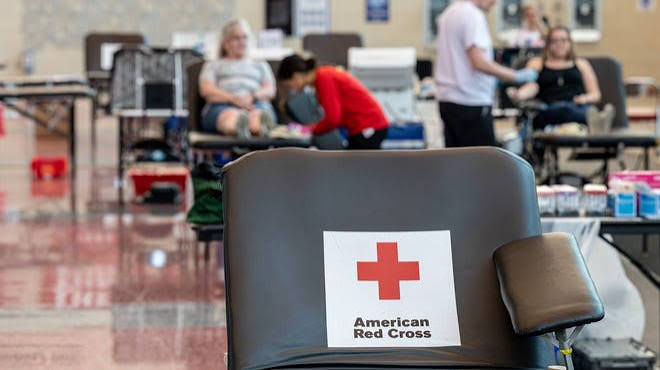
The American Red Cross has declared a national blood supply crisis, marking only the second time in the organization’s history that such an emergency designation has been issued. With blood donations plummeting to a four-year summer low, hospitals across the country now face the unsettling prospect of delaying critical procedures and struggling to meet the surge in trauma cases that typifies the warmer months.
This is not a distant warning or a hypothetical scenario. It is unfolding right now, in communities from coast to coast, as blood banks report critically low inventories and medical teams brace for the consequences. The situation demands immediate attention from every eligible donor, because the gap between supply and demand has never been more precarious.
Understanding the Scope of the Crisis
The Red Cross announcement, made in late July 2026, revealed a stark reality: the organization has less than a one-day national supply of type O positive blood, the most commonly transfused blood type in the United States. This shortage has forced the Red Cross, which supplies approximately 40% of the nation’s blood, to begin limiting distributions of type O blood products to hospitals, prioritizing only the most critical emergencies.
[axios](https://www.axios.com/local/san-antonio/2026/08/06/south-texas-blood-tissue-donations-drop-san-antonio)
Blood donations fell to their lowest summer level in four years, creating a widening deficit that now stands at roughly 3,500 units per week. The shortfall comes at precisely the wrong time. Summer is peak trauma season, when outdoor activities, travel, and heat-related incidents drive up the demand for blood transfusions in emergency rooms and surgical suites nationwide.
[theguardian](https://www.theguardian.com/us-news/2026/jul/30/american-red-cross-blood-supply-crisis)
What makes this crisis particularly alarming is how quickly it materialized. In June alone, the blood supply dropped nearly 25%, a precipitous decline that caught many blood collection centers off guard. While seasonal dips in donations are not unusual, this year’s convergence of environmental and public health challenges has created an unusually severe situation.
[npr](https://www.npr.org/2026/07/13/nx-s1-5888357/red-cross-declares-national-blood-emergency-as-supplies-dwindle-and-demand-surges)
Why Donations Have Collapsed
The Red Cross has identified several interconnected factors driving the historic drop in donor participation. Extreme heat waves across much of the country have kept people indoors and disrupted normal routines, including scheduled blood drives. Poor air quality, a consequence of wildfire smoke and pollution in many regions, has also discouraged turnout, particularly among those with respiratory sensitivities or underlying health conditions.
[axios](https://www.axios.com/local/san-antonio/2026/08/06/south-texas-blood-tissue-donations-drop-san-antonio)
Compounding these challenges is a widespread outbreak of foodborne illness that has affected more than 11,500 Americans this summer. The cyclosporiasis outbreak has rendered many potential donors temporarily ineligible, while the general climate of illness has made people more cautious about visiting public spaces, including donation centers.
[axios](https://www.axios.com/local/san-antonio/2026/08/06/south-texas-blood-tissue-donations-drop-san-antonio)
Beyond environmental factors, the traditional summer exodus plays a role. Vacation travel, school breaks, and the absence of high school and university blood drives, which typically account for a significant portion of annual collections, have all contributed to the shortfall. When campuses close for the summer, dozens of high-volume collection events disappear from the calendar simultaneously, creating a predictable but difficult-to-offset gap.
[npr](https://www.npr.org/2026/07/13/nx-s1-5888357/red-cross-declares-national-blood-emergency-as-supplies-dwindle-and-demand-surges)
What This Means for Patients and Hospitals
The implications of this shortage extend far beyond statistics. For patients awaiting surgery, cancer treatment, or trauma care, the blood shortage translates into real delays and heightened risks. Hospitals are now being asked to conserve blood products, postpone elective procedures, and in some cases, seek alternative sources or ration supplies.
[npr](https://www.npr.org/2026/07/13/nx-s1-5888357/red-cross-declares-national-blood-emergency-as-supplies-dwindle-and-demand-surges)
Type O positive blood is especially critical because it can be transfused to the largest percentage of the population in emergency situations when there is no time to determine a patient’s blood type. With less than a day’s supply on hand nationally, the margin for error has virtually disappeared. The Red Cross has also highlighted an urgent need for platelet donors and type AB plasma donors, both of which are essential for cancer patients, trauma victims, and those undergoing complex surgeries.
[axios](https://www.axios.com/local/san-antonio/2026/08/06/south-texas-blood-tissue-donations-drop-san-antonio)
Medical professionals across the country have expressed deep concern. The American College of Surgeons issued a brief alert to its members, warning that the crisis could impact surgical schedules and emergency care capabilities. For families waiting for a loved one to receive a transfusion-dependent treatment, the uncertainty is unbearable.
[facs](https://www.facs.org/for-medical-professionals/news-publications/news-and-articles/acs-brief/august-4-2026-issue/us-faces-a-blood-supply-crisis-that-could-impact-surgery/)
How You Can Help Right Now
The Red Cross emphasizes that just three additional donors at each blood drive this summer could end the crisis and stabilize the blood supply. This is not hyperbole. It is a mathematical reality rooted in the current deficit. Every donation matters, and every eligible donor has the power to make a tangible difference.
[theguardian](https://www.theguardian.com/us-news/2026/jul/30/american-red-cross-blood-supply-crisis)
If you are in good health, at least 17 years old (or 16 with parental consent in some states), and weigh at least 110 pounds, you likely qualify to donate. The process takes less than an hour, and the impact can last for months in the life of a patient in need.
[redcross](https://www.redcross.org/about-us/news-and-events/press-release/2026/red-cross-declares-national-blood-supply-crisis-urges-immediate-.html)
To schedule an appointment, you can visit RedCrossBlood.org, download the Red Cross Blood Donor App, or call 1-800-RED CROSS (1-800-733-2767). The organization is urging all eligible donors, especially those with type O blood, to make an appointment as soon as possible.
[knpr](https://knpr.org/2026-08-05/national-blood-crisis-tied-to-heat-and-other-environmental-factors)
Incentives are also available to encourage participation. Donors who gave blood by July 31 received a movie ticket voucher via email, while those who donate in August are eligible for a $20 Amazon gift card. These small tokens are a gesture of appreciation, but the real reward is knowing you have helped save a life.
[usatoday](https://www.usatoday.com/story/news/nation/2026/07/29/red-cross-national-blood-supply-crisis/91100227007/)
A Call to Action That Cannot Wait
This crisis is not abstract. It is personal. It is the parent waiting for a transfusion during chemotherapy. It is the child injured in a car accident. It is the surgical patient whose procedure has been postponed because the blood bank cannot guarantee supply.
[axios](https://www.axios.com/2026/07/31/red-cross-us-blood-crisis-donations-update)
We have seen this before. The Red Cross declared its first national blood crisis in January 2022, and the system recovered only after a massive surge in donations. Now, history is repeating itself, and the window for action is narrow. The next few weeks will determine whether hospitals can meet demand through the end of summer and into the fall, when another surge in respiratory illnesses typically strains the healthcare system.
[aha](https://www.aha.org/news/headline/2026-07-28-red-cross-declares-national-blood-supply-crisis-member-advisory-includes-resources-assist-donations)
The message from the Red Cross is clear and urgent: we need you. Not tomorrow, not next week, but now. Every pint donated is a lifeline extended to someone in desperate need. And in moments like these, the difference between crisis and recovery is measured not in policy or funding, but in the willingness of ordinary people to show up, roll up a sleeve, and give.
[axios](https://www.axios.com/local/san-antonio/2026/08/06/south-texas-blood-tissue-donations-drop-san-antonio)
If you are eligible, please make an appointment today. Visit RedCross.org to learn more about donation eligibility, find a center near you, and take action before the situation worsens. The blood supply is a shared resource, a collective responsibility, and right now, it depends on you.
[redcross](https://www.redcross.org/about-us/news-and-events/news/2026/red-cross-responding-to-disasters.html)