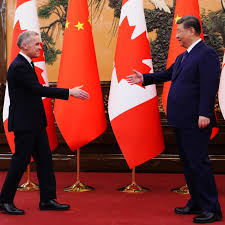
Canadian agricultural exporters have gained a longer planning horizon after China and Canada agreed to extend favourable tariff arrangements on key agricultural and seafood products through December 2028. The agreement offers renewed market access for Canadian canola meal, peas, lobster and crab, giving farmers, processors and exporters greater confidence as they make decisions about production, storage, transportation and international sales. Announced in November, the extension also forms part of a wider effort by the two countries to stabilize trade relations and expand commercial cooperation.
For agricultural businesses, predictable market access can be almost as important as the price they receive for their products. Farmers must decide what to plant months before harvest, processors need to secure supplies and exporters must arrange shipping contracts well in advance. When tariffs can change suddenly, those decisions become harder and more expensive. By extending the existing arrangements until the end of 2028, China and Canada have reduced one important source of uncertainty for several export sectors.
What the China Canada tariff extension covers
Canada’s Minister of International Trade, Maninder Sidhu, announced the two year extension on November 4 following a meeting of the Joint Economic and Trade Commission in Beijing. Sidhu co chaired the meeting with China’s Commerce Minister, Wang Wentao. The agreement extends favourable market access for Canadian canola meal, peas, lobster and crab through December 2028.
The measures build on a preliminary bilateral arrangement reached during Canadian Prime Minister Mark Carney’s visit to Beijing in January 2026. Under that arrangement, China suspended additional anti discrimination tariffs on the specified Canadian products from March 1, 2026. The relief had initially been scheduled to run only until the end of that year. The latest extension gives exporters two additional years to operate under the more favourable conditions.
The agreement matters because China is one of Canada’s largest agricultural trading partners. Canadian producers have developed substantial export relationships with Chinese buyers, particularly in oilseeds, animal feed ingredients and pulses. Changes in market access can affect not only exporters but also grain elevators, transportation companies, processing facilities, port operators and rural communities that depend on agricultural trade.
The arrangement is not a complete removal of all Chinese tariffs on Canadian agricultural products. Different commodities remain subject to different trade measures. Canola seed, for example, has a separate tariff structure, while canola oil continues to face significant restrictions. Understanding these distinctions is essential when assessing the actual benefits of the agreement.
Canola and peas stand to benefit from improved access
Canola is among the most important products in Canada’s agricultural export economy. Farmers across the Prairie provinces grow the oilseed for its value in food production, vegetable oil manufacturing and animal feed. Canola meal, the protein rich material left after oil extraction, is widely used in livestock and poultry feed. China represents an important destination for Canadian supplies.
Under the trade arrangement, China suspended its additional 100 percent anti discrimination tariff on Canadian canola meal. The extension keeps that suspension in place through December 2028. This gives Canadian processors and exporters more time to maintain commercial relationships, negotiate supply agreements and plan production without the immediate risk that the additional tariff will return at the end of 2026.
Canadian canola seed also received substantial tariff relief under the earlier bilateral agreement. From March 1, 2026, the combined applied tariff on Canadian canola seed entering China was reduced to approximately 14.9 percent, compared with a previous combined rate of almost 85 percent. This reduction is separate from the new extension covering canola meal, peas and selected seafood products. The distinction is important because the seed, meal and oil markets do not all receive identical treatment.
Pea exporters have also gained from the extension. Canadian field peas are used in food products, animal feed and food processing. China is an important destination for these shipments, and more predictable access can help exporters plan volumes and maintain relationships with importers. The extension also provides greater certainty for businesses that handle grading, cleaning, packaging and transportation before products reach overseas buyers.
Early trade figures point to a recovery
Available Canadian government figures suggest that the earlier tariff relief has already supported stronger trade flows. Between March and August 2026, Canadian canola seed exports to China reached approximately C$1.74 billion, an increase of 43 percent compared with the same period in 2025. Canola meal shipments reached C$327.5 million, while Canadian pea exports were valued at approximately C$347 million during the same period.
These figures offer an indication of how quickly market access changes can affect commercial activity. When import costs fall, buyers may be more willing to purchase from suppliers that were previously less competitive. Exporters can respond by negotiating larger contracts, improving delivery schedules and strengthening relationships with overseas customers.
However, trade figures should be interpreted carefully. Export growth can also reflect commodity prices, harvest conditions, currency movements, shipping costs and changing demand. The tariff extension creates more favourable conditions, but it does not guarantee that export volumes or prices will continue to rise at the same pace.
Why predictable tariffs matter for storage and export infrastructure
The most important long term effect of the agreement may extend beyond individual shipments. Agricultural exporters make infrastructure decisions based on expectations about future demand. A grain company considering a new storage facility, a processor evaluating additional crushing capacity or a logistics operator planning improvements at a transport terminal must estimate whether sufficient business will exist to justify the investment.
Uncertain tariffs complicate those calculations. If an export market becomes significantly more expensive overnight, buyers may reduce orders or switch suppliers. Businesses can respond by delaying investment, keeping inventories low or avoiding long term contracts. These decisions can limit the development of processing and transportation capacity, even when the underlying agricultural products remain competitive.
More stable market access through 2028 gives companies a clearer period in which to evaluate potential investments. That could encourage improvements in grain storage, handling systems, product processing, quality testing and export logistics. Modern storage facilities can help maintain product quality, reduce losses and give exporters greater flexibility when coordinating shipments with overseas customers.
For farmers, stronger demand from reliable buyers can improve marketing options. Producers may have greater confidence when deciding how much of their harvest to sell immediately and how much to store for later delivery. That does not remove the risks associated with weather, crop prices or operating costs, but it can make export planning more manageable.
A wider trade agreement extends beyond agricultural products
The tariff extension is part of a broader effort to improve Canada China economic relations. On November 17, Prime Minister Carney and Chinese President Xi Jinping agreed to expand the preliminary trade arrangement during a meeting in Shenzhen. The additional measures include further tariff relief for approximately C$400 million in Canadian exports, covering selected frozen pork products, shrimp and prawns, molluscs, sea cucumber and Greenland halibut.
In return, Canada agreed to extend existing remission measures for certain Chinese steel and aluminum products through December 2028 and expand the coverage to additional tariff categories where Canadian supply is insufficient or unavailable. The wider agreement demonstrates that both governments are seeking practical areas of cooperation while managing a relationship that has experienced significant trade tensions.
The two countries have also identified opportunities to improve customs, inspection and quarantine cooperation. More efficient procedures, including electronic certification for agricultural and food products, could help reduce administrative delays and make cross border trade easier to manage. For exporters dealing with products that require careful handling or timely delivery, improvements in documentation and inspection processes can have meaningful commercial value.
Trade certainty does not remove every risk
Despite the progress, important barriers remain. Canadian canola seed continues to face a combined applied tariff of approximately 14.9 percent, while canola oil remains subject to a 100 percent anti discrimination tariff. These measures limit the benefits available to some parts of the Canadian canola industry and show why the latest extension should not be described as a complete restoration of agricultural market access.
There are also broader risks that a tariff agreement cannot resolve. International agricultural trade remains sensitive to shipping disruptions, changing demand, currency fluctuations, harvest conditions and competition from other exporting countries. Chinese buyers can adjust sourcing decisions as market conditions change, while Canadian producers must continue to manage input costs, weather uncertainty and transportation expenses.
For businesses considering new infrastructure, the extension provides a more favourable planning environment rather than a guarantee of future returns. Investment decisions will still depend on sustained demand, available financing, operating costs and the ability to compete with suppliers from other major agricultural exporting nations.
What exporters and producers should watch next
The period through 2028 will provide an opportunity to assess whether improved market access can support lasting growth in Canadian agricultural exports. Producers, processors and logistics companies will be watching several developments closely:
- Export demand: Continued purchases from Chinese buyers will help determine whether current trade growth can be sustained.
- Remaining tariff barriers: Further progress on canola seed and canola oil could provide additional opportunities for Canadian producers and processors.
- Infrastructure investment: New storage, processing and transportation capacity will indicate whether businesses consider the improved market access sufficiently durable to justify long term commitments.
- Customs cooperation: More efficient inspection and certification procedures could reduce delays and improve the reliability of agricultural shipments.
The Government of Canada’s Global Affairs department has outlined the wider trade measures and their expected benefits for Canadian exporters. Agricultural businesses can also follow market developments through the Agriculture and Agri Food Canada information portal.
A more predictable future for agricultural trade
The extension of China Canada tariff arrangements is a meaningful step for agricultural exporters seeking stable access to international markets. It gives Canadian producers and processors additional time to build commercial relationships, plan shipments and consider investments that require confidence in future demand. For rural communities, the benefits could extend through farm income, processing employment, transportation services and supporting industries.
Still, the agreement should be viewed as progress rather than a final settlement of every trade dispute. Some agricultural products continue to face significant barriers, and global market conditions can change quickly. The real test will be whether the additional certainty translates into sustained purchases, stronger export infrastructure and lasting commercial cooperation.
For farmers preparing another growing season and businesses deciding whether to expand storage or processing capacity, the extension provides something valuable: a clearer view of the market ahead. In international agriculture, where decisions made today can determine the success of a harvest many months later, that added predictability can make a substantial difference.