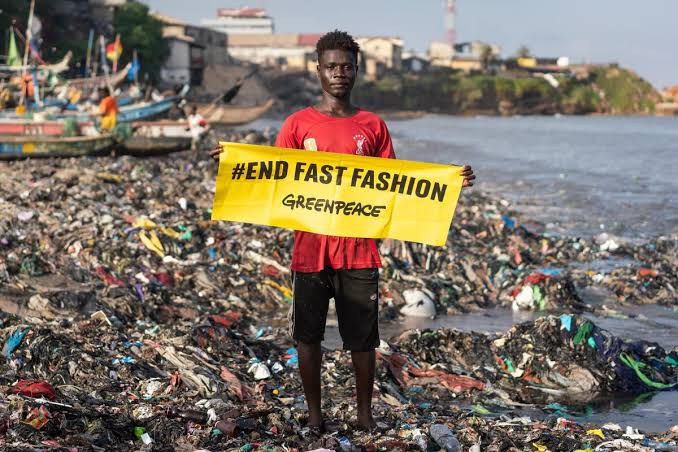
October 20, 2026 — Fashion houses, textile manufacturers, and clothing retailers are facing growing pressure to rethink how they source raw materials as extreme weather threatens agricultural production across South America and Africa. Droughts, floods, rising temperatures, and unpredictable rainfall can disrupt the crops that supply the global textile industry, creating uncertainty for farmers while exposing weaknesses in the supply chains behind everyday clothing. For an industry built around seasonal collections, competitive pricing, and rapid production, climate related disruption is becoming a business concern as well as an environmental challenge.
Behind a cotton shirt, a pair of jeans, or a lightweight summer dress lies a network of farmers, processors, mills, dyeing facilities, and manufacturers spread across multiple countries. When severe weather damages a harvest or limits access to water, the consequences can travel far beyond the affected region. We are seeing why fashion companies must look beyond the finished product and examine the environmental and social conditions that make production possible.
Why Climate Change Is Threatening Fashion’s Raw Materials
The fashion industry depends on agricultural and natural resources that are sensitive to changing weather patterns. Cotton requires suitable growing conditions and reliable water supplies, while wool production depends on healthy livestock and grazing land. Other natural fibers also rely on ecosystems that can be affected by drought, flooding, soil degradation, and shifting temperatures.
South America and Africa are important parts of international agricultural and textile supply networks. Their producers operate across diverse climates, from humid tropical areas to dry regions where rainfall can be scarce. These differences mean climate impacts are not identical everywhere, but changes in temperature and precipitation can create serious difficulties for particular crops and farming communities.
Prolonged drought may reduce crop yields and increase the cost of irrigation. Heavy rainfall can flood fields, damage infrastructure, and delay harvesting. Extreme heat can place additional stress on plants, workers, and livestock. Even when a harvest survives, unstable weather may affect fiber quality, making it harder for mills to maintain consistent production standards.
Climate change does not explain every agricultural loss. Market conditions, farming practices, infrastructure, pests, and local economic pressures also influence production. However, the growing risks associated with extreme weather make it increasingly difficult for manufacturers to depend on historical supply patterns when planning future orders.
How Agricultural Disruptions Reach Clothing Stores
The journey from a farm to a retail store involves several stages, and each can be affected by environmental disruption. A decline in cotton production may tighten supplies for textile mills. Higher raw material costs can then affect yarn producers, fabric manufacturers, garment factories, and retailers. Companies may face difficult choices between absorbing additional costs, changing suppliers, adjusting product designs, or increasing prices for consumers.
These pressures can be particularly difficult for brands that rely on narrow production schedules. Fashion retailers often plan collections months before products reach customers. If a preferred fabric becomes unavailable or arrives late, manufacturers may need to find an alternative, revise designs, or delay deliveries. A disruption at one stage can therefore affect an entire collection.
Smaller suppliers may have fewer financial resources to manage these changes. A large international brand might negotiate alternative purchasing agreements or maintain additional inventory, while a small garment factory may struggle to finance more expensive materials. Farmers can also experience financial strain when crop losses reduce their income while the costs of seeds, equipment, energy, and water continue to rise.
For consumers, the consequences may appear as higher clothing prices, fewer product choices, delayed launches, or changes in fabric composition. Yet the people closest to the source of the disruption often experience the greatest immediate hardship. Farmers and textile workers may face lost income long before the effects become visible on store shelves.
South America and Africa Face Different Supply Chain Risks
South America’s agricultural exposure
South America contains major agricultural regions that supply domestic industries and international markets. Climate pressures vary significantly across the continent, but drought, extreme heat, flooding, and changing rainfall patterns can affect farming operations and transport networks. When agricultural output becomes less predictable, textile companies may have difficulty securing consistent quantities of natural fibers at expected prices.
Water availability is especially important in regions where farming competes with households, industry, and other agricultural activities. Producers may need to invest in improved irrigation, soil conservation, and more resilient crop management. These measures can help, but they require financing, technical knowledge, and infrastructure that are not equally available to every farmer.
Manufacturers sourcing from South America should therefore assess more than the purchase price of a raw material. They should consider the reliability of regional production, the availability of water, transportation vulnerabilities, and the ability of suppliers to recover after extreme weather events.
African farmers and textile communities under pressure
African countries face a wide range of climatic conditions and agricultural challenges. In some areas, irregular rainfall and extended dry periods can threaten crop production and increase competition for water. Elsewhere, intense rainfall and flooding can damage farmland, roads, storage facilities, and processing infrastructure. The impact depends on local geography, crop choices, farming systems, and access to public services.
For farming households with limited savings or insurance, a failed harvest can threaten more than the next commercial contract. It may affect food security, school expenses, household income, and the ability to prepare for the following growing season. When international buyers demand low prices without sharing the costs of more resilient production, the financial burden can fall disproportionately on producers.
Fashion companies that depend on African agricultural materials have an opportunity to build more stable relationships with suppliers. Long term purchasing agreements, fairer payment practices, technical assistance, and investment in climate adaptation can help producers plan ahead rather than shoulder the risks alone.
Why Sustainable Fashion Must Include the Entire Supply Chain
Sustainable fashion is often associated with recycled fabrics, durable garments, secondhand shopping, and reduced textile waste. These measures can contribute to a lower environmental footprint, but they do not address every vulnerability in the production system. A brand may sell clothing made from recycled materials while remaining exposed to climate disruption in other parts of its supply chain.
A more comprehensive strategy begins with understanding where raw materials originate, how they are produced, and what environmental pressures affect each stage. Companies need reliable information about farms, fiber processors, textile mills, dyeing facilities, and garment factories. Without that visibility, it is difficult to identify risks early or determine whether sustainability commitments are producing meaningful results.
Supply chain transparency also helps businesses distinguish between genuine progress and broad environmental claims. A company should be able to explain the materials it uses, the standards it applies to suppliers, and the steps it takes to measure environmental performance. Clear documentation can support better purchasing decisions and help consumers make more informed choices.
The United Nations Environment Programme’s work on sustainable lifestyles provides broader context for reducing environmental impacts associated with consumption and production. For fashion businesses, this perspective reinforces the need to consider how products are sourced, manufactured, used, and ultimately discarded.
Practical Steps Fashion Brands Can Take Now
Diversify sourcing without abandoning responsible suppliers
Depending too heavily on one crop growing region or one supplier can leave a company exposed to localized disruption. Brands can assess alternative sourcing regions and materials while maintaining clear environmental and labor standards. Diversification should not become an excuse to abandon existing farming communities whenever conditions become difficult. Responsible sourcing requires balancing resilience with long term supplier relationships.
Businesses should also avoid assuming that switching to another fiber automatically reduces climate risk. Different materials have different land, water, energy, and processing requirements. A suitable alternative depends on the product, its expected lifespan, the conditions under which the material is produced, and the availability of credible environmental information.
Invest in climate resilient agriculture
Fashion companies can work with agricultural suppliers to support practices that help farms withstand environmental stress. Depending on local conditions, these may include improving soil health, using water more efficiently, diversifying crops, protecting biodiversity, and adopting farming methods suited to changing rainfall patterns.
Such measures need to be developed with local expertise. A technique that works in one climate may be unsuitable elsewhere, and farmers should not be expected to absorb all the financial risks of experimentation. Training, accessible financing, and predictable purchasing arrangements can make adaptation more practical.
Use traceability and risk monitoring
Digital supply chain systems can help companies record the origin of materials, monitor supplier performance, and identify potential bottlenecks. Weather forecasts, agricultural assessments, and regional risk information can also support earlier planning. These tools are most useful when the information is accurate, regularly updated, and connected to decisions about purchasing and production.
Companies should establish clear procedures for responding to warning signs. These may include reviewing inventory, communicating with suppliers, adjusting delivery schedules, or preparing alternative production plans. The purpose is not to predict every disruption perfectly, but to reduce the likelihood that a local crisis will become an avoidable business emergency.
The Role of Governments, Investors, and Industry Partnerships
Fashion companies cannot build climate resilient supply chains alone. Governments influence access to irrigation, transport infrastructure, agricultural research, energy, and financial support. Investors can encourage businesses to assess environmental risks and report material vulnerabilities. Industry associations can help smaller suppliers access technical guidance and develop common approaches to traceability and sustainability reporting.
International cooperation is especially relevant because raw materials, financing, manufacturing, and consumer markets often sit in different countries. Policies that support climate adaptation in agricultural regions can benefit the wider textile economy by protecting livelihoods and improving the reliability of production. At the same time, standards and reporting requirements should be designed carefully so that smaller producers are not excluded simply because they lack the resources to meet complicated administrative demands.
The Intergovernmental Panel on Climate Change provides scientific assessments of climate risks, adaptation, and mitigation. Its work can help companies and policymakers understand why long term planning must account for both gradual environmental changes and more severe weather events.
What This Means for Consumers and the Future of Fashion
Consumers also influence the direction of the industry, although individual purchasing decisions cannot solve structural supply chain problems by themselves. Buying fewer, better made garments, repairing clothing, choosing secondhand items, and using products for longer can help reduce pressure associated with constant production and disposal. These choices may also make wardrobes less dependent on rapidly changing fashion cycles.
At the same time, consumers need honest information rather than vague claims about environmentally friendly clothing. Brands should explain what their sustainability labels mean and provide evidence for claims about recycled content, responsible sourcing, and production practices. Clear communication allows customers to compare products without being misled by attractive packaging or unsupported promises.
For the industry, the central challenge is to make resilience part of everyday business planning. Climate risk should influence sourcing decisions, supplier contracts, product design, inventory management, and investment priorities. Companies that treat these issues as a separate environmental project may miss opportunities to protect their operations and the people who support them.
A More Resilient Fashion Industry Starts at the Source
Extreme weather is exposing the close relationship between environmental stability and the clothing supply chains that connect agricultural communities with global markets. When harvests become less predictable, the effects can reach farmers, textile manufacturers, fashion houses, workers, and consumers. The costs are not distributed evenly, and those with the fewest resources often have the least ability to recover.
Building a more sustainable fashion industry requires action beyond recycled labels and public commitments. Companies must improve supply chain visibility, invest in climate adaptation, establish fairer relationships with producers, and prepare for disruptions before they occur. Governments and industry partners also have a role in ensuring that smaller suppliers can participate in this transition.
The future of fashion will depend not only on what designers create, but also on whether the systems behind those creations can withstand environmental pressure. By treating climate resilience as a shared responsibility, the industry can work toward supply chains that are more dependable, more transparent, and fairer to the communities whose labor and resources make global fashion possible.