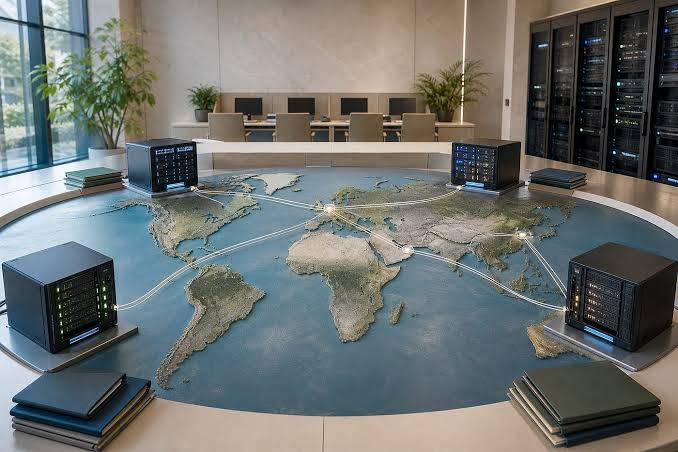
October 20, 2026 — Entertainment companies, advertising agencies, independent filmmakers, and digital creators are adapting to a new generation of artificial intelligence powered creative studio tools designed to coordinate complex production tasks. As these platforms expand across international markets, they are changing how teams develop visual concepts, manage digital assets, build scripts, and move projects from an early idea to a finished production. The shift offers new opportunities for creators working across languages and time zones, while raising important questions about creative control, intellectual property, data protection, and the future of media work.
Why AI Creative Studio Tools Are Expanding Across Borders
Creative production has always depended on collaboration. A single entertainment project may involve writers, illustrators, animators, editors, sound designers, visual effects specialists, and marketing teams. When those professionals work in different countries, even routine decisions can become complicated. Teams must exchange files, maintain consistent visual styles, track revisions, and communicate changes without disrupting the production schedule.
AI powered creative studio platforms aim to reduce some of that friction by bringing multiple production activities into a connected environment. Rather than relying on disconnected applications for each task, a team may use an integrated system to organize reference materials, generate preliminary visual concepts, coordinate production stages, and prepare assets for review. Some systems also support visual scripting, which allows creators to connect actions and automate repetitive steps through graphical workflows.
International expansion makes these capabilities particularly relevant. A production company in the United States may collaborate with animation specialists in South Korea, advertising teams in Europe, and post production professionals in South Asia. Shared digital workspaces can help those groups coordinate tasks without requiring every participant to use the same local infrastructure or follow identical working hours.
However, the availability of these tools does not mean every organization is adopting them at the same pace. Larger studios may have the resources to test new systems and integrate them with existing production pipelines. Smaller agencies and independent creators often need to consider subscription costs, hardware requirements, training, and the risks of moving sensitive project materials to an external platform.
How AI Agency Suites Are Changing Creative Workflows
From individual tasks to connected production pipelines
Traditional creative workflows often involve moving between several applications, exporting files, checking formats, and repeating adjustments when a client changes a requirement. AI enabled agency suites are designed to connect more of these steps. A creative team might begin with a campaign brief, organize its references, produce initial visual directions, and prepare draft assets for human review within a coordinated workflow.
The practical value lies in reducing unnecessary handoffs. When a project manager can see which assets are awaiting approval and which production tasks remain unfinished, the team has a clearer picture of its progress. Automation may also help identify missing files, apply naming conventions, prepare different asset sizes, or route completed work to the appropriate reviewer.
These capabilities are especially useful when a campaign must be adapted for several markets. A global brand may require different visual formats, language versions, product information, and cultural references for each region. A connected production system can help organize those variations, although local teams still need to check whether the resulting material is accurate and appropriate for its intended audience.
Visual scripting gives creators more control over complex tasks
Visual scripting allows users to build a sequence of actions by connecting blocks, nodes, or other graphical elements. Depending on the software, those actions may include importing assets, applying effects, generating variations, checking project conditions, or sending work to another stage. AI features can assist with setting up parts of a workflow, interpreting instructions, or suggesting changes when a production requirement evolves.
For creators who do not specialize in programming, visual scripting can make certain forms of automation easier to approach. An animation team, for example, might create a repeatable workflow for preparing scene previews. An advertising agency could establish a process for generating approved banner dimensions from a master design. A small video production business might organize footage, label clips, and prepare rough sequences before an editor makes the final decisions.
Nevertheless, automated workflows require careful design. An incorrect instruction can affect many assets at once, and a process that works for one project may fail when file structures, formats, or creative requirements change. Teams should test new workflows on limited projects, maintain version histories, and provide a straightforward way to review or reverse automated changes.
What Global Entertainment Companies Stand to Gain
For film studios, streaming services, game developers, and digital publishers, production efficiency can have a direct effect on budgets and delivery schedules. AI creative tools may help teams explore more visual concepts during early development, prepare preliminary storyboards, organize reference materials, and create draft assets for discussion. These uses can help decision makers compare creative directions before committing significant time and resources to final production.
Gaming companies may find particular value in systems that manage large collections of visual assets. A game can contain thousands of textures, environmental elements, interface graphics, character references, and promotional materials. Consistent naming, searchable libraries, and automated review procedures can help teams locate the correct files and reduce avoidable duplication.
Streaming and entertainment businesses also operate across territories with different audience expectations. Promotional artwork, trailers, subtitles, and social media campaigns may need to be adapted for several markets. AI assistance can help prepare initial versions more quickly, but human editors and local specialists remain essential for checking cultural context, humor, language, representation, and brand consistency.
Independent creators may benefit in a different way. A small studio that cannot afford a large production department may use AI assisted workflows to handle some administrative and preparatory work. This can free more time for storytelling, visual experimentation, client communication, and other activities where individual judgment matters most. Still, the technology does not eliminate the need for strong artistic direction or a realistic understanding of production costs.
The Challenges of International AI Adoption
Copyright, ownership, and licensing
One of the most significant questions surrounding AI generated creative work concerns ownership. Studios need to know whether they have permission to use the material supplied to a platform, how generated outputs may be used commercially, and what happens when a project contains licensed photographs, music, characters, or confidential client assets.
These questions become more complicated when production crosses national borders. Copyright rules, contractual terms, and the treatment of AI generated material can differ between jurisdictions. A company operating in several markets should not assume that a permission granted under one agreement automatically covers every territory or every type of use.
Before adopting a platform, organizations should review its licensing terms, understand how uploaded content is handled, and establish clear agreements with contractors and clients. They should also keep records of human contributions, source materials, approvals, and revisions. These practices cannot eliminate every legal uncertainty, but they can make responsibilities easier to establish when a dispute arises.
Data security and confidential production materials
Creative files often contain information that has commercial value long before a project becomes public. Unreleased film footage, game designs, campaign concepts, product launches, and client documents may all be sensitive. Uploading those materials to an AI service without reviewing its data policies can expose an organization to risks it did not anticipate.
Companies should examine whether a provider uses submitted content to train its models, how long it retains files, where data is processed, and which employees or contractors can access project materials. Access controls, multifactor authentication, encryption, and clear retention policies can help reduce exposure. For particularly sensitive productions, organizations may prefer private deployments or workflows that keep restricted assets within approved environments.
International data transfers also require attention. Privacy obligations can vary depending on the locations of the company, its employees, its customers, and the systems processing their information. Legal and security teams should assess these requirements before a platform becomes embedded in routine production.
Creative consistency and human oversight
Speed is not the same as quality. An AI system may generate attractive images that contain inconsistent details, produce a script that misinterprets a brief, or create a visual sequence that does not fit the director’s intention. Generated material can also reproduce familiar patterns at the expense of originality or represent people and cultures in ways that require correction.
For these reasons, the strongest production process is likely to combine automation with clearly defined human review. Creators should decide which tasks can be automated safely and which require approval from an experienced professional. Final decisions about narrative, visual identity, factual accuracy, cultural representation, and audience suitability should remain accountable to people rather than being delegated entirely to software.
What Smaller Agencies and Independent Creators Should Consider
Adopting an advanced creative platform does not have to mean replacing an entire production setup. Smaller organizations can begin with a narrow, measurable problem and expand only when the results justify the investment.
- Identify repetitive tasks: Start with work such as file organization, resizing approved graphics, or preparing routine project documentation.
- Test before committing: Use a limited project to assess output quality, reliability, operating costs, and the amount of human correction required.
- Protect client material: Check data handling terms and obtain appropriate permission before uploading confidential assets.
- Keep human approval: Assign a responsible person to review generated material before it reaches a client or public audience.
- Measure actual value: Compare the time saved against subscription fees, training, integration, and quality assurance costs.
These steps can help businesses avoid paying for impressive features they rarely use. They also make it easier to explain the benefits and limitations of AI assisted production to clients who may be uncertain about how their material is created.
Why Skills and Training Will Matter More
The spread of AI creative tools is likely to change the mix of skills demanded across media production. Familiarity with illustration, editing, animation, writing, and design will remain valuable, but professionals may increasingly need to understand workflow planning, prompt development, asset management, quality control, and the limits of automated systems.
Technical knowledge will not be the only advantage. Clear communication, cultural awareness, critical thinking, and the ability to interpret a client’s intentions can distinguish an effective creative professional from someone who simply knows how to operate a tool. A generated image may be completed in moments, yet deciding whether it communicates the right message can require experience and careful discussion.
Employers should provide practical training rather than assuming workers will learn unfamiliar systems on their own. Training can include reviewing generated outputs, protecting confidential information, documenting workflows, identifying bias, and understanding licensing restrictions. Freelancers and smaller agencies can build similar habits through focused experiments and written procedures that can be reused across projects.
Resources such as the National Institute of Standards and Technology AI Risk Management Framework offer a useful starting point for organizations assessing AI related risks. Although it is not a creative production manual, its emphasis on identifying, evaluating, and managing risk can help businesses develop more responsible internal policies.
The Importance of Interoperability and Open Standards
As AI studio platforms expand internationally, their ability to work with existing tools may become as important as their generation capabilities. Many organizations have invested heavily in editing software, design applications, digital asset libraries, and project management systems. A new service that requires teams to abandon established workflows can introduce extra cost and operational disruption.
Interoperability allows assets and project information to move between compatible applications with fewer manual steps. Common file formats, documented interfaces, export options, and reliable version control can reduce dependence on a single vendor. Before signing a long term agreement, organizations should determine whether they can retrieve their files in usable formats if they later change providers.
For cross border teams, access and reliability matter as well. Different regions may experience different network conditions, payment restrictions, language support, or service availability. Businesses should confirm that a platform can serve their intended locations and that its support arrangements match the needs of projects operating across time zones.
The OECD’s work on artificial intelligence provides broader context for responsible AI development and policy cooperation. Such international guidance is relevant as creative businesses consider how transparency, accountability, and public trust should shape their use of automated production systems.
What Comes Next for AI Powered Creative Studios
The international expansion of AI creative studio tools points toward a production model in which more tasks can be coordinated within connected digital environments. Visual scripting may help teams automate repeatable processes, while AI assistance may support early concepts, asset preparation, and collaboration between specialists. The precise capabilities will vary by provider, and organizations should evaluate individual products rather than treating all AI suites as interchangeable.
For entertainment companies, the opportunity is not simply to produce more material in less time. It is to use available resources more intelligently, reduce avoidable delays, and give creative professionals more room to focus on decisions that require imagination and judgment. For smaller businesses, carefully selected tools may make certain production capabilities more accessible without requiring the staffing levels of a major studio.
Yet lasting success will depend on more than the speed of software. Copyright clarity, secure data practices, reliable integration, inclusive design, and meaningful human oversight will shape whether these systems earn the confidence of workers and clients. Organizations that address those responsibilities early will be better prepared to expand across markets without compromising the integrity of their work.
As the technology continues to develop, the central question for global media creators is not whether every creative task should be automated. It is where automation genuinely helps, where human expertise remains indispensable, and how the two can work together. The most useful AI studio will ultimately be the one that supports better creative decisions, protects the people and material behind each project, and helps teams deliver work that audiences can trust.