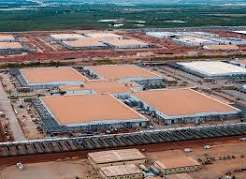
Commercial real estate is entering a new phase as the rapid expansion of artificial intelligence, cloud computing, streaming services, and other high energy technologies drives demand for properties that can support enormous amounts of electricity. Across major markets, investors are increasingly looking beyond conventional office towers, retail centers, and industrial warehouses toward specialized sites with reliable grid connections, substantial power capacity, and room for complex digital infrastructure. The shift is changing what makes a commercial property valuable and forcing the real estate industry to think about land, electricity, connectivity, and infrastructure as parts of the same investment equation.
Why Data Centers Are Becoming a Major Real Estate Investment Story
For decades, location was one of the simplest ways to describe the value of commercial property. Being close to customers, transportation networks, workers, or major business districts could determine whether a building attracted tenants and generated strong returns. Data centers are rewriting that formula. A site can be far from a traditional business district and still command significant attention if it has access to dependable electricity, fiber connectivity, water resources, and suitable land.
We are seeing this change because computing infrastructure has become physically demanding. Artificial intelligence workloads require powerful processors operating continuously, while cloud services support millions of businesses and consumers around the clock. Every digital interaction may feel weightless to the person using a phone or laptop, but behind the screen are buildings filled with servers, cooling equipment, backup systems, transformers, and electrical infrastructure.
That physical reality has created a new category of commercial real estate opportunity. Developers and investors are assessing properties not simply by square footage, but by whether the site can support the electrical load required by a modern data center.
Power Capacity Is Becoming a Property Advantage
The most valuable feature of some prospective data center sites may now be something that rarely appeared in traditional property brochures: available power. A building with excellent road access and attractive architecture can have limited value for a data center operator if the surrounding grid cannot deliver sufficient electricity.
This is pushing developers closer to major transmission infrastructure, substations, power generation facilities, and areas where utilities can provide additional capacity. The process is not as simple as purchasing land and connecting a building to the grid. Large projects can require extensive utility planning, transmission upgrades, environmental reviews, permitting, and negotiations that may take years.
For investors, that creates both opportunity and risk. Properties with confirmed or realistically achievable power capacity can become strategically important, while sites that appear attractive on paper may face lengthy delays if the electricity connection is uncertain.
The new commercial property checklist
As data center demand expands, investors are increasingly examining several factors together:
- Available electrical capacity and the timetable for additional power
- Proximity to substations and major transmission infrastructure
- Fiber connectivity and network redundancy
- Land availability for expansion and supporting equipment
- Water availability and cooling requirements
- Local permitting conditions and environmental restrictions
- Access to construction labor, engineering expertise, and transportation infrastructure
This broader assessment is particularly important because data center projects are capital intensive. A small mistake during site selection can create years of additional work and significantly increase development costs.
Artificial Intelligence Is Accelerating the Shift
Artificial intelligence has added another layer of urgency. Traditional cloud facilities already consumed substantial electricity, but AI computing can create much higher power densities inside data centers. Advanced processors generate significant heat, requiring sophisticated cooling systems alongside increasingly powerful electrical infrastructure.
We believe this is one reason commercial property investors are paying closer attention to specialized infrastructure. The demand is not limited to one technology company or one country. AI services, cloud platforms, enterprise software, scientific research, financial services, gaming, and digital media all require computing capacity.
The broader consequence is that data centers are becoming infrastructure assets as much as conventional real estate assets. Their value depends on the building itself, but also on the quality and reliability of the systems surrounding it.
Global Markets Are Competing for Data Center Development
The trend is not confined to the United States. Data center development is expanding across regions where digital demand is increasing and governments or utilities can support additional electricity infrastructure. Europe, Asia Pacific, the Middle East, and other emerging technology markets are assessing how to accommodate growing computing requirements while managing pressure on electricity networks.
International developers face different challenges in each market. Some locations offer strong fiber networks but limited power availability. Others have abundant energy resources but insufficient digital connectivity. Water availability, climate, land costs, taxation, permitting rules, and political priorities can also influence where projects ultimately move forward.
That makes global data center real estate increasingly specialized. The best site is rarely determined by one factor. Instead, developers must find a workable balance between electricity, connectivity, land, construction costs, regulation, and long term demand.
Industry participants can also track broader energy and infrastructure trends through resources such as the International Energy Agency, which provides research on electricity markets, energy demand, and infrastructure conditions relevant to large scale computing.
Traditional Commercial Real Estate Faces a New Competition for Capital
The rise of data centers is also influencing how investors think about other commercial properties. Office buildings continue to face questions about occupancy and changing workplace patterns, while retail and traditional industrial properties have their own demand dynamics. Data centers offer a different proposition because their tenants may require highly specialized infrastructure and can commit to long term arrangements when the facility meets their technical requirements.
That does not mean every data center investment will outperform conventional real estate. Construction costs can be enormous, power constraints can delay projects, and technology changes can affect infrastructure requirements. Investors also need to consider whether a particular market can sustain demand after a wave of new facilities arrives.
Still, the contrast is significant. A conventional commercial property is often judged primarily by tenant demand and rental income. A data center site can acquire strategic value before construction begins if its electrical and connectivity characteristics are unusually strong.
Utilities Are Becoming Central Players in Real Estate Decisions
One of the most important consequences of this trend is the closer relationship between real estate developers and electricity providers. Historically, a property investor could treat utility access as one element of site selection. For large computing facilities, electricity planning can become the foundation of the entire project.
Utilities must determine whether local networks can support new loads without compromising reliability for existing customers. In some markets, new data center demand can require substations, transmission upgrades, generation additions, or other infrastructure investments.
This creates a complicated balance. Data centers can bring construction activity, investment, tax revenue, and technology infrastructure to communities. At the same time, residents and businesses may worry about electricity prices, grid reliability, water consumption, land use, and the environmental effects of additional power generation.
Communities Are Asking Harder Questions
For people living near proposed developments, the discussion is much more personal than an investment thesis. A new facility can mean cranes on the horizon, heavy construction traffic, new electrical infrastructure, and changes to the local landscape. It can also mean jobs, improved infrastructure, and additional economic activity.
That tension is likely to become more visible as projects become larger. Successful development will require more than securing land and signing an agreement with a technology company. Developers will need to explain how projects will affect local electricity systems, water resources, employment, taxes, noise, and surrounding communities.
Transparency may become one of the most valuable tools available to developers. Communities are more likely to support major infrastructure when they understand what is being built, why it is needed, and how its costs and benefits will be distributed.
What Investors Should Watch Through 2026 and Beyond
For commercial real estate investors, the emerging market calls for a different approach to due diligence. A promising property should be evaluated through both a real estate lens and an infrastructure lens.
Investors should verify the actual status of grid interconnection rather than relying on assumptions about nearby power infrastructure. They should examine whether the local utility has confirmed capacity, how long required upgrades could take, and whether permitting could become a bottleneck. Fiber availability, cooling requirements, water access, environmental considerations, and expansion potential also deserve careful review.
Another consideration is tenant concentration. A project designed around one large technology customer may offer strong economics but could also expose owners to significant leasing risk if that customer changes its expansion strategy. Diversification and adaptable facility design can therefore become important elements of long term asset planning.
A New Definition of Location in Commercial Real Estate
The data center boom is changing one of commercial real estate’s oldest principles: location. The next generation of valuable sites may not be the properties with the busiest streets or the tallest buildings. They may be the parcels where electricity, fiber, land, water, regulation, and transportation come together at precisely the right time.
That shift gives real estate professionals a new way to view infrastructure. Power lines, substations, transmission capacity, and network connections are no longer background details. They can determine whether a property becomes a highly sought after digital infrastructure site or remains ordinary commercial land.
Research from organizations such as the U.S. Department of Energy also illustrates why electricity infrastructure is becoming increasingly relevant to discussions about large scale computing and future energy demand.
Commercial Real Estate Is Moving Closer to the Power Grid
The commercial property market has always adapted when technology changes how businesses operate. Railroads reshaped industrial property. Highways changed logistics and retail. The internet created demand for telecommunications infrastructure and server facilities. Artificial intelligence and cloud computing are now pushing that evolution further.
For investors, the lesson is increasingly clear: the future value of a commercial site may depend as much on what powers it as on what stands on it. As global computing demand continues to grow, properties connected to reliable electricity and digital networks are likely to receive greater attention from developers, institutional investors, utilities, and technology companies.
That does not make every power rich site a guaranteed investment. Markets will still face permitting delays, construction costs, energy constraints, community concerns, and changing technology requirements. But the direction of the market is difficult to ignore. Commercial real estate is becoming more closely tied to the infrastructure that keeps the digital economy running, and data center demand is putting electricity capacity at the center of that conversation.